Technical newsheet
Sensors & InstrumentationDevice profile
£1.9m NIHR project funds perovskite photon-counting detectors
A £1.9m NIHR award gives Clarity Sensors and STFC 36 months to build and validate a perovskite photon-counting CT detector, advance it from TRL 3 to 6, and establish pilot production in Cambridge.
By Olivia Hart4 min read830 words
Features
- NIHR awarded £1.9 million for a 36-month project beginning 1 October 2026.
- Clarity Sensors receives £1.3 million and leads the project; STFC’s Technology Department receives the remainder.
- Perovskite single crystals grow at around 40 °C in days, versus months above 750 °C for current detector materials.
- STFC’s HEXITECMHz readout operates at a continuous 1 million frames per second.
- PICASO targets a preclinical detector module, moves from Technology Readiness Level 3 to 6, and establishes pilot production in Cambridge.
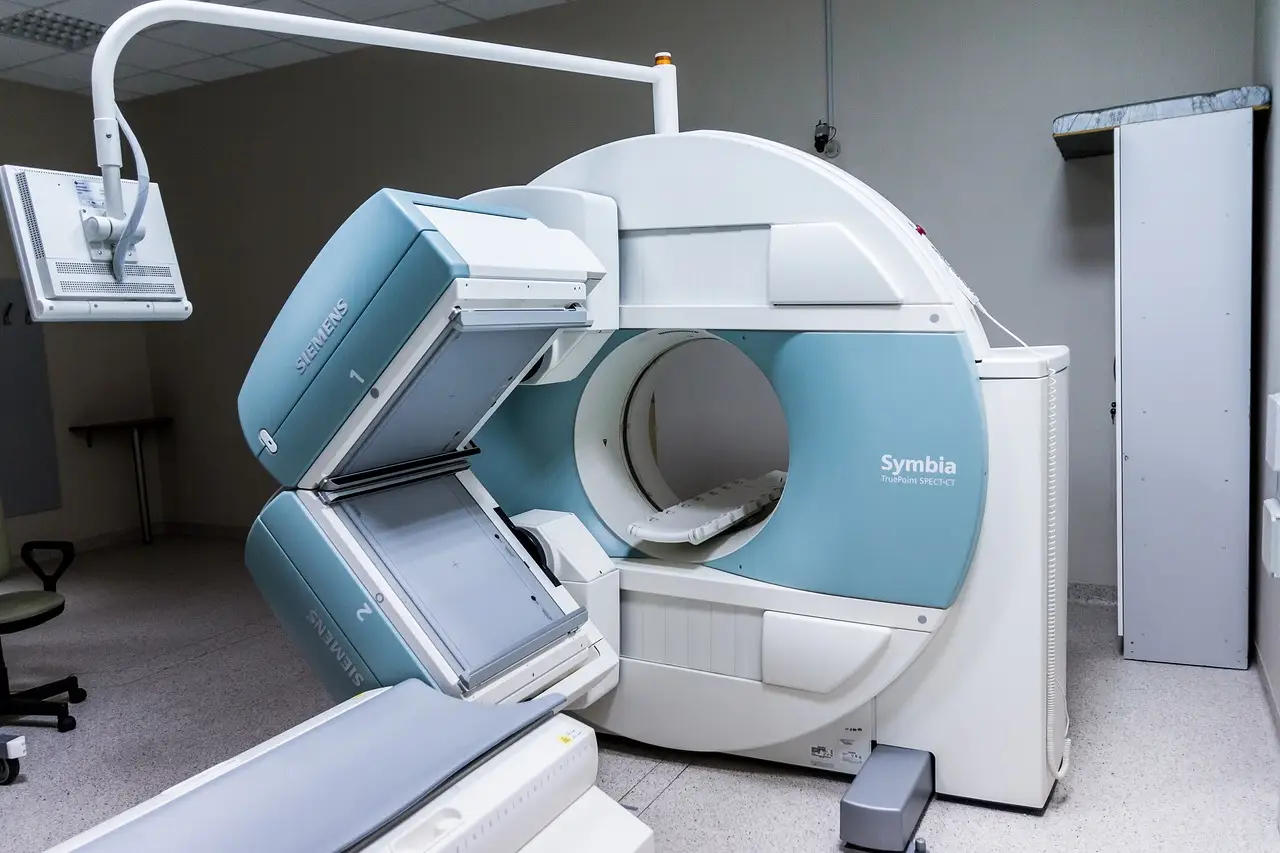
By Olivia Hart
A £1.9 million NIHR award will support a 36-month photon-counting CT detector project beginning 1 October 2026, with Clarity Sensors as lead organization. NIHR, the National Institute for Health and Care Research, made the award through its Invention for Innovation (i4i) program as a Product Development Award.
Based in Cambridge and spun out of the University of Cambridge, Clarity Sensors is led by CEO Hayden Salway. It will receive £1.3 million; the remainder funds work at STFC’s Technology Department.
What bottleneck is the project trying to remove?
Color photon-counting CT measures individual X-ray photon energies and uses them to reconstruct high-resolution images that precisely distinguish tissues and materials, according to the project description. That energy discrimination is the operating principle behind “color” CT.
Today’s photon-counting detectors rely on cadmium telluride and cadmium zinc telluride sensor materials. They require months of crystal growth at temperatures above 750 °C, and the project description says only a small number of suppliers worldwide can produce them at medical grade.
The project description says photon-counting CT is currently available only at specialist centers, including teaching hospitals, because the systems carry premium prices. It is not yet widely available across the NHS.
What performance evidence exists?
The project description says clinical photon-counting CT has produced higher-resolution images at substantially lower radiation doses than conventional CT, and that every major CT manufacturer now develops photon-counting systems. It supplies no named study, dose value, cohort, or resolution figure for those clinical comparisons.
Clarity reports that laboratory tests of its halide perovskite single crystals produced performance comparable with cadmium telluride sensors in current commercial systems on key detector measures. The company also reports stable operation under X-ray flux and bias conditions relevant to CT.
Those results remain qualitative in the announcement: it gives no numerical energy resolution, flux, bias, dose, module lifetime, or production-yield data. Clarity says further optimization remains ahead. The company presents the comparison as a laboratory starting point rather than a finished specification.
What will PICASO assemble?
PICASO will combine Clarity’s perovskite sensors with readout electronics from STFC’s Technology Department. STFC describes HEXITECMHz as the latest generation of its UK-designed High Energy X-ray Imaging Technology, operating at a continuous 1 million frames per second.
STFC says the readout provides energy-resolved information at CT-relevant fluxes. The partners will optimize the HEXITECMHz chip for perovskite sensors, then build and validate a complete photon-counting detector module in a CT-relevant preclinical environment.
Those tasks must advance the technology from Technology Readiness Level 3 to 6 on the development-readiness scale. Clarity will also establish pilot-scale sensor production at its Cambridge facility and implement relevant ISO 13485 quality management system controls.
What do the project leaders expect?
Dr Hayden Salway, CEO of Clarity Sensors and lead applicant, said:
“Photon-counting CT offers real benefits for patients, but the materials it depends on today are slow and costly to make. We grow our perovskite sensors in a matter of days at low temperature, and our initial laboratory results show they can already perform comparably with the materials in current systems.”
“This NIHR award, and our collaboration with STFC’s detector specialists, will allow us to turn these results into a complete detector module and test it under the conditions a CT scanner demands. It is a significant step towards our goal of supplying perovskite semiconductor detector technology to CT manufacturers.”
Dr Matthew Veale, group leader of STFC’s Technology Department’s Detector Development Group, said:
“For 20 years, our HEXITEC® technology has advanced the field of color X-ray imaging, bringing capabilities once confined to national science facilities into laboratories and industry.”
“The combination of our next-generation HEXITECMHz detector technology with Clarity Sensors’ innovative perovskite semiconductor materials represents an exciting opportunity to widen access to affordable color CT imaging.”
“With NIHR funding, working with Clarity Sensors, we aim to advance knowledge of these emerging materials, improve lives through the development of more accessible medical imaging technologies, and drive growth by strengthening UK sovereign capability in advanced X-ray detector technologies.”
What must happen before adoption?
Beyond the stated 1 million-frame-per-second readout rate, the announcement does not specify the detector’s energy resolution, spatial resolution, maximum flux, operating bias, clinical dose reduction, unit cost, or production capacity. Those omissions leave the principal performance and commercial comparison open.
The near-term test is technical and compliance-based: the partners must turn a laboratory sensor and high-speed readout into a validated preclinical module, show that pilot production can sustain the reported material advantages, and implement the relevant ISO 13485 quality-management-system controls.
The commercial case remains open. The adoption question is whether that evidence will let CT manufacturers qualify a module at a price and supply scale that carries photon-counting CT beyond premium specialist centers and into routine NHS use.
via azosensors.com (Source)
Filed under
- photon-counting-ct
- perovskite-sensors
- x-ray-detectors
- medical-imaging
- nihr-funding
More from Olivia Hart
Show full bio
Market editor covering technology and product news in Instruments, test and measurement at Testbench Report.
99 articles
Application notes
- Exosens to showcase image sensor lineup at SEMICON West 2026
- Glimpse Expands CT Software Beyond Batteries With Explore Package
- NIST Transition Edge Sensors Tighten Actinide X-Ray Data 3× to 8×
- GiantEye High-Energy CT Targets 20-Foot Container-Scale Metrology in 2027
- Specim Readies High-Speed NIR-SWIR Hyperspectral Camera for Industrial Lines