TB-6341 · REV A · Technical newsheet
Test & MeasurementDevice profile
Aemulus and Samsung Electro-Mechanics Move Test Collaboration Into Commercial Supply
Aemulus's collaboration with Samsung Electro-Mechanics has entered commercial supply, moving from joint development to production-stage deliveries of test equipment.
By Amara Osei2 min read457 words
Features
- Aemulus and Samsung Electro-Mechanics have moved their collaboration into commercial supply, per The Malaysian Reserve.
- No equipment models, volumes, or financial terms of the arrangement have been disclosed.
- The partnership has graduated from development phase to production-stage supply of Aemulus test equipment.
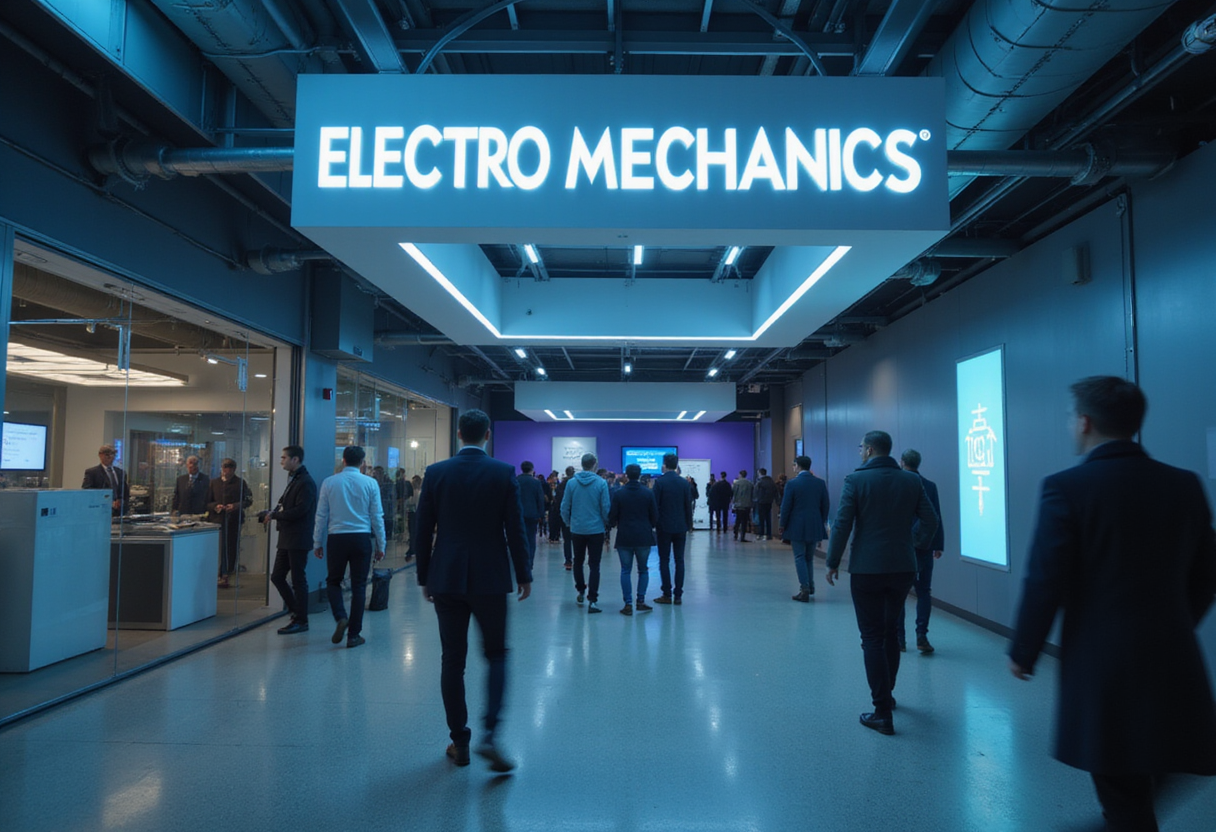
Aemulus Holdings, the Malaysian semiconductor test-equipment developer, has moved its collaboration with Samsung Electro-Mechanics into commercial supply, The Malaysian Reserve reports.
The shift marks the transition of the partnership from a joint development arrangement to a stage in which Aemulus supplies product to the Korean component manufacturer on a commercial basis. For test-and-measurement buyers, that distinction matters. Development-phase engagements between instrument vendors and component makers typically involve prototype handlers, engineering builds, and jointly defined test coverage; commercial supply implies recurring deliveries against production requirements, with the accompanying obligations on delivery schedule, unit consistency, and long-term support.
Samsung Electro-Mechanics produces passive components — MLCCs, inductors, and related modules — at volumes that rank among the highest in the industry. Test equipment qualified into that supply chain generally faces throughput and uptime requirements well beyond those of engineering-lab use. Aemulus's core business sits in this segment: the company builds test handlers and systems used in the outgoing inspection and characterization of passive and discrete semiconductor components, where test cell economics are governed by pick-and-place speed, contactor life, and measurement integration rather than by instrument bandwidth alone.
Neither company has disclosed the specific equipment models covered by the commercial supply arrangement, the volumes involved, or the financial terms. The Malaysian Reserve report confirms the status change but does not attach figures to it. Buyers evaluating the announcement should therefore treat it as a qualification signal — Samsung Electro-Mechanics has accepted Aemulus equipment into production use — rather than as a datasheet event with measurable performance claims attached.
For Aemulus, the commercial phase carries practical weight. The Penang-based company has positioned itself as a lower-cost alternative to the established Japanese and American handler vendors in the passive-component test niche. A production foothold at one of the largest MLCC manufacturers gives the company a reference deployment that shortens subsequent qualification cycles at other component makers, since acceptance at a high-volume tier-one plant answers many of the statistical-process-control and uptime questions that prospective customers raise during audits.
The development also fits the broader pattern of component makers diversifying their test-equipment supply base after the capacity shortages of recent years, when lead times for test handlers and probe systems stretched and forced procurement teams to qualify second sources. Whether Samsung Electro-Mechanics treats Aemulus as a primary or secondary supplier for the covered product lines remains an open question; the announcement does not specify the scope of the supply commitment.
The question the arrangement raises for the industry is straightforward: will tier-one passive-component manufacturers follow Samsung Electro-Mechanics in moving Malaysian-built test systems into volume production lines, or does this remain a single qualified deployment?
via Google News: Oscilloscopes and test equipment (Source)
Filed under
- semiconductor-test
- test-handlers
- passive-components
- supply-chain
- samsung-electro-mechanics
More from Amara Osei
Show full bio
Senior reporter covering industry trends and analytics at Testbench Report.
22 articles
Application notes
- Industrial Physics Acquires Vitrek, Consolidating Test Equipment Under KKR
- AI Chip Demand Drives Record Profits for Taiwan Test Equipment Makers
- Korean Chip Test Equipment Maker Plans Design Center in Daegu
- Neosem Books 5.62 Billion Won SSD Test Equipment Order
- YEST and Yonata Electronics Sign MOU for Semiconductor Test Equipment JV