TB-6394 · REV B · Technical newsheet
Metrology & CalibrationDevice profile
Cintoo Workspace Brings Real-Time Review Sessions Into 3D Scan Digital Twins
Cintoo Workspace streams digital twins from real-world 3D scan data and lets desktop, VR and immersive-room users run guided review sessions together inside the model.
By Nathan Brooks3 min read522 words
Features
- Cintoo has officially launched Cintoo Workspace for collaborative digital-twin reviews.
- Twins stream directly from real-world 3D scan data, not CAD or reconstructed geometry.
- Sessions are joined from desktop, VR headset or immersive room in real time.
- Built-in guided collaboration structures virtual reviews like a real site walk.
- The announcement gives no accuracy, bandwidth or capacity figures for the platform.
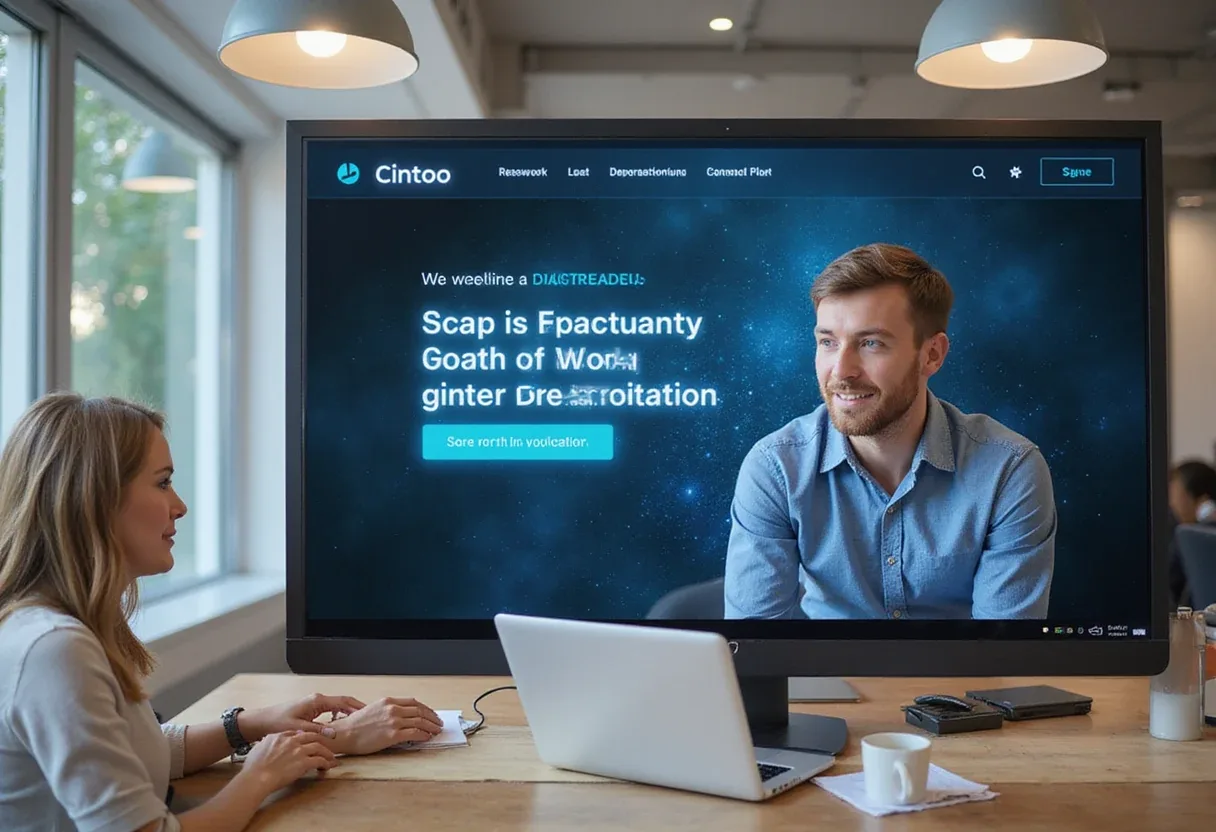
Cintoo has launched Cintoo Workspace, a platform that lets project teams meet and decide inside high-fidelity digital twins streamed directly from real-world 3D scan data. The company positions the release as a shift from passive twin viewing to structured, real-time collaboration, with sessions joined from a desktop, a VR headset or an immersive room.
The core technical claim is fidelity to as-built conditions. The digital twins in a Workspace session stream from 3D scan data captured on site, rather than from CAD models or manually reconstructed geometry. That distinction matters for metrology-adjacent workflows: scan-derived twins carry the deviations, clashes and field conditions a design model cannot represent, so a review conducted inside the twin reviews the facility as it exists.
What does the launch actually deliver?
Cintoo Workspace provides three concrete capabilities:
- Real-time collaborative sessions inside the digital twin, with participants joining from desktop, VR headset or immersive-room hardware.
- Built-in guided collaboration that gives virtual reviews the structure of a physical site walk.
- A shared decision-making context: teams meet and make decisions together inside the twin rather than exchanging static captures.
The company did not publish session capacity limits, latency figures, streaming bandwidth requirements or supported headset models in the announcement. Buyers evaluating deployment at scale will need those numbers before committing to immersive-room or multi-site configurations.
Why scan data changes the use case
The underlying argument rests on data provenance. A digital twin built from laser scanning or photogrammetry preserves measured geometry — surfaces, clearances, installed equipment positions — at the fidelity of the capture campaign. When a review team walks that twin, whether on a desktop or in VR, the objects under discussion correspond to the physical asset rather than to an idealized model. Cintoo's guided-collaboration feature is designed to reproduce the sequencing and focus of an actual site walk, so reviewers move through the asset in a structured order instead of navigating free-form.
The multi-modal access path is the practical differentiator for project organizations. A single session can mix a desktop user, a headset user and a room-scale participant, which removes the hardware uniformity that has limited earlier immersive-review deployments.
What remains unverified
The announcement describes fidelity and collaboration quality in qualitative terms. It gives no accuracy figures for the underlying twin, no point-cloud density or mesh resolution, and no test conditions under which the streaming performance was measured. Buyers in metrology and quality roles should treat the high-fidelity characterization as a vendor claim until they benchmark it against their own scan datasets and network conditions.
Integration details are also unstated in the launch material: which scan formats Workspace ingests, how revision history is handled across sessions, and what export or audit trail a decision recorded inside a twin produces.
The adoption question
The launch raises a governance question for engineering and quality teams: when a design review or acceptance decision happens inside a streamed twin rather than on site, does the organization's evidence and sign-off process still hold — and Cintoo's buyers will now have to answer it.
via cintoo.com (Original)
Filed under
- 3d-scanning
- digital-twins
- design-review
- virtual-reality
- point-cloud
More from Nathan Brooks
Show full bio
Staff writer covering people, launches and day-to-day practice in Instruments, test and measurement at Testbench Report.
62 articles