Technical newsheet
Industrial IoT & MonitoringDevice profile
Drones That Recharge From Live Power Lines Log 20,000 Test Hours
Nomadic's NOMAD quadcopters perch on live lines up to 420kV, recharge inductively, and each monitor 25km of grid. The Munich startup reports 20,000 test hours and $6M in seed funding.
By Nathan Brooks3 min read593 words
Features
- NOMAD drones have logged over 20,000 hours of testing on live lines in Germany, Norway and the U.S.
- Each NOMAD drone monitors roughly 25km of line; fixed sensors sit 1km to 5km apart
- Units have flown in temperatures down to -25°C, strong winds, and on lines up to 420kV
- Nomadic raised $6 million in seed funding alongside the announcement
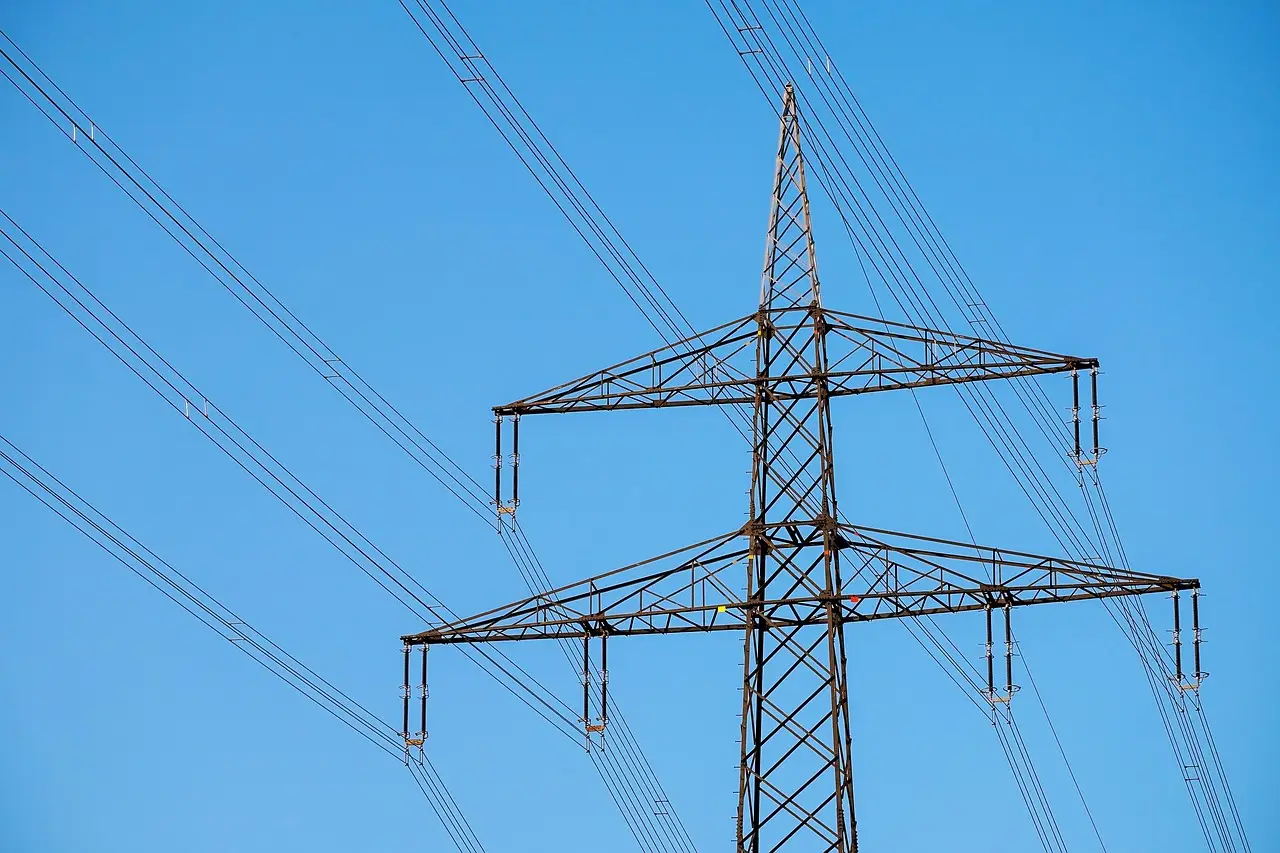
Quadcopters that recharge by perching on live high-voltage transmission lines have accumulated more than 20,000 hours of testing across Germany, Norway and the United States, according to Nomadic, the Munich-based startup that builds them. The company announced the figures alongside a $6 million seed funding round and its public debut of the NOMAD drone fleet this week.
The aircraft address a measurement problem grid operators already spend money on. Operators currently rely on weather models to estimate how much current each line can safely carry, but the physical condition of a given line segment varies, and Nomadic notes that the weakest point in any line "sets the limit for the whole line." A measurement taken at the wrong span therefore overstates the capacity available everywhere else on that circuit. Continuous, line-level monitoring lets operators rate dynamically rather than from conservative assumptions.
How the drones stay airborne indefinitely
Each NOMAD quadcopter lands directly on an energized conductor and draws charge from the line, then relocates to the next measurement point. "NOMADs are drones that land on live high-voltage lines, charge from the line itself, and relocate across the grid to where measurements are needed," the startup said in its announcement. The company describes the charging method as inductive, harvesting energy from the field around the conductor without a galvanic connection.
Because the energy source is the infrastructure under inspection, the drones do not return to base. Nomadic positions this as the operational difference from fixed monitoring sensors, which have become the accepted solution for line condition monitoring but are typically installed at intervals of 1km to 5km. A single NOMAD can monitor roughly 25km of line, the company claims, moving along the route as conditions change.
What the test conditions show
Nomadic reports it has validated the hardware in temperatures as low as minus 25 degrees Celsius, in strong winds, and on lines rated up to 420kV — the typical maximum voltage of the European transmission grid. The 20,000-hour figure covers operation on live lines rather than bench testing. The company has not published independent verification of these numbers; they are vendor-reported at this stage.
The alternative to either fixed sensors or drones remains the manned inspection: a conventional investigative check of a high-voltage line requires extensive planning, heavy machinery such as bucket trucks or helicopters, and taking the line out of service for a maintenance window. A drone that charges from the line under test removes all three constraints, provided the aircraft can survive the electrical and mechanical environment at 420kV.
Software turns fleet data into ratings input
The hardware ships with an integrated software layer, Nomadic OS, which the company says combines drone-collected data with weather and grid models "giving operators a real-time picture of what is physically happening on their lines." The measurement outputs are configurable, which allows a fleet to be tuned to the specific conductor, joint or spacer conditions an operator wants tracked.
Nomadic says it will use the $6 million seed round to expand the drone fleet and build out its partner program. The company is also hiring, with most open positions in engineering and all of them based in Munich.
The open question for utility adoption is integration: whether conductor-level data gathered by a perching drone can be certified for use in dynamic line rating schemes, where a rating error propagates directly into how much power an operator schedules over the line. Nomadic has demonstrated endurance and voltage tolerance; the standards case is the next hurdle.
via tomshardware.com/feeds.xml (Source)
Filed under
- power-grid-monitoring
- dynamic-line-rating
- high-voltage-transmission-lines
- drone-based-inspection
- grid-sensor-data
More from Nathan Brooks
Show full bio
Staff writer covering people, launches and day-to-day practice in Instruments, test and measurement at Testbench Report.
107 articles
Application notes
- Battery Costs Highlight Challenge for Industrial IoT Expansion
- Modern Test Equipment Targets Accurate Power Cable Fault Location
- ST's L9962 Brings 12-Bit Cell Monitoring to 10-Cell Battery Packs
- Edge Intelligence Reshapes the IoT Platform Architecture
- OTUS reports 13 drone intercepts across 10 tornadoes