TB-5234 · REV D · Technical newsheet
Machine Vision & InspectionDevice profile
Edmund Optics Rolls Out Configurable Ring Lights for Machine Vision
Edmund Optics has launched a configurable ring light family for machine vision, promising flexible illumination geometry for inspection tasks; full specifications are not yet published.
By Nathan Brooks2 min read419 words
Features
- Edmund Optics has introduced configurable ring lights for machine vision applications
- The announcement appeared via Military Aerospace; no specifications, wavelengths, or pricing were published
- Configurability targets integrators needing multiple illumination geometries from one product family
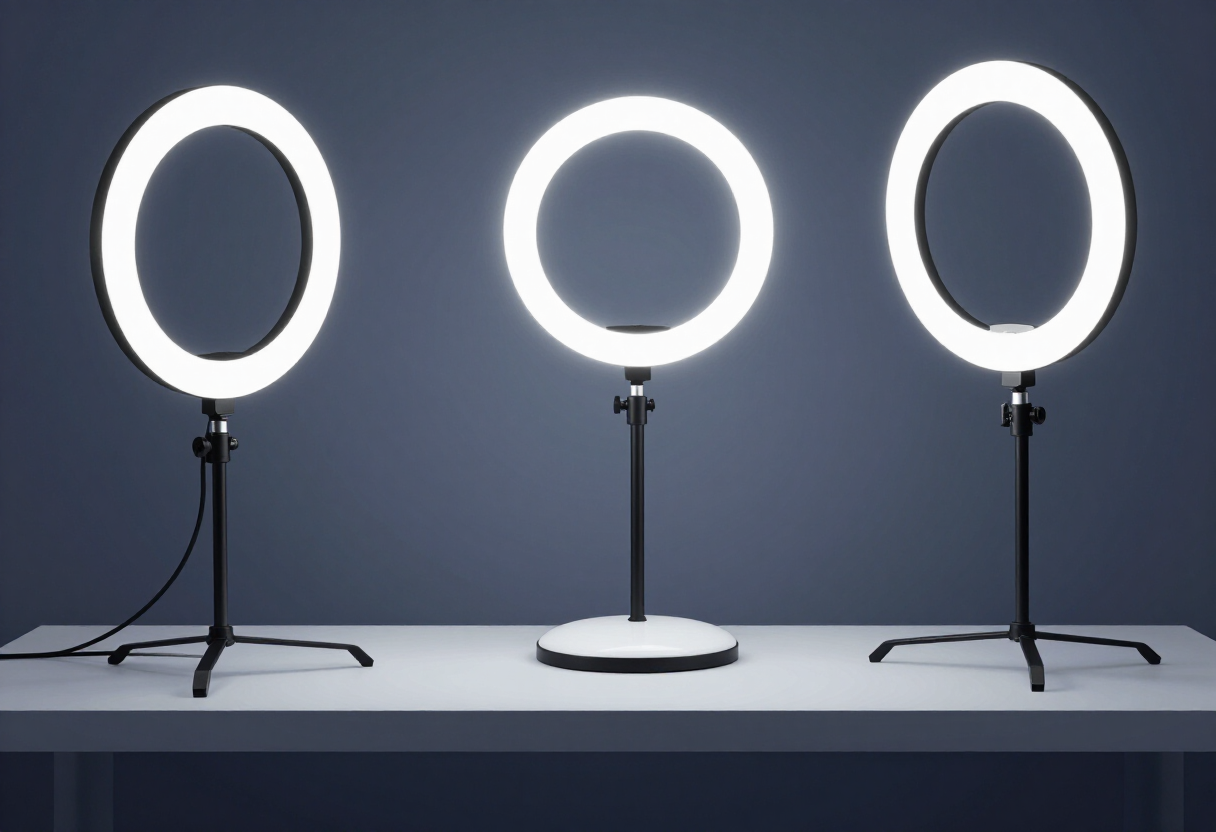
Edmund Optics has introduced a line of configurable ring lights aimed at machine vision applications. The announcement, carried by Military Aerospace, gives the product family its name but stops short of publishing a specification table, so the buying-relevant numbers — wavelength options, illuminance levels, working distance ranges, and input voltage — remain vendor-side data at this point.
Ring lights are the workhorse geometry of directed illumination in machine vision. Mounting an annular light source coaxially around the lens axis produces near-uniform illumination on flat, reflective surfaces and highlights surface topology from low angles. That behavior makes the format a default choice for print inspection, label verification, and parts-presence checks on conveyor lines, where the geometry of the light — not its raw output — determines contrast at the sensor.
The word doing the heavy lifting in this launch is "configurable." Fixed ring lights force integrators to design the optical stack around a single illumination geometry. A configurable platform typically lets the user select diameter, LED color or wavelength, diffuse or direct output, and intensity control method, so one part number can serve multiple stations or a product line that changes over time. Edmund Optics has not yet stated which of those axes of configuration the new family supports, nor has it published pricing.
The military-aerospace placement of the announcement is itself a signal. Defense and avionics inspection tasks — connector pin verification, solder-joint examination on high-reliability boards, surface-crack detection on machined parts — share the same illumination physics as industrial inspection but add constraints: stable output over wide temperature ranges, resistance to shock and vibration, and long calibration intervals so a vision station does not drift between maintenance windows. Whether the new ring lights carry any environmental ratings remains unstated in the initial release.
For integrators, the practical questions now sit with the datasheet. What intensity regulation does the controller offer — constant-current drive, closed-loop feedback, or PWM with a stated ripple figure? Does the family include diffuse-dome and dark-field variants for reflective surfaces? And can output be synchronized to the camera trigger, which matters for short-exposure inspections where light pulse width sets the effective exposure?
The development also raises a procurement question for vision-system builders standardizing their illumination inventory: does a configurable ring-light platform actually reduce the number of SKUs a line must stock, or does it simply move the configuration burden from the vendor to the integration bench? That answer will decide adoption more than any single optical specification.
via Google News: Machine vision inspection (Source)
Filed under
- edmund-optics
- ring-lights
- machine-vision-lighting
- machine-vision-inspection
- led-illumination
More from Nathan Brooks
Show full bio
Staff writer covering industry trends and analytics at Testbench Report.
19 articles
Application notes
- PiXARGUS Targets Rubber Extrusion with Modular 8-Camera Inline Inspection
- Exaktera Consolidates Six Machine Vision Brands Into Single Supplier
- Smartphone-Based Visual Inspection: A Question for Quality Control
- Metaphase Launches Controller Platform for Machine Vision Lighting
- Machine Vision Veterans Reflect on Three Decades of Sector Change