TB-8183 · REV E · Technical newsheet
Machine Vision & InspectionDevice profile
Industrial Vision Expands Across Automation, Robotics, AI Inspection
Industrial vision is expanding across automation, robotics, and AI-driven inspection, MarketScale reports, with no market-size figures disclosed in the headline claim.
By Nathan Brooks3 min read565 words
Features
- MarketScale reports industrial vision sector expansion across three named domains: automation, robotics, and AI-driven inspection
- The report contains no revenue figures, growth rates, or unit volumes as circulated
- AI-driven inspection shifts validation burden from camera datasheets to training-data quality and model test conditions
- Convergent platforms now must serve robotic guidance and defect classification with one hardware and software stack
- Buyers lack a defined validation standard for AI inspection models replacing deterministic gauging
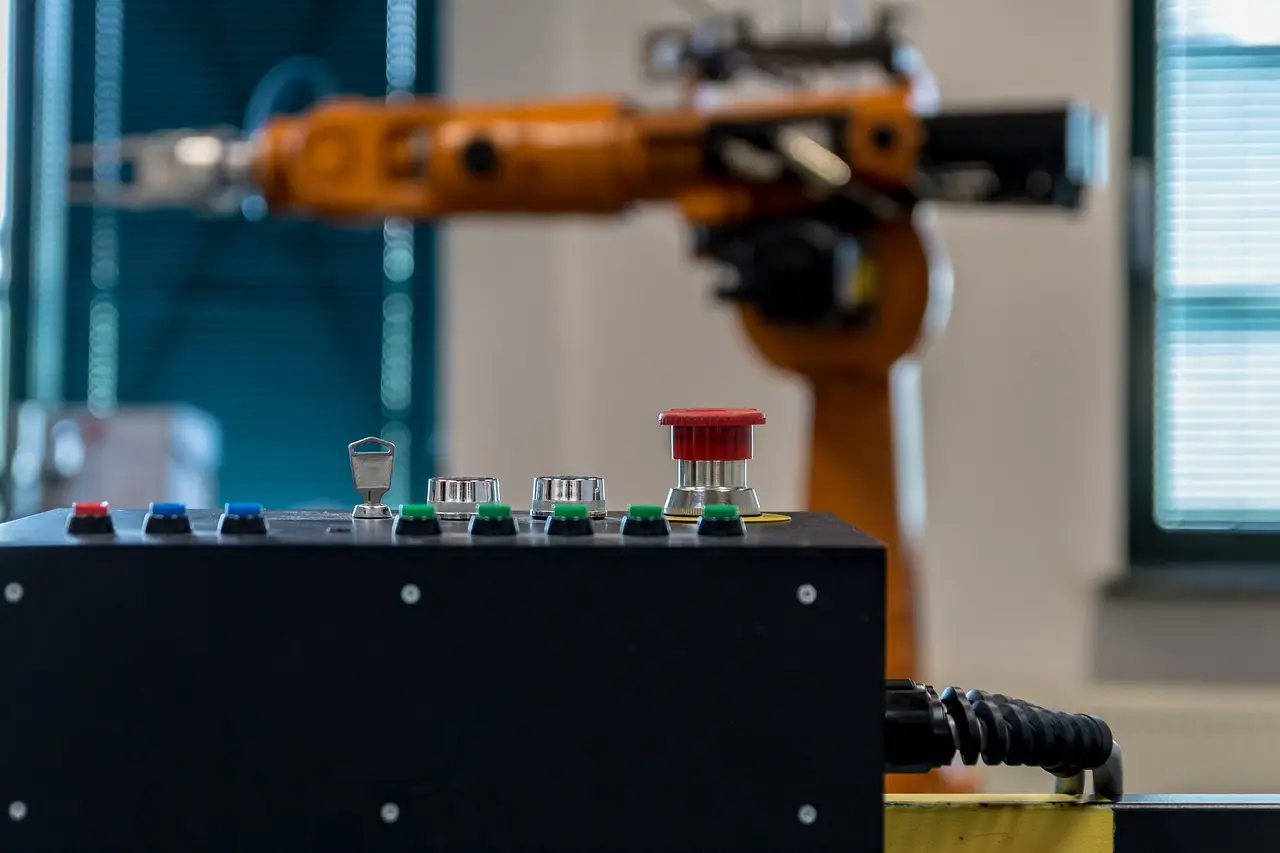
The industrial vision sector is expanding across automation, robotics, and AI-driven inspection, according to a MarketScale report on the trade press release. The headline marks a sector-level development claim rather than a single product launch, and it arrives as manufacturers continue to push sensing and measurement functions deeper into production lines.
No specific revenue figure, growth rate, unit volume, or accuracy specification appears in the report as circulated. What the report does establish is the direction of travel: the three named application domains — automation, robotics, and AI-driven inspection — now define the boundaries of the sector's expansion.
What does the expansion cover?
The report names three domains. Each carries distinct measurement requirements for test and instrumentation buyers.
- Automation: vision systems serve as inline gauges, verifying part presence, dimensions, and assembly state at line rate. Deployment decisions here hinge on frame rate, lighting stability, and integration with PLC timing.
- Robotics: cameras close the feedback loop for guidance and pick-and-place, where latency between image capture and motion command sets the achievable cycle time.
- AI-driven inspection: trained models classify defects that rule-based algorithms miss, shifting the metrology question from pixel resolution to training-data quality and model validation.
The convergence matters because one hardware platform increasingly must satisfy all three. A camera specified for robotic guidance may also feed an inspection model, and buyers now weigh sensor interfaces, edge compute capacity, and software ecosystems together rather than separately.
Why the AI qualifier changes the buying decision
The phrase "AI-driven inspection" is the load-bearing term in the report. Traditional machine vision detects what an engineer can describe geometrically: edge positions, gray-level thresholds, template matches. AI-driven inspection detects what an engineer can only show by example — surface texture anomalies, subtle assembly faults, variable lighting artifacts.
That shift moves the burden of proof from the camera datasheet to the validation dataset. A classification accuracy figure quoted by a vendor is meaningful only against the exact defect distribution used in testing, and factory floors rarely match laboratory image sets. Buyers evaluating these systems should request the confusion matrix, the false-accept and false-reject rates, and the conditions under which the vendor measured them. Where those test conditions are not disclosed, the accuracy claim remains a datasheet number rather than measured performance.
The physics has not changed. Lenses still resolve to diffraction limits, sensors still trade quantum efficiency against read noise, and illumination still dominates repeatability. What AI changes is the tolerance for imperfect images — and, in doing so, it changes the specification that matters most from raw sensor quality to end-to-end system validation.
How should instrument teams respond?
For test and measurement teams, sector expansion of this kind raises a procurement question before it raises a technical one. Vision platforms that serve automation, robotics, and AI inspection simultaneously promise lower integration cost, but they concentrate risk in a single supplier's software stack.
The report as circulated gives no vendor names, market-size figures, or timeframes. Readers needing those numbers for capital planning should treat the headline as directional and wait for the underlying data — market studies, shipment counts, or vendor test results — before committing to a platform strategy.
The open compliance question: as AI-driven inspection replaces deterministic gauging in regulated production, which body will define the validation standard for models whose behavior no engineer fully specifies?
via Google News: Machine vision inspection (Source)
Filed under
- machine-vision
- ai-inspection
- robotics
- automation
- defect-detection
More from Nathan Brooks
Show full bio
Staff writer covering people, launches and day-to-day practice in Instruments, test and measurement at Testbench Report.
66 articles
Application notes
- Industrial Machine Vision Cameras Headed for $5.61B by 2035
- IMTS 2026 reframes machine vision for manufacturing
- Machine Vision Moves From Defect Detection to Autonomous Control
- Visual Reasoning Moves Machine Vision Beyond Binary Pass/Fail
- Machine Vision Roundup: MES Integration, Optical Semiconductors, Structured Light