TB-6039 · REV E · Technical newsheet
Electronic TestDevice profile
Keysight's XR3 Puts 14-bit Scope Performance in a 1U Rack Unit
Keysight's XR3 fits a 14-bit, four-channel oscilloscope with 50 µVrms noise and 1.3 M wfms/s update into 1U, syncing over 100 channels via 10 MHz reference.
By Nathan Brooks3 min read596 words
Features
- XR3 is a 14-bit, four-channel mixed-signal oscilloscope in a 1U rack-mount form factor
- Noise floor of 50 µVrms and update rate of 1.3 million waveforms per second
- Selectable bandwidths span 200 MHz to 1 GHz with 100 Mpts memory per channel
- Autosensing 10 MHz reference enables over 100 time-correlated channels across multiple units
- Hardware auto-sync, auto-discovery and auto-deskew simplify multi-instrument setup
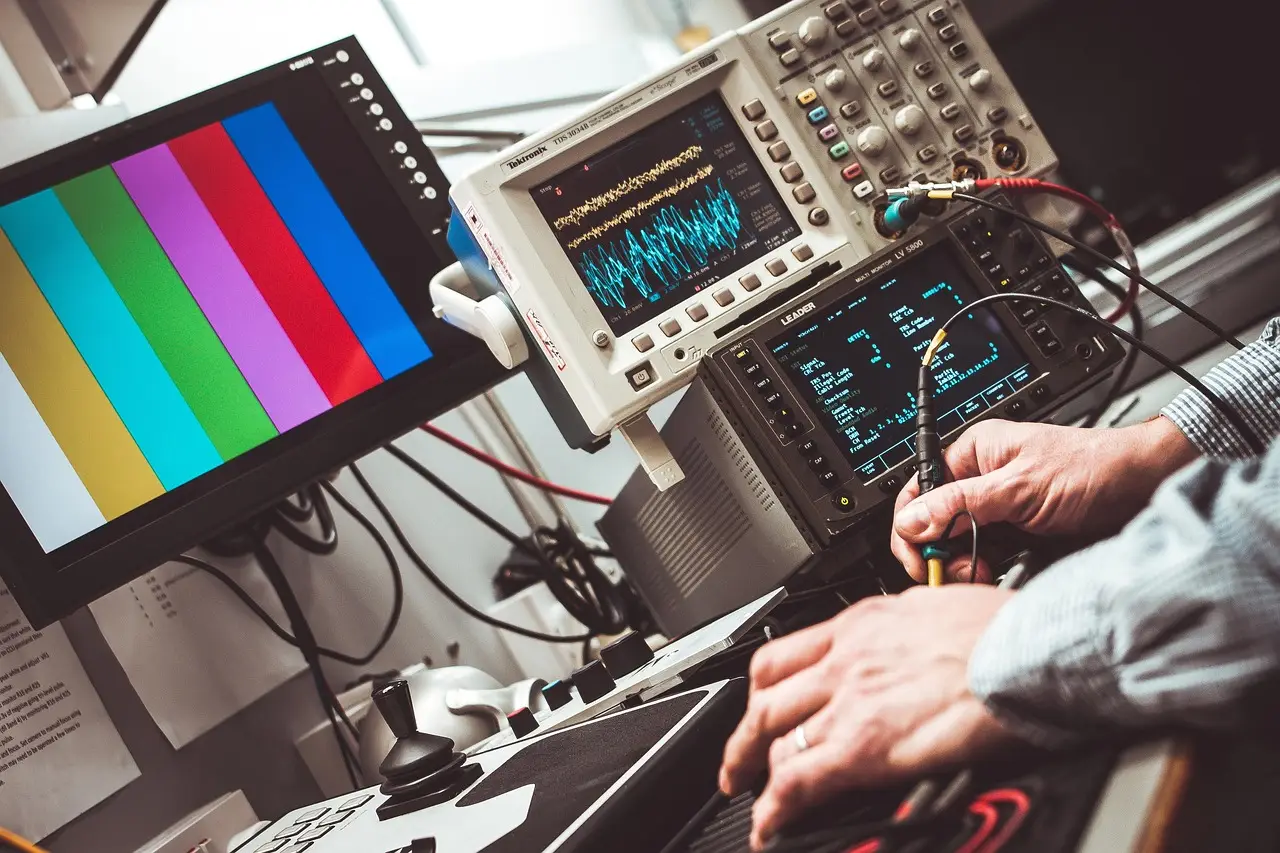
Keysight has packed a 14-bit oscilloscope with a 50 µVrms noise floor and a 1.3 million waveforms-per-second update rate into one rack unit. The XR3, announced by Keysight Technologies, is a low-profile, four-channel mixed-signal instrument intended to raise measurement capacity in rack-based automated test systems without the space, weight, and cabling of bench hardware.
What problem does the 1U form factor solve?
Automated test systems in aerospace and defense, manufacturing, and physics applications increasingly need several synchronized oscilloscopes where one bench instrument once sufficed. Each added unit consumes rack space, adds cabling complexity, and introduces signal skew. Until now, engineers building dense systems had to trade full-featured oscilloscope flexibility against the compact form factor scalable high-density racks demand. The XR3 collapses that trade, pairing Keysight's benchtop-class measurement performance with a compact, scalable architecture.
What are the measured specifications?
The instrument rests on two hardware pillars:
- Keysight's MegaZoom 5 custom ASIC paired with a 14-bit analog-to-digital converter
- 100 Mpts of memory per channel for capturing small signals and rare events
- A 50 µVrms noise floor
- An update rate of 1.3 million waveforms per second
- Selectable bandwidths from 200 MHz to 1 GHz, letting engineers scale performance to the application
Zoom, filters, zone triggering, and color grading all run in real time on hardware, and none of these functions reduces the 1.3 million waveforms-per-second rate. That figure is a vendor datasheet claim; Keysight did not publish the test conditions behind it.
How does multi-unit synchronization work?
An autosensing 10 MHz reference in/out synchronizes clocks and triggers across multiple units, supporting more than 100 time-correlated channels in a single multi-blade system. Hardware-based auto-sync, auto-discovery, and auto-deskew remove the manual steps that multi-instrument timing normally requires. The company positions this as a simplified setup path to accelerating debug and reducing time to market for customers whose channel counts keep climbing.
Jun Chie, Vice President, Keysight Product Management, said: "Engineers building dense test systems should not have to choose between measurement performance and rack space. The XR3 brings benchtop-class capabilities to a compact, scalable platform, helping customers add synchronized channels, simplify integration, and preserve measurement confidence as their systems grow."
What about software and system integration?
Native software on the XR3 covers protocol decodes, power supply test, and jitter analysis for routine debug work. Two integration paths extend its reach:
- Infiniium 2026 software, native to Keysight's XR8 oscilloscope, runs on an external controller as a unifying interface, visualizing and controlling multiple XR3 units from a single screen.
- The XR3 pairs directly with the next-generation XR8, adding low-noise, cost-effective high-impedance (Hi-Z) channels without converting to a high-speed channel through an adapter.
The 14-bit ADC matters for the target applications because it resolves small signals sitting on larger offsets that 8-bit converters would bury, and the low noise floor preserves that resolution in real measurements rather than only on paper.
Keysight frames the XR3 within its broader role as a design and test supplier across AI infrastructure, communications, industrial automation, aerospace and defense, automotive, semiconductor, and general electronics, connecting design, emulation, and test across the product life cycle.
The open question for test-system architects is how the XR3's synchronization claims hold up at the full 100-channel scale in production racks, and whether the auto-deskew hardware delivers timing alignment tight enough to displace the conventional bench instruments it aims to replace.
via Google News: Oscilloscopes and test equipment (Source)
Filed under
- oscilloscope
- keysight-xr3
- automated-test
- waveform-capture
- multi-unit-synchronization
More from Nathan Brooks
Show full bio
Staff writer covering people, launches and day-to-day practice in Instruments, test and measurement at Testbench Report.
83 articles
Application notes
- Keysight Announces Next-Generation XR8 Oscilloscope
- Keysight Launches Infiniium XR8 Oscilloscope Series for High-Speed Digital Compliance Work
- Tektronix Claims First 8-Channel 25 GHz Oscilloscope
- 8-Channel Oscilloscope Pairs 12-Core AMD EPYC, 96 GB RAM
- Keysight Signs Five-Year Managed Services Deal with Leonardo UK