TB-8880 · REV F · Technical newsheet
Metrology & CalibrationDevice profile
Liquid nitrogen anchors new cryogenic flowmeter calibration design
A ScienceDirect paper details a liquid-nitrogen-based calibration system for cryogenic flowmeters, addressing the 200 K gap left by warm-fluid calibration benches.
By Olivia Hart2 min read481 words
Features
- Paper presents a design for a cryogenic flowmeter calibration system using liquid nitrogen as the working fluid
- Liquid nitrogen boils at approximately 77 K (−196 °C), the regime the calibration rig must reproduce
- Published on ScienceDirect as a design study, not an accredited-facility uncertainty report
- Target applications include LNG, liquid hydrogen, and aerospace propellant flow metering
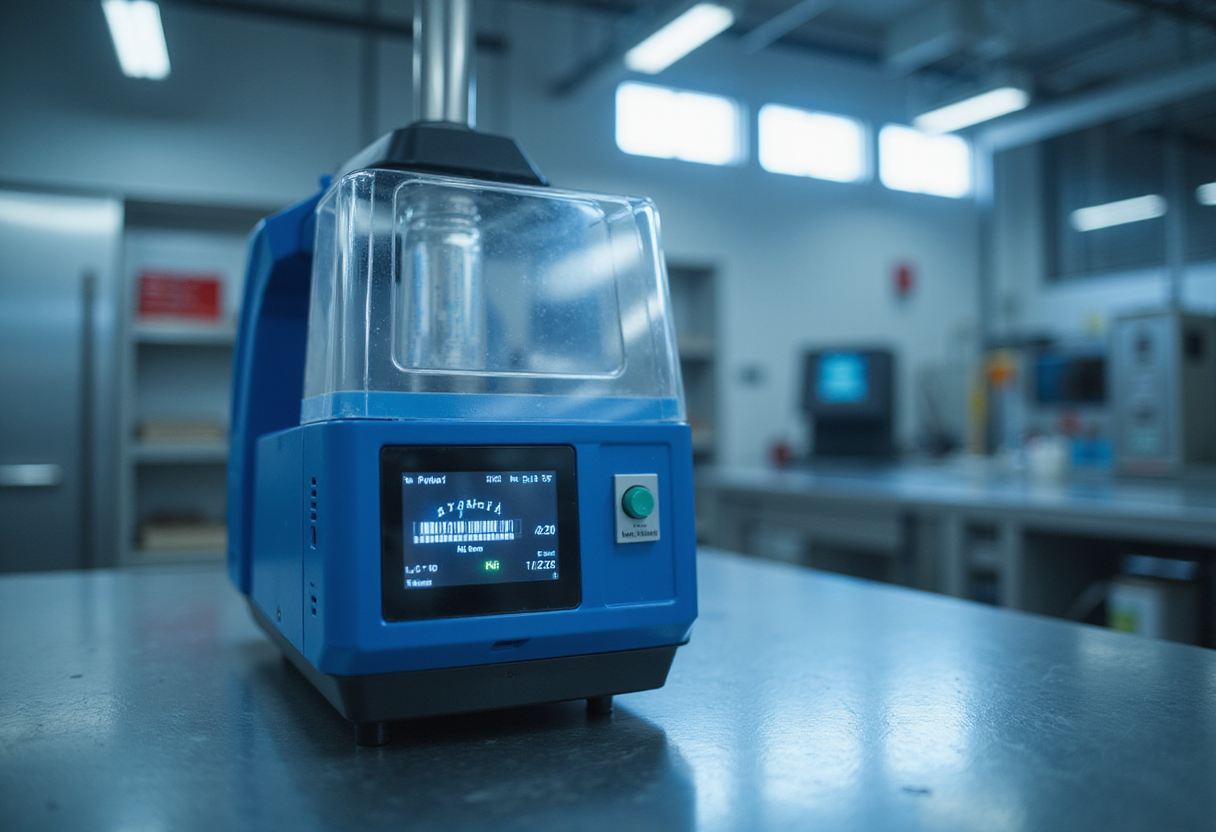
A new design for a cryogenic liquid flowmeter calibration system built around liquid nitrogen has appeared on ScienceDirect, targeting a measurement problem that grows harder as cryogenic fluids move from laboratory curiosities to industrial infrastructure. The paper's core proposition is straightforward: use liquid nitrogen (LN2, nitrogen in its liquid state below 77 K at atmospheric pressure) as the working fluid for calibring flowmeters that must operate reliably on cryogenic liquids.
The choice of fluid is not incidental. Flowmeters calibrated on water or ambient-temperature hydrocarbons do not necessarily hold their accuracy when the fluid temperature drops by roughly 200 K, because sensor geometry, fluid density, and viscosity all shift. A calibration system that runs the meter under test on an actual cryogenic liquid closes that gap between bench conditions and service conditions — the central rationale metrology labs apply whenever they argue for in-situ or like-condition calibration.
Why does fluid choice matter at cryogenic temperatures?
Liquid nitrogen sits near the bottom of the practical cryogen temperature scale, boiling at approximately 77 K (−196 °C). Its behavior as a calibration medium — density around 0.81 g/cm³ at its boiling point, low viscosity, and a strong tendency to flash if heat leaks into the loop — dictates much of the system architecture. Any gravimetric or volumetric reference method in such a rig must contend with boil-off, two-phase flow, and thermal contraction of piping, which is precisely why cryogenic calibration facilities remain scarce and why a documented design carries weight with readers specifying meters for LNG, liquid hydrogen, or aerospace propellant service.
The ScienceDirect listing identifies the work as a design study rather than a report of an accredited facility, so readers should treat performance figures, where the paper gives them, as design-stage values under stated test conditions rather than independently verified uncertainties. The distinction matters: a calibration system's own reference uncertainty sets the floor for every meter it calibrates, and cryogenic reference uncertainties are notoriously difficult to hold below the levels buyers of LNG custody-transfer metering expect.
Who needs this?
The application base is widening. Cryogenic flow measurement now underpins LNG custody transfer, liquid-hydrogen energy logistics, aerospace propellant loading, and superconducting-magnet cooling, each with its own accuracy demands and each poorly served by warm-fluid calibration. A published, reproducible LN2-based design gives calibration labs and national metrology institutes a concrete starting point rather than a bespoke one-off.
What the paper does not settle — and what adopters will ask first — is whether the system's reference measurement chain can be traced to national standards with an uncertainty budget tight enough for custody-transfer applications, where fiscal metering tolerances are measured in fractions of a percent. Until that traceability question is answered with published comparison data, designs like this one remain a credible engineering path rather than a finished metrological answer.
By Olivia Hart
via Google News: Metrology and calibration (Source)
Filed under
- cryogenic-flow-measurement
- flowmeter-calibration
- liquid-nitrogen
- cryogenic-metrology
- lng-custody-transfer
More from Olivia Hart
Show full bio
Market editor covering technology and product news in Instruments, test and measurement at Testbench Report.
68 articles
Application notes
- World Metrology Day Spotlights Calibration's Role in African Healthcare
- Gage Block Calibration: One Degree of Temperature Can Exceed the Entire Tolerance
- Miniature pressure sensors shift from industrial to OEM design-in
- CSIR-NPL Commissioning Two New Apex Calibration Facilities
- Honeywell Introduces Infrared Gas Sensor for Industrial Safety