TB-1782 · REV B · Technical newsheet
Machine Vision & InspectionDevice profile
Machine Vision Meets Food Tracking in Fight Against Cyclospora
Zebra's Robb Robles discusses with Photonics Spectra how machine vision inspection and lot-level food tracking converge to contain Cyclospora outbreaks in fresh produce.
By Nathan Brooks3 min read627 words
Features
- Robb Robles of Zebra Technologies discussed machine vision and food tracking for Cyclospora control with Photonics Spectra
- Cyclospora oocysts are microscopic and cannot be detected directly by line-speed camera inspection
- FSMA Rule 204 traceability requirements for high-risk foods take effect January 2026, driving lot-level data capture investment
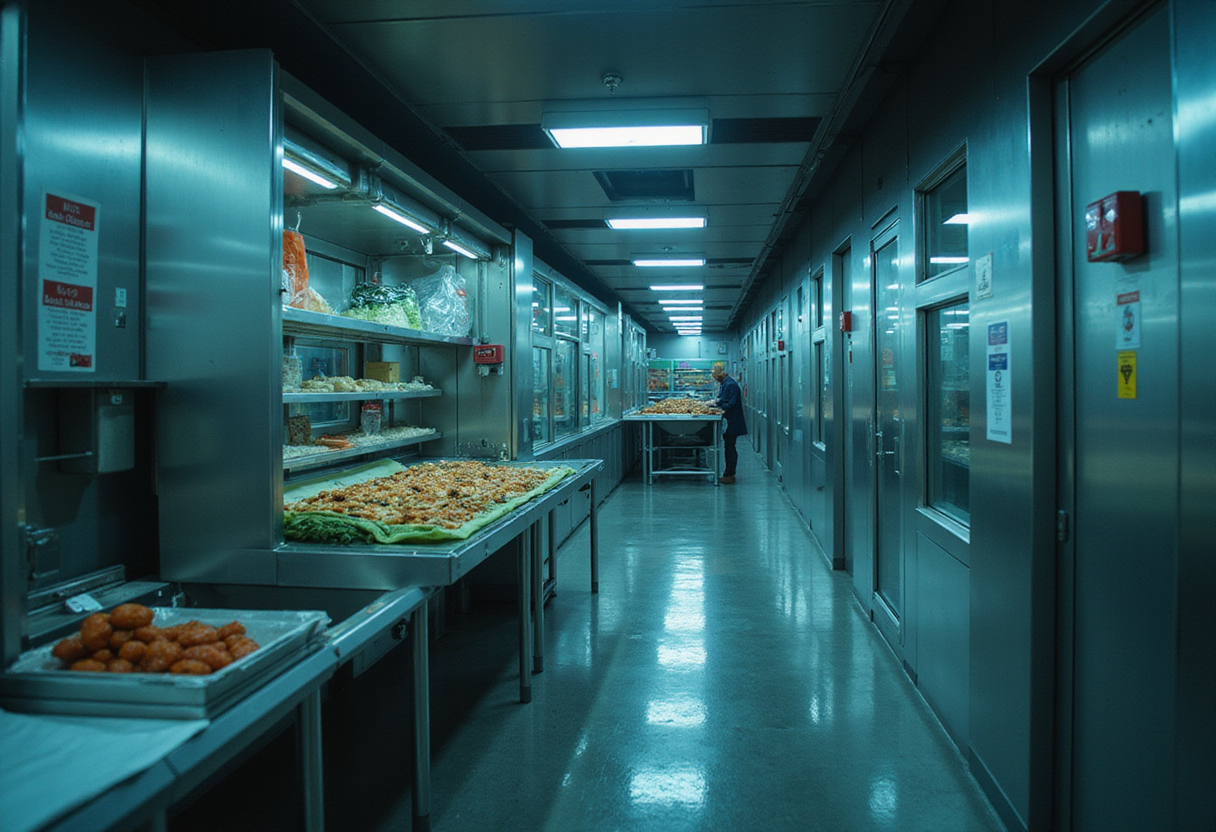
Cyclospora cayetanensis has become the parasitic contamination event that produce growers and distributors cannot ignore, and Photonics Spectra has published a discussion with Robb Robles of Zebra Technologies on how machine vision and food-tracking systems respond to it.
The conversation, carried by the photonics trade publication, centers on a practical question: can imaging and traceability infrastructure shorten the interval between a detected Cyclospora outbreak and the identification of the contaminated lot? The answer matters commercially. Outbreaks of cyclosporiasis linked to fresh produce have repeatedly forced broad recalls because investigators could not narrow the implicated product to a specific grower, packer, or shipment window. Every day that identification slips, recall scope widens and unsullied product gets destroyed alongside the contaminated lot.
Robles speaks from Zebra's position in the supply-chain segment. Zebra Technologies, headquartered in Lincolnshire, Illinois, builds the data-capture layer — fixed industrial scanners, mobile computers, RFID readers, and the barcode standards that tie a scanned item to its lot and origin record. In food distribution, that layer is what converts a physical case of produce into a queryable data object: when it was packed, where it was grown, which truck carried it, which distribution center broke it down.
Machine vision supplies the complementary function on the inspection side. Camera-based systems on packing lines examine produce surface characteristics at line speed, flagging defects, foreign material, and anomalies that correlate with contamination risk. The physics is straightforward: high-resolution sensors under controlled illumination capture reflectance and, in some configurations, multispectral signatures that separate suspect product from acceptable product. What changes the buying decision is not the sensor alone but the integration — pairing a rejected or flagged item with its tracking identity so the rejection propagates into the traceability record rather than dying on the line.
That integration is where the Cyclospora problem gets hard. Unlike metal shavings or glass fragments, Cyclospora oocysts are microscopic and cannot be seen by any conveyor-side camera at food-industry speeds. Vision systems do not detect the parasite directly. What they can do is enforce process discipline: verify that washing, inspection, and segregation steps actually occurred for each lot, and confirm that product from a suspect growing region is routed and recorded as intended. Traceability then does the epidemiological work, reconstructing the lot's path when a positive sample surfaces downstream in a laboratory test.
The regulatory backdrop sharpens the argument. The U.S. Food and Drug Administration's Food Safety Modernization Act rule 204 — the Food Traceability Final Rule — sets a January 2026 compliance date for high-risk foods on the Food Traceability List, and leafy greens and several fresh-produce categories implicated in past Cyclospora events appear on that list. The rule requires key data elements, including lot codes and transformation records, to be captured and shared along the supply chain within 24 hours of an FDA request. Barcode and RFID infrastructure of the kind Zebra supplies is the mechanical prerequisite for meeting that clock.
Robles's contribution to the Photonics Spectra discussion sits at this junction: the imaging hardware that inspects product and the tracking hardware that documents it are converging into a single data stream, and buyers who specify them separately risk a seam in the record exactly where an outbreak investigation needs continuity.
The piece raises the adoption question the industry now faces. Growers and packers serving U.S. retail channels must decide before the FSMA 204 deadline whether their existing capture infrastructure — scanners, label printers, vision stations — can carry the required data elements, or whether the standard forces a refresh. For Cyclospora specifically, the unresolved issue is whether process-level verification plus traceability can substitute for direct detection, or whether the parasite will remain a laboratory-only finding until sampling methods catch up.
via Google News: Machine vision inspection (Source)
Filed under
- machine-vision
- food-safety
- traceability
- cyclospora
- fsma-204
More from Nathan Brooks
Show full bio
Staff writer covering industry trends and analytics at Testbench Report.
19 articles
Application notes
- Sentinel and Zebra Technologies Link on Enhanced Machine Vision
- Smartphone-Based Visual Inspection: A Question for Quality Control
- Visual Reasoning Moves Machine Vision Beyond Binary Pass/Fail
- Kinshasa's Central Veterinary Laboratory Receives Equipment Delivery
- Machine Vision's Post-IMTS 2026 Question: System, Not Sensor