TB-1881 · REV E · Technical newsheet
Sensors & InstrumentationDevice profile
Nature paper applies reinforcement learning to IIoT streaming maintenance
A Nature study pairs deep reinforcement learning with ensemble models to predict equipment failures directly from continuous IIoT sensor streams, challenging batch-mode maintenance analytics.
By Olivia Hart3 min read576 words
Features
- Nature published a study on predictive maintenance for streaming data in industrial IoT networks
- The method combines deep reinforcement learning with ensemble machine-learning techniques
- Streaming IIoT data breaks batch-training assumptions through continuous ingestion, distribution drift, and closed-loop feedback from maintenance actions
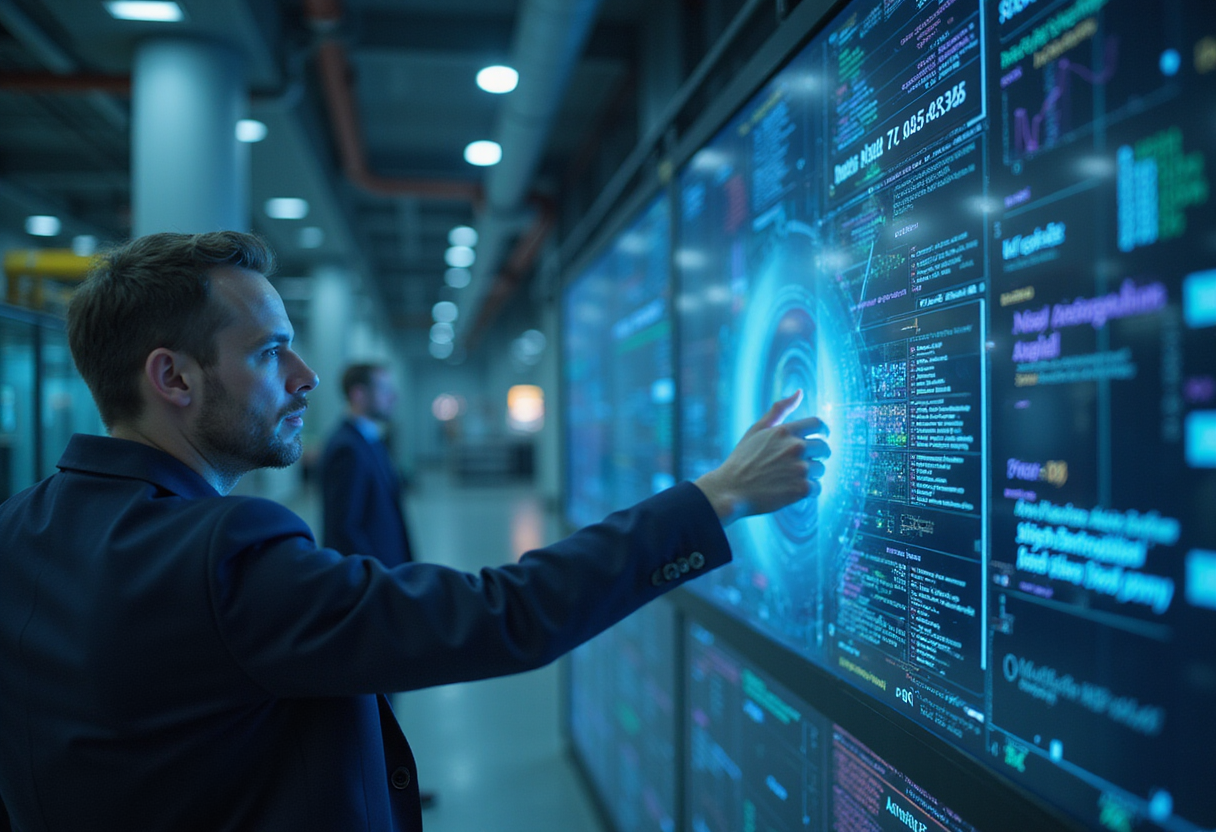
A study published in Nature, titled "Optimized predictive maintenance for streaming data in industrial IoT networks using deep reinforcement learning and ensemble techniques," addresses a problem that instrument engineers know from the plant floor: condition-monitoring data arrives as a continuous stream, yet most predictive-maintenance pipelines were designed for static, batch-processed datasets.
The paper's subject matter sits at the intersection of two disciplines that test and measurement teams increasingly touch. The first is instrumentation itself — the vibration, current, temperature, and acoustic sensors distributed across industrial IoT (IIoT) networks that generate the raw streaming data. The second is the analytics layer: how to convert those streams into maintenance decisions before equipment fails, without waiting for a scheduled batch analysis window.
The authors combine two families of machine-learning methods. Deep reinforcement learning (DRL) trains an agent to make sequential decisions — in this context, when to flag degradation, schedule intervention, or adjust monitoring parameters — by rewarding decisions that improve long-term outcomes rather than single-shot predictions. Ensemble techniques, the second family, aggregate multiple base models so that the individual weaknesses of any one model do not dominate the result. Ensembles have long been favored in prognostics work because failure signatures in rotating machinery and process equipment are often subtle, and no single classifier reliably captures them across operating regimes.
Why the streaming framing matters deserves one paragraph of explanation. Conventional predictive-maintenance models assume a fixed training set: collect data, train offline, deploy. Streaming data breaks that assumption in three ways. Sensors emit measurements continuously at sampling rates set by the monitoring hardware, so the dataset never closes. Operating conditions drift as loads, ambient temperatures, and wear states change, which shifts the statistical distribution of the incoming data — the classic covariate-shift problem. And maintenance actions themselves alter the equipment state, meaning the model's decisions feed back into the data it will see next. Reinforcement learning is one of the few frameworks that natively handles this closed-loop, sequential character, which is presumably why the authors chose it over purely supervised classifiers.
The IIoT context also imposes constraints that bench instruments do not. Edge nodes in industrial networks typically have limited compute and power budgets, network links can drop, and time-stamping across distributed sensors must stay coherent enough for the ensemble features to remain meaningful. A method optimized for streaming ingestion has to survive these conditions, not just laboratory-grade data paths.
For metrologists and calibration managers, the study raises a question that machine-learning papers in this field rarely answer directly: how does model-driven maintenance interact with the calibration intervals of the underlying sensors? A drift in a sensor's transfer characteristic is indistinguishable, from the analytics layer's point of view, from drift in the monitored asset. If reinforcement-learning agents begin tuning maintenance schedules on IIoT streams in production plants, the calibration status of each contributing sensor becomes part of the decision chain — and someone has to own that traceability.
The adoption question follows directly. Plants already run condition-monitoring programs on SCADA and vibration-analysis platforms; whether a DRL-plus-ensemble approach can be validated to the satisfaction of reliability engineers — against established benchmarks and with performance separated from training-set optimism — will determine if it moves beyond the literature. Until independent evaluations replicate the claimed performance under real plant data conditions, instrument teams should treat this as a methods advance worth tracking, not a procurement decision.
via Google News: Sensors and industrial IoT (Source)
Filed under
- predictive-maintenance
- industrial-iot
- reinforcement-learning
- machine-learning
- condition-monitoring
More from Olivia Hart
Show full bio
Market editor covering media and advertising at Testbench Report.
33 articles