TB-7812 · REV F · Technical newsheet
Metrology & CalibrationDevice profile
NIST Report Maps Strategy for Sustainable U.S. Metals Infrastructure
NIST's report from a July 2024 workshop targets missing recycled-content standards and critical-material supply risk across the U.S. metals processing chain.
By Olivia Hart3 min read605 words
Features
- NIST published 'Material Challenges in Developing a Sustainable Metal Processing Infrastructure' based on a July 2024 workshop.
- The report cites lack of robust standards for recycled content and critical-material supply vulnerabilities as key challenges.
- It highlights five strategies and calls for new certification programs to verify recycled-content product performance.
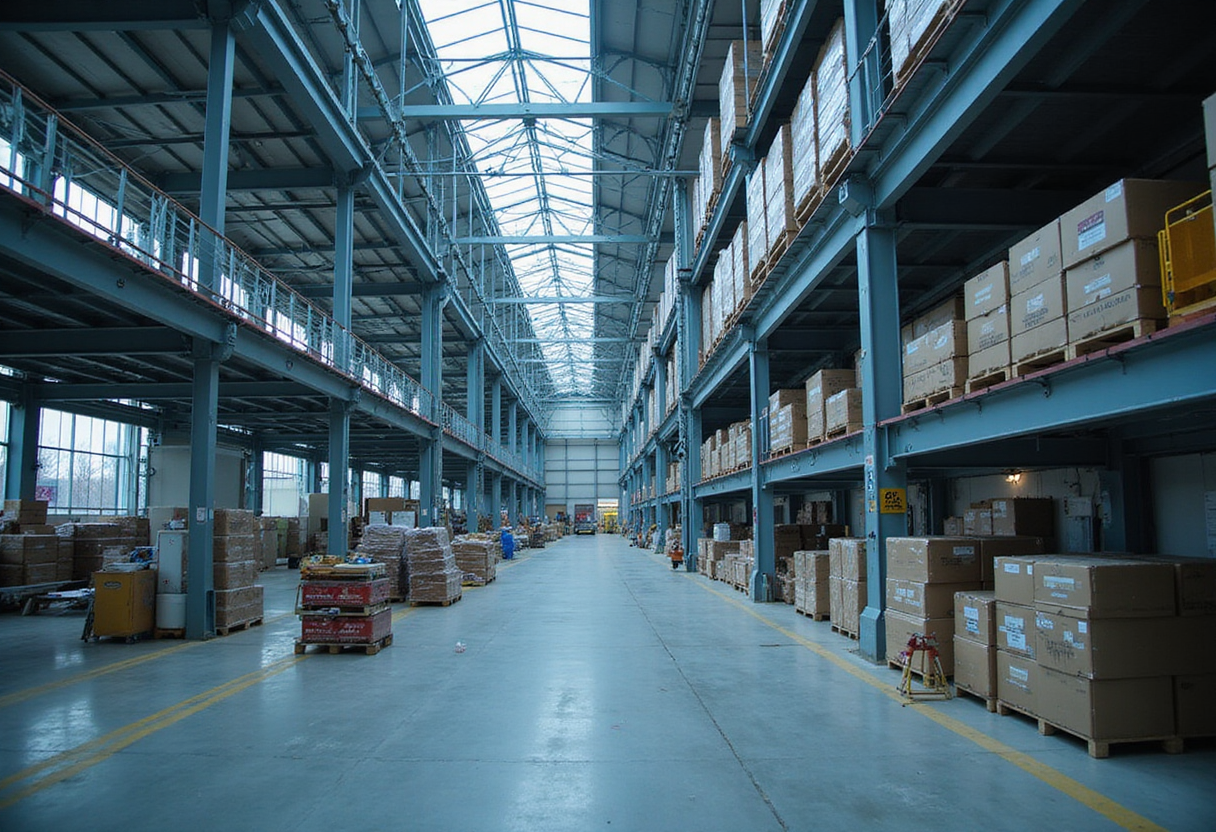
NIST has published a report, Material Challenges in Developing a Sustainable Metal Processing Infrastructure, that identifies the two obstacles it considers most consequential for U.S. metals circularity: the absence of robust standards for recycled content, and supply chain vulnerabilities surrounding critical materials such as lithium-bearing minerals, cobalt-bearing minerals, and superalloys. The document distills a workshop the institute convened in July 2024, drawing manufacturers, technology companies, researchers, and policy experts from every stage of the metals processing chain — mining, alloy design, manufacturing, reuse, and recycling.
The standards gap has direct metrological consequences. Separating metals for recycling remains inefficient, and that inefficiency shows up as cost. The report argues that better standards for metals reuse and recycling would make separation more efficient, and that new certification programs could verify that products made with recycled content meet performance requirements. Without such certification, buyers cannot distinguish a recycled-content alloy that matches virgin-material performance from one that does not — a measurement problem before it is a market problem. Solve the verification chain, NIST suggests, and the market for recycled materials expands.
The critical-materials discussion covers minerals containing lithium and cobalt, which serve as key manufacturing inputs for smartphones, batteries, semiconductors, and medical devices, along with the superalloys used in military hardware and jet engines. Availability is limited and disruption risk is real. The report frames three practical responses available to industry: diversify supply chains with new sources, identify substitute materials, and improve recycling methods so that existing material stock recirculates rather than exits the economy.
"The workshop brought together a diverse group of experts from industry, academia and the policy world to take on some of the biggest challenges in the metals processing space," said NIST materials research engineer Andrew Iams, a co-author on the report. "Meeting these challenges requires a new approach in how to source, process, use and recycle metals."
The report's technical scope spans both ends of the sophistication spectrum. On one end sit new technologies for extracting and processing bulk materials such as aluminum and steel — tonnage commodities where incremental efficiency gains compound across the economy. On the other end sit modeling and data tools for designing advanced alloys, where composition and process simulation can reduce the experimental iterations needed to qualify a new material.
NIST positions the work within its longstanding convening role: bringing stakeholders across industrial sectors together to solve shared problems through better technology and standards. "We are always seeking ways to help industrial partners solve tough engineering or scientific problems," Iams said. "Part of NIST's mission is to help keep U.S. industry competitive. We can do that by identifying promising technologies and helping to move them out of the lab so they can be implemented on an industrial scale."
The report identifies five strategies it says would help the industry tackle these and other challenges.
The stakes extend beyond sustainability accounting. Metals processing resilience against supply chain disruption and resource scarcity, the report notes, ties directly to U.S. innovation capacity, industrial competitiveness, and economic and national security — a framing that places scrap-stream characterization and recycled-content certification in the same policy conversation as defense-critical superalloy supply.
For test and measurement practitioners, the report raises a concrete question: who will build the reference methods, traceability chains, and certification infrastructure that make recycled-content claims measurable and enforceable? Until a recycled alloy can carry a certification a procurement officer trusts — backed by standardized characterization rather than vendor assertion — the circular metals economy will run on incomplete data. That is the adoption gap the NIST workshop participants have now put on record.
via energy.gov (Original)
Filed under
- nist
- metals-recycling
- materials-characterization
- supply-chain
- standards
More from Olivia Hart
Show full bio
Market editor covering media and advertising at Testbench Report.
33 articles
Application notes
- NIST Releases Five-Swatch Textile Standard for NIR Fiber ID
- UNDP and Sri Lanka's Environment Ministry Deliver Lab Equipment for Chemicals Management
- Zambia Expands ZABS Laboratory Testing Capacity with New Equipment
- NIST RM 8043 Brings Degraded DNA and Mixtures to Forensic Labs
- NIST Commits $20 Million to Two AI Centers with MITRE