TB-8998 · REV F · Technical newsheet
Industrial IoT & MonitoringDevice profile
One Year of Centrifuge Vibration Data Goes Public
Nature publishes a 12-month multisensor dataset from a Sulzer centrifuge at Arab Potash, giving predictive-maintenance researchers rare industrial ground truth.
By Amara Osei3 min read638 words
Features
- A one-year multisensor time-series dataset from a Sulzer industrial centrifuge is now publicly available.
- The data comes from production equipment at Arab Potash Company, not a laboratory rig.
- The dataset was released through Nature's scientific data channels.
- It is intended for predictive-maintenance and condition-monitoring research, covering a full year of operation.
- The centrifuge operates in an industrial potash processing environment.
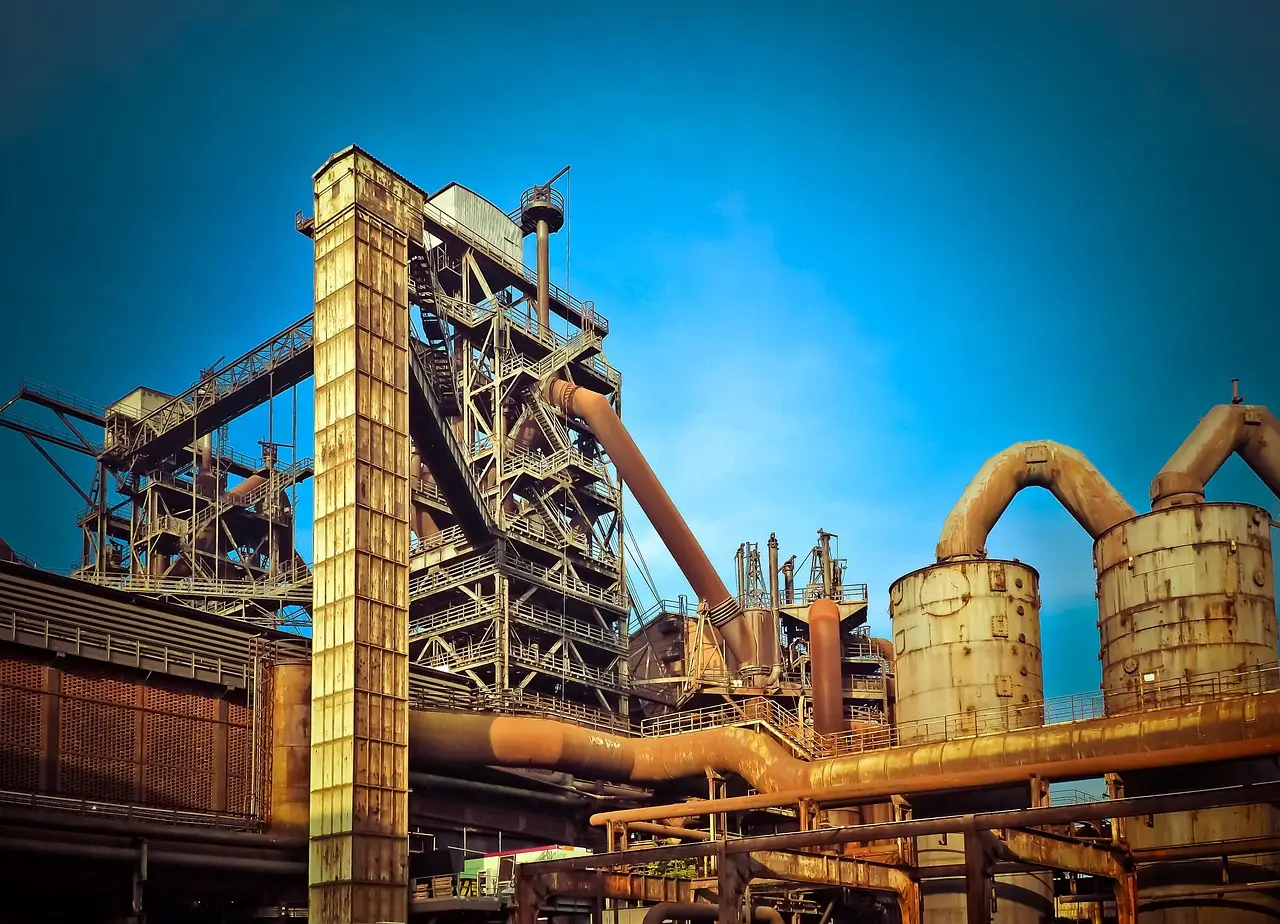
A full year of multisensor condition-monitoring data from a Sulzer industrial centrifuge at Arab Potash Company is now published in Nature's scientific data channels, giving predictive-maintenance researchers something they rarely get: a real machine, a real plant, and a real calendar.
That's the whole story, and it's a significant one. Most vibration datasets in this field come from laboratory rigs, toy bearings, and staged faults. This one ran for twelve months on production equipment at a potash plant. If you train an anomaly-detection model, the difference matters.
Why does a dataset count as news?
Because data is the bottleneck, not algorithms. Condition monitoring (continuous measurement of machine health indicators such as vibration, temperature, and rotational speed) has no shortage of machine-learning papers. What it lacks is industrial ground truth, recorded over long durations, on equipment that operators actually depend on.
This dataset fills that gap for one machine class: the centrifuge. It captures a Sulzer unit operating within Arab Potash Company's production environment, in the conditions a field instrument sees daily — load swings, ambient variation, maintenance interventions, and long stretches of unremarkable steady-state operation. That last part is the prize. Steady-state data is what lets you characterize normal before you try to detect abnormal.
The upshot: for the first time in this segment, researchers can benchmark predictive-maintenance methods against a year of genuine plant behavior.
What's in the record?
The publication documents a time-series archive built from multiple sensors installed on the centrifuge, recorded continuously across a one-year window. The monitoring covers the quantities you'd expect from a serious condition-monitoring program on rotating equipment: vibration and related process variables, sampled across the machine's operating envelope.
Because the source announcement is itself brief, instrument-level specifics — sensor types, exact sampling rates, channel counts — live in the dataset documentation rather than the headline. Researchers evaluating it should read the data descriptor for those details before committing compute. That's standard practice for scientific data releases, and the right instinct here too.
A takeaway: the value lies in duration and provenance, not in exotic sensor specs.
Who benefits, and how?
Predictive-maintenance research lives or dies by validation. A model that flags bearing wear on a lab rig may collapse when it meets a production centrifuge whose spectra are contaminated by neighboring equipment, process noise, and duty cycles no textbook describes. A year-long industrial record lets developers:
- test anomaly-detection algorithms against realistic seasonal and load variation;
- study slow-developing faults over months rather than hours;
- compare competing methods on identical, publicly available data — something this field has struggled to do;
- train students and engineers on plant-grade signals without plant access.
The centrifuge itself deserves a word. In potash processing, centrifuges dewater and separate product; an unplanned stop costs real money and, occasionally, real mess. Arab Potash Company operates at industrial scale on the Dead Sea, which makes its equipment a legitimately harsh test environment — the kind of setting where condition monitoring earns its keep or doesn't.
The reproducibility angle
Publishing in a Nature-family data journal signals curation. Scientific data descriptors require methodology, structure, and access details sufficient for independent reuse, which is precisely what benchmark datasets need. The move also nudges industrial operators: plant data can be shared responsibly, and the result is better science for everyone.
It won't settle every argument. One machine is one machine. But one machine for one year, openly published, beats a hundred lab rigs behind paywalls.
The question the release raises for instrument vendors and plant engineers alike: if a potash producer will publish a year of centrifuge telemetry, what's stopping the rest of industry from feeding the same research pipeline — and who will build the monitoring tools that deserve it?
via Google News: Condition monitoring (Source)
Filed under
- predictive-maintenance
- condition-monitoring
- vibration-analysis
- industrial-monitoring
- rotating-equipment
More from Amara Osei
Show full bio
Senior reporter covering people, launches and day-to-day practice in Instruments, test and measurement at Testbench Report.
84 articles
Application notes
- ST Sensor Moves AI Into Industrial Vibration Monitoring
- Pumps & Systems Examines Artificial Intelligence in Condition Monitoring
- Nature publishes convolutional autoencoder approach to condition monitoring
- Edge AI Moves Motor Predictive Maintenance Onto the Control MCU
- Wireless Vibration Sensors and Machine Learning Reshape Pump Health Monitoring