TB-9669 · REV A · Technical newsheet
Test & MeasurementDevice profile
Oscilloscope Probe Market Forecast to Hit $2.39 Billion by 2034
The oscilloscope probe market will reach USD 2.39 billion by 2034, per a TimesTech forecast — a figure that signals where signal-integrity budgets are heading.
By Olivia Hart3 min read667 words
Features
- Oscilloscope probe market forecast to reach USD 2.39 billion by 2034
- Forecast attributed to TimesTech; no baseline value, CAGR, or methodology published
- Probe, not the scope, defines loaded channel bandwidth — probe capacitance and lead inductance govern measurable rise time
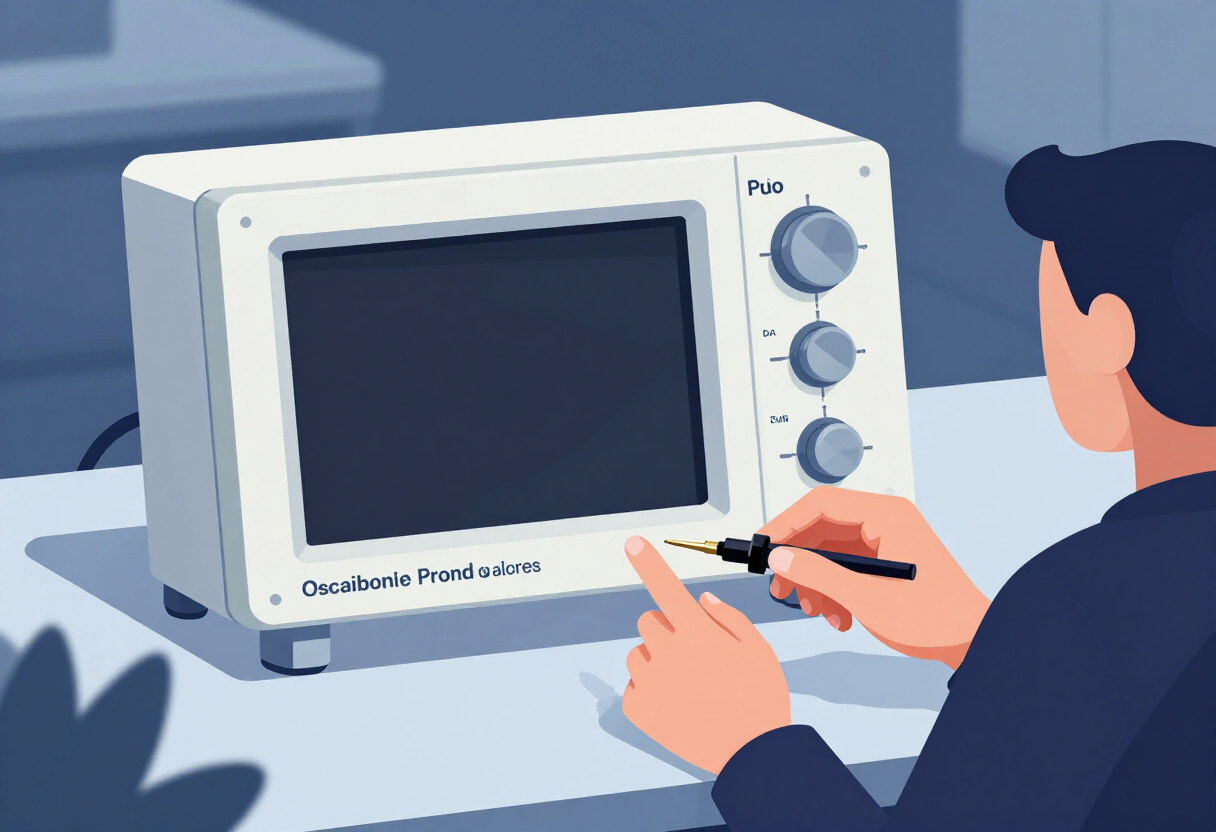
The oscilloscope probe market will reach USD 2.39 billion by 2034, according to a forecast attributed to TimesTech. For test and measurement buyers, that single figure deserves a closer read than the headline suggests, because probe spending tracks something very specific: the point where an instrument touches the circuit under test.
Every oscilloscope measurement begins and ends at the probe tip. The probe, not the scope, defines the loaded bandwidth of the channel. A 2 GHz instrument fitted with a probe rated for 500 MHz delivers a 500 MHz measurement. Probe capacitance, tip resistance, and ground-lead inductance set the rise time an engineer actually sees on screen. When the market for these accessories grows to USD 2.39 billion over the coming decade, the growth tells us where signal-integrity work is heading — and where bench budgets will tighten or stretch.
The forecast figure anchors a market trajectory, though the source item does not publish the baseline valuation, the compound annual growth rate, or the methodological basis for the projection. That absence matters. Market forecasts in test and measurement vary widely depending on whether they count active differential probes, passive high-impedance probes, current probes, optical probes, and probing accessories individually or as bundled shipments with instruments. A probe that ships in the carton with every entry-level oscilloscope carries a very different revenue profile than a standalone differential probe sold at several times the host instrument's entry price. Readers comparing this USD 2.39 billion figure against other published estimates should check which product classes each analyst includes before drawing conclusions.
What the number does establish is scale. USD 2.39 billion in annual probe revenue by 2034 represents a substantial accessories economy running in parallel with the oscilloscope market itself. Engineers who specify test equipment already know the arithmetic: a probing setup for power-electronics characterization, high-speed serial debug, or wideband RF work routinely costs a meaningful fraction of the oscilloscope. A single high-bandwidth differential probe can list at prices that would have bought a complete mid-range instrument a generation ago. As protocol speeds climb and edge rates shrink, the probe budget stops being an afterthought and becomes part of the capital plan.
The physics behind that budget shift is straightforward. As signal edge rates fall below a nanosecond, the probe's input capacitance — typically a few picofarads for passive probes, under a picofarad for active designs — loads the node, rounding edges and shifting timing. Ground-lead inductance of even a few nanohenries turns the return path into a resonant loop that rings on fast transitions. Higher bandwidth demands lower loading, lower loading demands active front ends and exotic tip geometries, and active front ends cost more to build and calibrate. Faster signals therefore drive probe spending disproportionately, which is exactly the pattern a growing market figure captures.
For procurement teams, a market forecast of this size raises practical questions. First, budget allocation: if probe spending at this scale continues to grow, labs should plan accessory line items separately from instrument purchases rather than treating probes as consumables absorbed into general bench costs. Second, lifecycle planning: probe calibration intervals and tip wear are recurring costs that the purchase price does not capture, and a larger market signals a larger recalibration and replacement economy running alongside it. Third, standardization: consolidating probe families across multiple instrument vendors reduces training overhead and spare-tip inventory, a consideration that grows in weight as per-probe cost rises.
The source item provides the destination figure but not the route — no regional breakdown, no segment split by probe type, no named incumbent vendors with market-share claims. What it leaves the engineering reader with is a benchmark: USD 2.39 billion by 2034. The question the forecast raises for anyone specifying test gear over the next decade is not whether the market will grow, but whether their own bench budgets and calibration schedules are structured to absorb the probing costs that faster silicon will demand.
via Google News: Oscilloscopes and test equipment (Source)
Filed under
- oscilloscope-probes
- signal-integrity
- market-forecast
- probe-calibration
- test-equipment-budgeting
More from Olivia Hart
Show full bio
Market editor covering media and advertising at Testbench Report.
33 articles