TB-8799 · REV A · Technical newsheet
Machine Vision & InspectionDevice profile
Single-Photon Sensors Take On CMOS in Machine Vision
Canon's 1 MPixel SPAD camera signals commercial arrival for photon-counting sensors. Ubicept's Sebastian Bauer expects price parity with CMOS in 1 to 3 years for machine vision.
By Grace Kim3 min read691 words
Features
- Canon has released a 1 MPixel single-photon (SPAD) camera
- Bauer predicts SPAD sensors will near CMOS price points within 1 to 3 years
- SPAD dates to the 1960s; commercial viability arrived in the last 15 to 20 years
- SPAD targets moving platforms, low light, bright light and shiny-part inspection
- iPads already use SPAD sensors for medical imaging and fluorescence microscopy
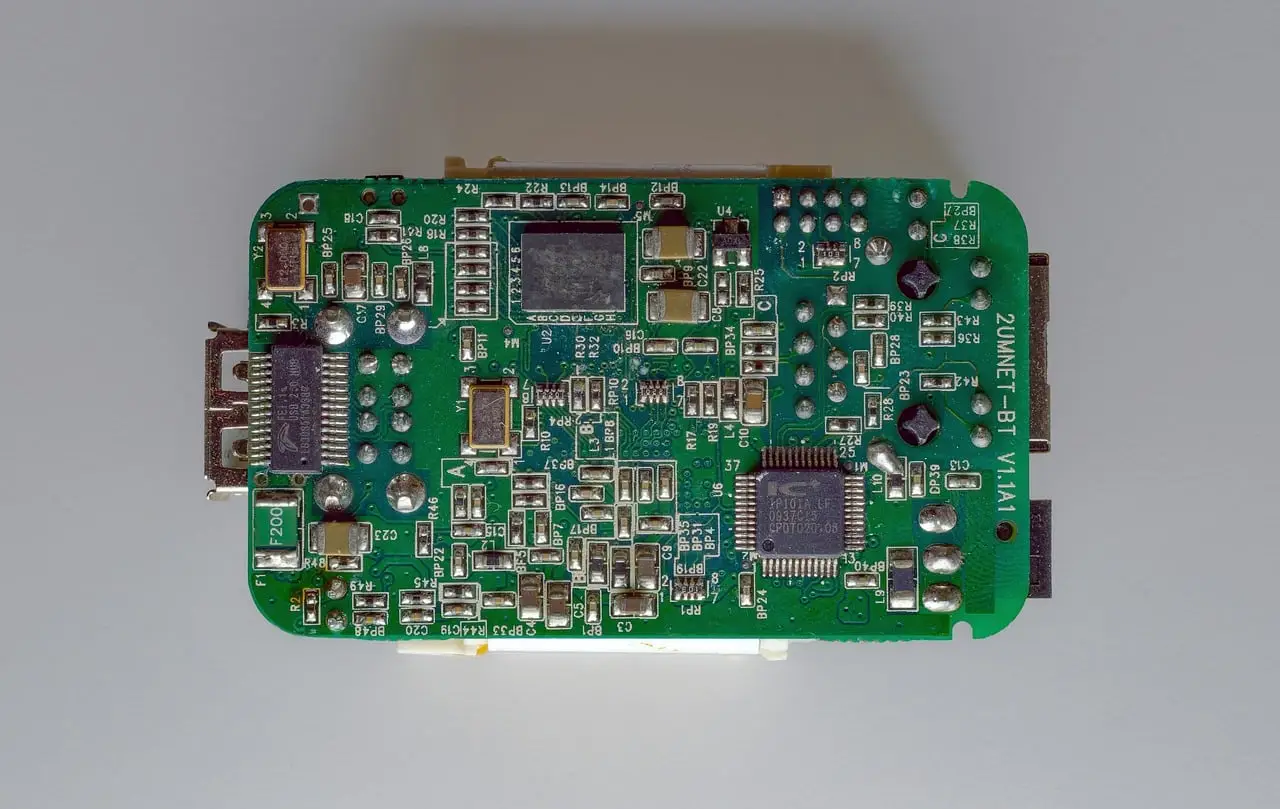
Canon has shipped a 1 MPixel single-photon avalanche diode (SPAD) camera, and Ubicept CEO Sebastian Bauer expects the technology to reach price parity with conventional CMOS image sensors within one to three years. SPAD pixels detect individual photons and timestamp their arrival, a measurement approach that CMOS sensors cannot replicate. The physics matters for buyers: where a CMOS pixel integrates incoming light into an analog electrical signal, a SPAD pixel runs in Geiger mode and fires a discrete electrical pulse for each photon event, enabling direct photon counting and time-of-flight measurement.
What does SPAD measure that CMOS cannot?
SPAD technology dates to the 1960s, but only the last 15 to 20 years brought commercial viability. The turning point came as LiDAR, 3D imaging and time-of-flight applications spread, making CMOS-integrated SPAD sensors economically viable to fabricate.
Bauer founded Ubicept with several MIT and University of Wisconsin scientists specifically to commercialize the approach. "We kind of saw the writing on the wall that single photon sensors, at least when you do the processing the best way possible, could replace conventional image sensors," Bauer said.
The detection method suits LiDAR, depth sensing, 3D imaging and low-light imaging. It also works in bright light, provided the image processing handles the photon stream correctly, according to Bauer.
Where does the single sensor replace two or three?
Bauer draws the performance boundary clearly: SPAD excels on a moving platform in extremely low light or extremely bright light. Conventional CMOS sensors struggle with motion blur, low-light conditions and rapidly changing lighting, which often forces manufacturers to add LiDAR or thermal imaging alongside a camera.
"I think SPAD sensors really shine in use cases where you have anything that moves and has a camera on it," Bauer said. "So I'm talking about a camera for driver assistance systems, backup cameras for cars... I'm talking about robots. I'm talking about drones, helicopters, planes."
A single SPAD sensor can deliver the perception quality that currently requires multiple devices. "If you had the highest camera perception level possible, you could probably start getting rid of these devices," Bauer said.
Shiny-part inspection shows the dynamic-range advantage. A reflective component can bounce illumination straight into the camera one moment and present a dimly lit scene the next as it rotates.
"When you're talking about shiny parts inspection, where sometimes the part reflects the light into the camera, it's very bright and then it turns slightly and the light is reflected in a different direction, you have a dim lighting problem, a dimly lit scene," Bauer said. "But SPADs don't really struggle with that."
SPAD sensors also minimize motion blur and resist physical vibration. That reduces the workload on downstream image processing and perception software, cutting system cost.
What still blocks adoption?
Price and processing remain the obstacles. SPAD systems currently cost more than CMOS systems because they need larger, more sophisticated data processing hardware to convert photon events into usable images.
Bauer frames the market position honestly: SPAD is a relatively new technology compared with CMOS imaging. "I think it's important to get it out in front of customers, let them see how it works, experience the quality," he said.
Deployment is already underway beyond Canon's 1 MPixel camera. iPads now carry SPAD-based sensors serving medical imaging, fluorescence and lifetime imaging microscopy — applications unavailable a few years ago.
"It's a little undefined yet where exactly these sensors will be used and at what scale," Bauer said. "But I think we will see much more coming in the next 1 to 3 years. What many people haven't understood yet is that as these sensors become available, they can be manufactured almost at the same price point of conventional image sensors."
He added that AI advancements make applications easier to scale, accelerating the product pipeline.
The open question for vision-system buyers: when SPAD reaches CMOS pricing, does the extra photon-timing data justify replacing proven CMOS camera chains — or will the processing overhead keep total system cost above a conventional sensor plus LiDAR combination?
via Vision Systems Design (Source)
Filed under
- single-photon-avalanche-diodes
- cmos-image-sensors
- photon-counting
- lidar
- time-of-flight-imaging
More from Grace Kim
Show full bio
Correspondent covering companies, deals and strategy in Instruments, test and measurement at Testbench Report.
116 articles
Application notes
- SPAD arrays push imaging bandwidth from 100 Gbps toward 1 Tbps
- Exosens to showcase image sensor lineup at SEMICON West 2026
- Photonics Spectra Spring 2026 Highlights Cooling for Machine Vision Cameras
- Picometer Encoders and Embedded Drives Reshape Fab Motion Control
- Teledyne DALSA adds 32K Linea ML camera at 150 kHz line rate