TB-7822 · REV F · Technical newsheet
Lab InstrumentationDevice profile
ZEISS Ventures Backs Cambridge Spin-Out Illumion with £1.7M Round
ZEISS Ventures has joined a £1.7 million round for Illumion, whose charge photometry images individual battery particles charging and discharging in real time inside working cells.
By Olivia Hart3 min read689 words
Features
- ZEISS Ventures participated in a £1.7 million funding round for Illumion, a University of Cambridge battery-imaging spin-out.
- Illumion's charge photometry uses optical interference reflection imaging to reveal the local state-of-charge of individual electrode particles in real time.
- The round included Foresight Group, Cambridge Enterprise Ventures, Parkwalk, Cambridge Angels and YourVC.
- Funding will advance illumionONE, a real-time particle-level analysis instrument, and the next-generation illumionX platform for selected industrial use cases.
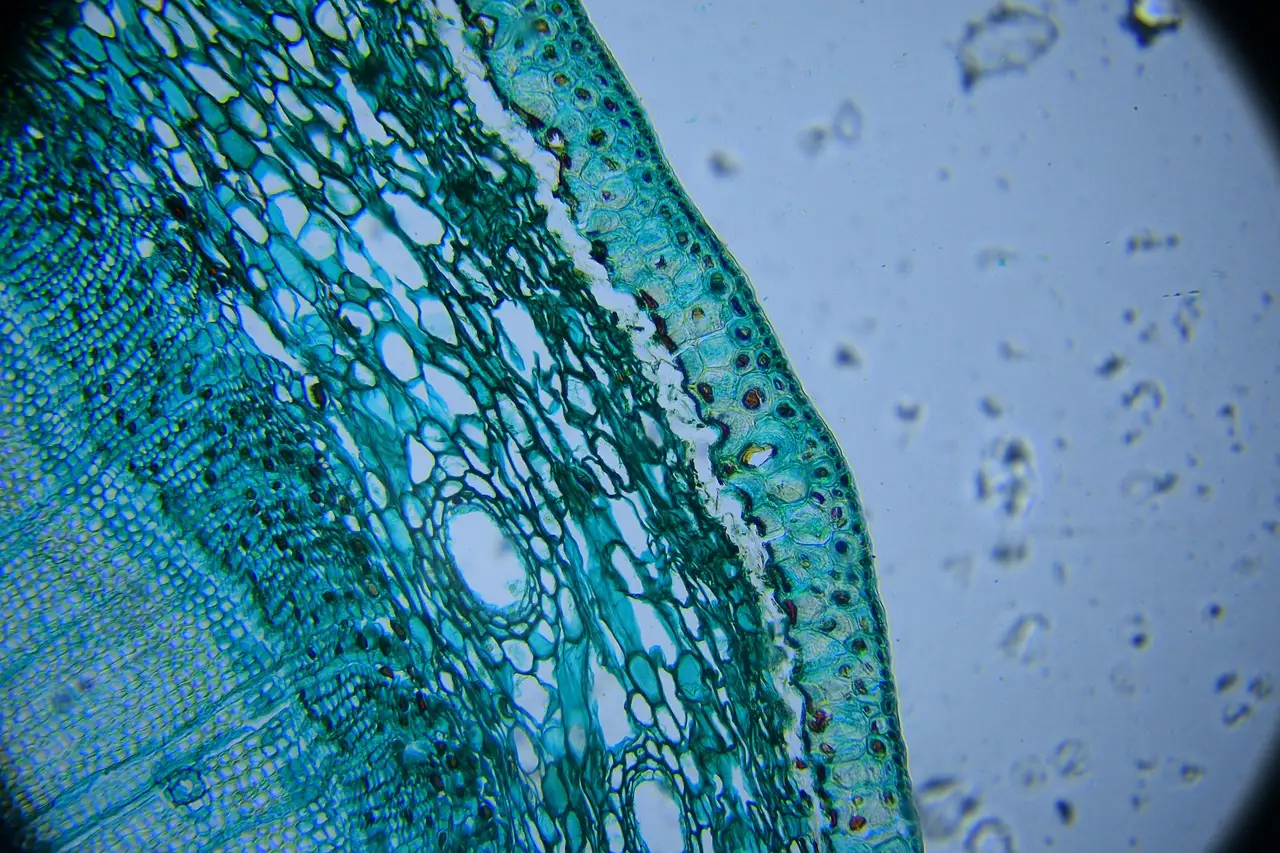
ZEISS Ventures has joined a £1.7 million funding round for Illumion, a University of Cambridge spin-out that images what happens inside working batteries at the level of individual particles. Foresight Group, Cambridge Enterprise Ventures, Parkwalk, Cambridge Angels and YourVC also participated in the round, the companies announced.
The investment targets a measurement gap that has persisted for decades in battery development: most analytical methods cannot observe electrochemical processes in an operating cell without destroying or disassembling it. Illumion's proprietary charge photometry claims to close that gap optically.
How does charge photometry work?
The technique rests on optical interference reflection imaging, a method that detects the light scattered by individual particles distributed across an electrode. As ions move in and out of the electrode material during charging and discharging, the particles' light-scattering behaviour changes in a measurable way. Those changes reveal the local state-of-charge of each particle — the fraction of its storage capacity actually filled at a given moment.
The result, according to the company, is a real-time view: researchers can watch each particle charge and discharge while simultaneously tracking changes in particle morphology (the particle's shape and structure) that affect battery performance and degradation. No teardown, no post-mortem analysis.
As with any young spin-out, the measured performance envelope of the technology remains defined by the vendor's own descriptions rather than independent third-party validation. The funding round itself, however, is verifiable: £1.7 million, closed with ZEISS Ventures among the participants.
What will the money build?
Illumion will direct the funding toward commercialization, execution of its product roadmap, and deeper collaboration with researchers, battery developers and industrial partners. Two platforms anchor that roadmap:
- illumionONE — the existing instrument line for real-time particle-level battery analysis, aimed primarily at research laboratories.
- illumionX — a next-generation platform intended to address selected industrial use cases, extending the technique from the lab toward manufacturing and quality environments.
The company has not yet published specifications, pricing or delivery dates for illumionX.
Why is ZEISS in the deal?
For ZEISS, the strategic logic is straightforward. The optics giant already sells microscopy and metrology systems across scientific and industrial markets, and battery development has become one of the fastest-growing drivers of demand for materials characterization. A stake in Illumion gives ZEISS Ventures early access to an optical analytics platform positioned at that intersection.
"Illumion combines scientific excellence with innovative imaging technology for battery research," said Dr. Boris Hofmann, Head of ZEISS Ventures. "By helping to visualize dynamic processes within batteries at the particle level, the company aims to deepen researchers' understanding of battery materials and their behavior. We are pleased to support the team as it further develops its optical analytics platform."
The phrasing is careful. Hofmann describes what the company "aims to" do — a forward-looking statement rather than a claim of established performance.
Illumion's own leadership framed the round as a bridge from academic research to deployed instrumentation. "This funding marks an important next step for Illumion as we translate world-class research into practical tools for battery development," said Christoph Schnedermann, Co-founder and CEO of Illumion. "We are excited to continue advancing our technology with the support of ZEISS Ventures, Foresight, and our existing investors."
What question does this raise for test labs?
The development points at a broader shift in battery characterization: the move from averaged, cell-level metrics toward spatially resolved, particle-level measurement. If charge photometry can deliver on its promise under industrial conditions, battery developers gain a way to correlate local state-of-charge heterogeneity with capacity fade — a correlation that currently requires destructive cross-sectioning and electron microscopy to establish.
The open question is adoption at scale. Research groups at Cambridge and peer institutions have driven the underlying science; whether illumionX can survive the vibration, throughput and automation demands of a production environment, and whether its readouts can anchor qualification decisions alongside established electrochemical impedance and coulombic-efficiency methods, will determine whether this £1.7 million round marks a niche instrument's refinement or the start of a new standard tool in battery metrology.
via illumion.io (Original)
Filed under
- illumion
- zeiss-ventures
- charge-photometry
- battery-characterization
- battery-metrology
More from Olivia Hart
Show full bio
Market editor covering technology and product news in Instruments, test and measurement at Testbench Report.
80 articles