TB-6906 · REV F · Technical newsheet
Sensors & InstrumentationDevice profile
€3.9M EU Project Puts Printed Sensors on Biodegradable Mulch Film
Nine EU partners will spend €3.9M over four years building mulch film that carries printed copper-ink soil sensors and biodegrades after the berry growing season.
By Sophie Lindqvist3 min read671 words
Features
- ECOSYSTEM is a 4-year Horizon Europe project with a €3.9 million budget and nine partners from five countries.
- DTI will test copper-based inks with a lower CO2 footprint than silver inks for sensors printed on biodegradable film.
- The film must last a full growing season, then degrade naturally in soil.
- Sensors will measure soil moisture and temperature beneath the mulch film in berry production.
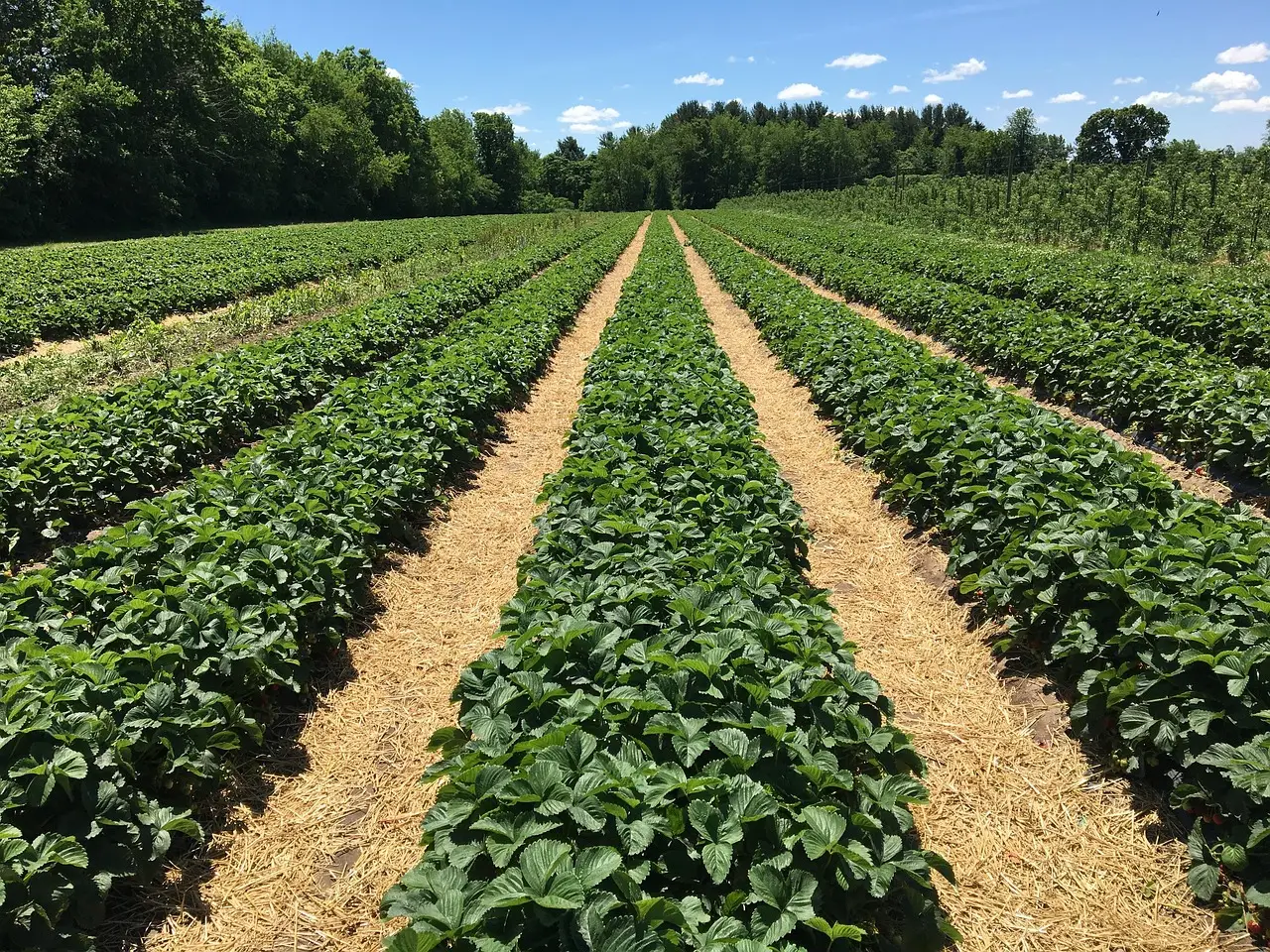
A four-year, €3.9 million Horizon Europe project is trying to solve two problems at once: microplastic pollution from agricultural film and the blind spot growers have under it. The ECOSYSTEM project, with nine partners from five countries, will develop a biodegradable mulch film carrying printed sensors that report soil moisture and temperature to berry producers — then break down in the soil after the growing season.
What does the film actually replace?
Conventional agricultural film is standard practice in European berry production, where it protects crops and creates the right microclimate. The catch is that it doesn't degrade. When fields are plowed after harvest, plastic residues mix into the soil and accumulate as microplastics year after year.
ECOSYSTEM takes a circular route to the material itself: waste from berry production is converted into polymers that serve as the raw material for the biodegradable film. The specification the researchers are working to is demanding in a specific way — the film must survive an entire growing season in the field, then degrade quickly and naturally once tilled in. That's a narrow window between durability and decomposition.
The sensing target follows directly from agronomy. Previous research shows mulch films alter soil temperature and moisture beneath them, which affects both plant growth and soil life. "This makes the under-film environment an important target for sensing and monitoring," says Sol Gutiérrez Alvarez, specialist in printed electronics at Danish Technological Institute (DTI). In short, the zone the film creates is exactly the zone nobody can currently measure.
How do you print electronics onto something that rots?
DTI contributes the printed electronics expertise and will develop the environmentally friendly inks used to print sensors directly onto the film. The leading candidate is a copper-based ink the institute developed in earlier projects, chosen because it carries a lower CO2 footprint than conventional silver inks.
The real engineering challenge isn't conductivity, though — it's degradation chemistry. The inks must be adapted so they break down safely along with the film, leaving no problematic residues. "Printed electronics have the advantage that we use very small amounts of conductive materials. This helps keep the material footprint low," Gutiérrez Alvarez says. "At the same time, the environmental and safety aspects of the developed solutions will also be assessed within the consortium, including through life-cycle assessment work."
That last point matters for anyone tracking this class of product. A sensor that works but leaves copper or additive residues in soil hasn't solved the microplastic problem — it has traded it for a chemical one. The consortium's life-cycle assessment work is the mechanism meant to catch that, though results are four years out.
What's the payoff for growers?
The project's stated goals line up squarely with farm economics: lower waste management costs, since there's no plastic film to collect and dispose of; improved yields through continuous monitoring of the under-film microclimate; and reduced microplastic load on agricultural soil.
No measured performance figures exist yet — the project is at the development stage, and the source carries no sensor accuracy, resolution, or readout specifications. Everything currently on the table is a design goal, not validated data. The first numbers worth watching will be whether printed sensors on a biodegradable substrate can hold calibration through a full season of moisture, UV exposure, and soil contact.
Who's behind it?
ECOSYSTEM runs under the Horizon Europe program with nine partners from five countries. Its remit extends beyond agriculture: the project develops biodegradable polymers and active materials for both packaging and agricultural applications, built on circular, bio-based value chains. DTI's role spans printed electronics and the ink chemistry that makes sensor-on-film integration feasible.
The open question for adopters is regulatory as much as technical. If the film and its sensor inks degrade in soil as intended, will EU rules on soil contamination and agricultural inputs treat them as benign — and will certification arrive fast enough for growers facing tightening scrutiny over plastic use?
via azosensors.com (Source)
Filed under
- printed-electronics
- soil-moisture-sensors
- soil-temperature-sensors
- biodegradable-mulch-film
- agricultural-monitoring
More from Sophie Lindqvist
Show full bio
News editor covering regulation, policy and their impact on Instruments, test and measurement at Testbench Report.
96 articles
Application notes
- John Deere's See & Spray covered 5 million acres in 2025
- Machine Vision Meets Food Tracking in Fight Against Cyclospora
- Smart metrology moves factory inspection into real-time control
- Visual Reasoning Moves Machine Vision Beyond Binary Pass/Fail
- LLNL Points Cameras and ML at Every Layer of 3D-Printed Parts