TB-3154 · REV B · Technical newsheet
Industrial IoT & MonitoringDevice profile
Bender UK rail summit targets shift from reactive faults to proactive asset care
Network Rail, Amey and AtkinsRéalis engineers met Bender UK to discuss signal power monitoring, earth-fault location and UPS battery health across Britain's ageing rail network.
By Grace Kim3 min read682 words
Features
- Bender UK hosted a rail power resilience summit drawing delegates from Network Rail, Amey, AtkinsRéalis and the IET.
- Technologies presented included Bender RS4 Tier 1 and Tier 2 signal power monitoring systems and the Bender Pulse platform.
- Sessions targeted a shift from reactive fault response to proactive asset management via continuous monitoring and fault location.
- Much of Britain's rail network dates back generations, according to Bender's Tony Edwards.
- No quantified field-trial performance data accompanied the vendor's monitoring claims at the event.
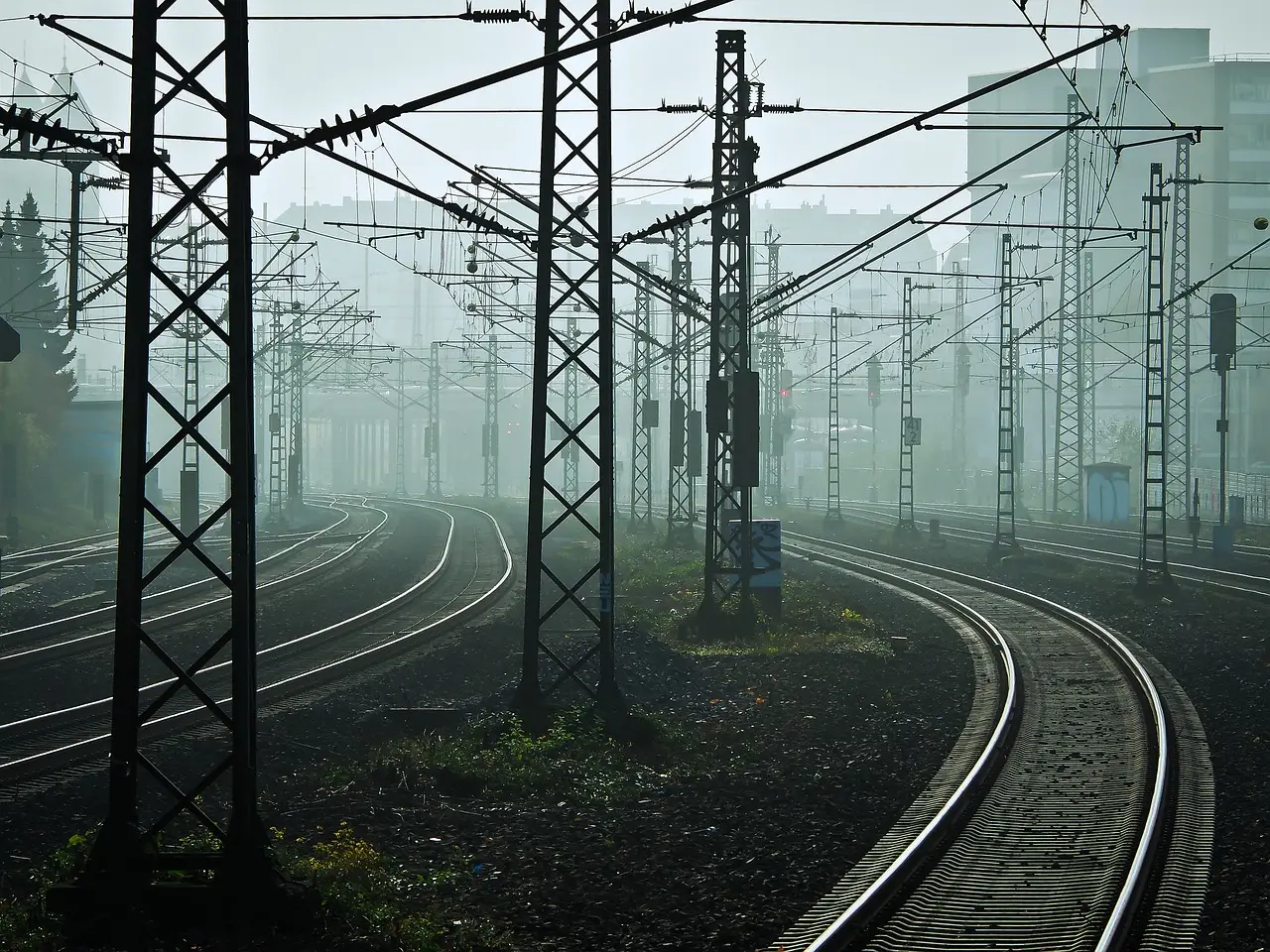
Engineers from Network Rail, Amey, AtkinsRéalis and the Institution of Engineering and Technology met at a Bender UK-hosted summit to tackle one measurable problem: keeping power flowing across a railway network in which, as Bender's rail sales manager Tony Edwards put it, "much of the network dates back generations."
The event addressed Britain's rail power resilience at a moment when government scrutiny of critical infrastructure networks is intensifying. Sessions concentrated on moving the industry from reactive fault response to proactive asset management, with speakers identifying continuous monitoring, fault-location technologies and data-driven maintenance strategies as the enabling methods.
What technologies took centre stage?
Bender presented two product families at the summit: the RS4 Tier 1 and Tier 2 signal power monitoring systems, and the Bender Pulse platform. The company describes these as tools for greater visibility of asset condition, supporting three specific functions: insulation monitoring, earth-fault location and centralised data analysis.
The claimed operational payoff is earlier identification of developing issues, faster fault diagnosis and better-informed maintenance decisions. These are vendor-stated benefits presented at the company's own event; no independent field-trial data was cited in the conference material.
Stuart Garnett, Senior Applications Engineer at Bender, said the summit worked in both directions: "Events like this are invaluable because they give us the chance to collaborate with the industry, listen to the people working on the railways every day and better understand the challenges they're facing."
Garnett added: "The feedback was incredibly useful, helping us understand how these systems are being used in the field and where we can continue to make them simpler and more effective for engineers and maintenance teams."
Why did UPS design dominate the discussion?
Delegates devoted a session to uninterruptible power supply systems and the discipline required to keep standby power dependable. Three areas framed the discussion: battery health monitoring, remote diagnostics and lifecycle management. Bender contributed its own experience in UPS installation, maintenance and monitoring across rail infrastructure.
Ian Beavors, Head of Mechanical and Electrical at Andromeda Engineering, leads a team responsible for designing signal power systems, low-voltage infrastructure and UPS renewals. He flagged a constraint that shapes every procurement decision in the sector: product approval requirements narrow the field of eligible equipment.
"Product choice within the rail sector can sometimes be limited due to approval requirements, so it's encouraging to see progress being made on alternative solutions," Beavors said. He described the UPS discussion as one of the most interesting areas of the event, alongside hearing "directly from the people using this equipment on the railway every day."
How does an ageing network change the maintenance question?
Edwards framed the core engineering economics problem plainly. Operators must do more with limited investment while maintaining infrastructure built generations ago, which shifts the priority toward identifying issues before they become failures.
"The priority is identifying issues before they become failures, allowing engineers to intervene proactively and minimise disruption," Edwards said. He positioned Bender's rail relationships as partnerships rather than transactions: "We don't see rail organisations simply as customers. We work together to solve problems."
That framing matters for buyers. Edwards stated the company's focus "isn't on selling products" but on developing solutions that keep the railway running safely and efficiently.
What remains unproven?
The summit presented capability claims rather than published measurement results. No quantified fault-detection lead times, insulation-resistance thresholds, earth-fault location accuracies or battery degradation figures accompanied the RS4, Pulse or UPS discussions. Engineers evaluating these systems for renewals programmes will want field data from operational deployments before treating earlier fault detection as a delivered outcome rather than a design intent.
Beavors's point about approval-limited product choice cuts the other way too: alternative UPS solutions now entering the market must clear the same rail approval regime before designers can specify them.
The open question the summit leaves behind is whether continuous monitoring and data-driven maintenance can deliver measurable reductions in unplanned signal power failures on a network whose assets predate the technologies now watching them.
via railway-news.com (Source)
Filed under
- rail-infrastructure
- condition-monitoring
- insulation-monitoring
- fault-location
- ups
More from Grace Kim
Show full bio
Correspondent covering companies, deals and strategy in Instruments, test and measurement at Testbench Report.
116 articles
Application notes
- Wireless Remote Condition Monitoring Advances on Unstable Railway Slopes
- Frontiers editorial tracks power system monitoring advances
- Modern Test Equipment Targets Accurate Power Cable Fault Location
- Edge AI Moves Motor Predictive Maintenance Onto the Control MCU
- Trackside Sensors Feed Control Room Decisions in Rail Monitoring Push