TB-4468 · REV B · Technical newsheet
Design EngineeringDevice profile
Factory Tests Pass, but Plant Integration Can Still Fail
Factory acceptance does not verify plant power, access, controls or utilities. Early site verification and shared ownership prevent costly startup failures on the plant floor.
By Sophie Lindqvist4 min read854 words
Features
- Factory acceptance testing can pass before machine-facility interface problems emerge on the plant floor.
- Facility layouts and 3D scans can be a decade old and omit recent plant changes.
- A multilevel conveyor had to be returned, cut into smaller sections and reassembled after a narrow-hallway access constraint was missed.
- A tote line used a wider conveyor and adjustable side guides to handle both its specified tote size and a larger planned size.
- PLC-to-MES integration requires a defined data scope, ownership and a loss-of-communications fallback before startup.
By Sophie Lindqvist
A factory acceptance test can certify a machine that still cannot start at the plant. The hard boundary often falls at the machine frame: once the original equipment manufacturer’s (OEM’s) scope ends there, power, structure, utilities, access and controls interfaces may remain unassigned.
Where does integration responsibility actually begin?
Facilities do not honor contractual boundaries. Floor flatness, building columns, available power, and pneumatic or hydraulic supplies constrain equipment even when another party owns the plant work.
Customers sometimes take installation and facility preparation in-house to reduce costs. That can leave electrical service, compressed air, floor preparation and leveling without a clear owner, so each supplier should state its requirements before detailed design locks.
A conveyor supplier, for instance, can explain how uneven floor causes binding, even if that supplier will not prepare the building. Noah Bougie, lead instrumentation and controls engineer at ACS, and Scott Blais Jr., sales and business development manager at mk North America, frame the remedy: OEMs, integrators and plant owners should “treat it as a shared responsibility.”
The practical consequence is straightforward. Shared ownership has to start before drawings harden.
How should teams verify facility conditions?
A current, plant-verified record should anchor integration requirements, yet layouts and 3D scans can be a decade old. They may omit relocated equipment, new piping, ceiling drops, mounting structures and undocumented increases in power demand.
Ignoring those changes can size equipment around a plant that no longer exists. Washdown rules add another constraint: water temperature, pressure and chemicals can undermine seals or corrode materials.
Lighting can matter too. A system tested at a runoff facility with large windows may behave differently under a plant’s lower light, so the test environment should reflect the operating site.
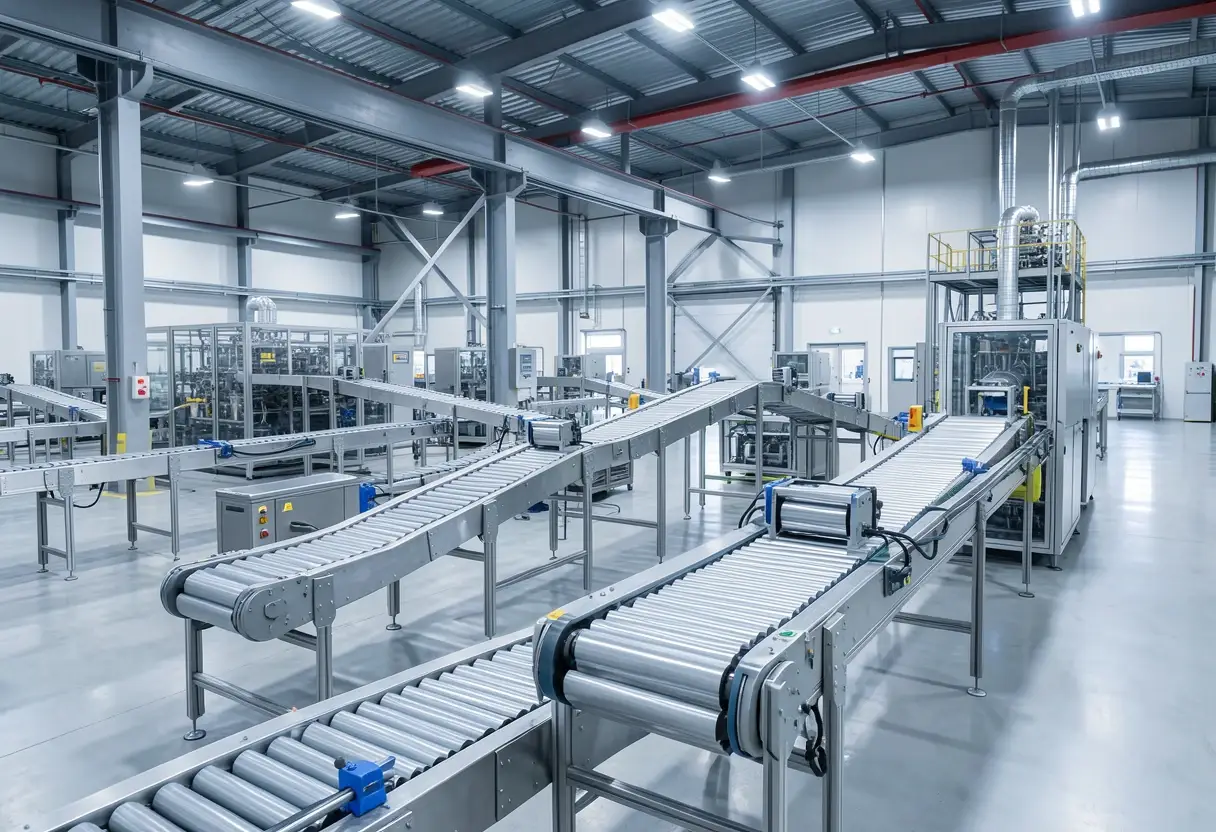
Access and vertical space need equally concrete checks. On one large project, a multilevel conveyor reached a plant through its only narrow hallway; the supplier returned it, cut it into smaller sections and reassembled it on the plant floor.
Maintenance teams often know details that engineering teams and drawings miss. Bringing them into early design reviews catches service-access problems and starts transferring the knowledge needed to support the equipment for its working life. Measure the plant as it exists today, not as its oldest drawing describes it.
What should controls integration settle before startup?
Machine-level programmable logic controller (PLC) connections to a manufacturing execution system (MES) or another plant-wide system begin with network-compatible hardware and interface modules. Once communication works, adding agreed data points becomes comparatively straightforward.
The harder decision is scope: which machine and production data cross the connection, and who implements each part? Attempts to capture everything turn integration into an open-ended project, so teams need a clear data definition.
Failure behavior needs the same treatment. If the plant-wide system loses contact with the equipment, should production stop or operators continue with manual tracking? That choice changes control design, operator procedures and production continuity, and belongs in planning rather than the first outage.
Controls work also depends on the facility inputs: electrical service, compressed air, floor conditions and leveling tolerances. A communication link cannot compensate for an unprepared plant interface. Define both the data exchange and the failure response before commissioning.
How much future-proofing is enough?
Open-ended design can consume the present project’s resources, particularly when future needs cannot be specified. A practical alternative is to define plausible minimum and maximum product specifications, then move toward that range in phases.
The same discipline applies to reserved space and power drops. Sizing to a reasonable upper boundary costs money now, but it can avoid demolition and infrastructure upgrades later; integrators, solution providers and end customers should set that boundary together.
One tote line shows how this can work. It was specified for one tote size, while a wider tote was planned for larger products in a few years, so the design used a wider conveyor and adjustable side guides to carry both sizes safely.
Modularity extends the same idea. Common drives, transmission methods and conveyor platforms let teams add equipment without rebuilding the line, while a stable core architecture lets end pieces change without replacing the machine.
Consistency also lowers operating and maintenance overhead; mixed components complicate integration. Adaptability still has to pass an economic test: each phase should earn its return against budget, schedule, anticipated capacity, physical limits and the cost of later modifications. Reserve useful capacity, but pay for flexibility phase by phase.
What does success require after site acceptance?
Equipment makers, systems integrators and plant owners should make reliable operation from day one an explicit project goal. Early planning must address space, structure, utilities and controls, because each discrepancy becomes harder and more expensive after installation.
Facility operations and maintenance teams can identify failure modes and flag designs that make access difficult. Their early involvement turns those constraints into design inputs instead of startup modifications.
Can the project team demonstrate that the plant will support the equipment reliably for its working life? Factory acceptance remains necessary, but it tests the machine rather than the complete machine-facility system.
via knowledgelibrary.ifma.org (Original)
Filed under
- factory-acceptance-testing
- plant-integration
- facility-readiness
- plc-and-mes-integration
- future-proofing
More from Sophie Lindqvist
Show full bio
News editor covering regulation, policy and their impact on Instruments, test and measurement at Testbench Report.
93 articles