TB-9687 · REV C · Technical newsheet
Design EngineeringDevice profile
Microchip's PolarFire SoC Kit Drives Up to 40 BLDC Motors from One Chip
Microchip's PolarFire SoC Motor Control Kit drives up to 40 BLDC motors from one MPFS095T device, combining deterministic FPGA control loops with a Linux-capable RISC-V subsystem.
By Amara Osei3 min read509 words
Features
- PolarFire SoC Motor Control Kit scales to up to 40 BLDC motors from a single MPFS095T device
- Supports both sensor and sensorless field-oriented control (FOC)
- Combines deterministic FPGA-based control with a Linux-capable RISC-V processor subsystem
- Includes gigabit Ethernet ready for time-sensitive networking (TSN)
- Ships with browser-based GUI, software, and reference designs
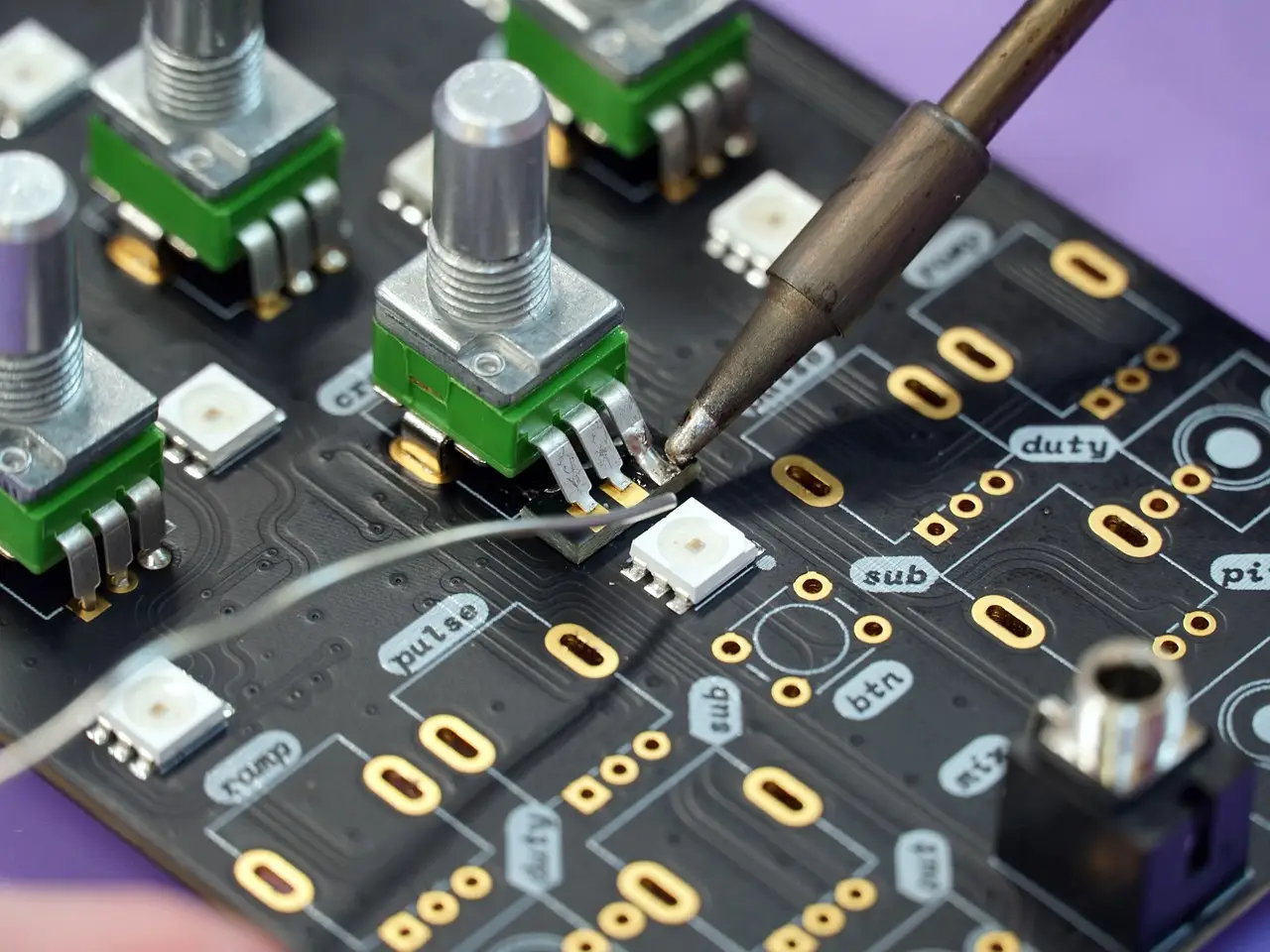
Microchip's PolarFire SoC Motor Control Kit scales to control up to 40 BLDC motors from a single MPFS095T device, pairing deterministic FPGA fabric with a Linux-capable RISC-V processor subsystem. That motor count is the number that frames the kit's ambition: synchronized multi-axis motion without a rack of separate controllers.
The platform, announced as a complete development environment rather than a bare board, supports both sensor and sensorless field-oriented control. FOC (a method that regulates motor torque and flux via rotating current vectors, giving BLDC motors smooth, efficient operation) works in either configuration, so developers aren't locked into a particular feedback strategy before they've characterized their mechanics.
What does the hardware actually provide?
The kit's feature list reads like a checklist for industrial motion design:
- Real-time current and voltage sensing on-board
- Configurable control loops
- Motor and sensor interfaces
- Gigabit Ethernet, ready for time-sensitive networking
- Browser-based monitoring and control GUI
- Supporting software and reference designs
The GbE port with TSN readiness (the IEEE-standard extensions that let Ethernet carry bounded-latency traffic for control loops) matters for the target applications. Factory automation and multi-axis servo systems increasingly want one network cable to carry both measurement and motion commands.
Where does 40 motors make sense?
The architecture splits duties in a way that should feel familiar to anyone who's fought jitter in software control loops. The FPGA fabric closes the motor-control loops deterministically, while the RISC-V processor subsystem runs Linux for supervision, communication, and the GUI. Hard real-time and hard convenience, separated at the silicon level.
Microchip positions the kit for:
- Synchronized multi-axis systems
- Industrial drives and servo systems
- Factory automation
- Robotic joints and actuators
- Autonomous and mobile robots
- Aerospace motion-control systems
That last category is worth a pause. Aerospace motion control usually demands qualification paths and long-term supply commitments that dev kits don't address, so treat the mention as an architecture claim rather than a procurement path.
Measured performance versus datasheet positioning
What Microchip has announced is a development platform: hardware, software, reference designs, and a GUI. The company hasn't published per-axis loop rates, current-sensing accuracy, or synchronization skew figures across the claimed 40-motor ceiling in the material provided. Those numbers will decide whether the scaling claim survives contact with a real servo backplane. Until independent benchmarks exist, the 40-motor figure is a vendor architecture claim, not a measured result.
The kit's value is nonetheless concrete. It gives engineers a working reference for combining FOC, FPGA determinism, and a Linux environment in one evaluation platform, which historically meant assembling three vendors' worth of tools.
The adoption question
For teams running multi-axis robotics or factory automation, the question isn't whether 40 motors is impressive. It's whether a single-SoC architecture simplifies their safety case and network topology enough to justify re-platforming from discrete per-axis drives onto a RISC-V-plus-FPGA part whose toolchain they may not yet know.
via microchip.com (Original)
Filed under
- polarfire-soc
- bldc-motor-control
- field-oriented-control
- fpga
- risc-v
More from Amara Osei
Show full bio
Senior reporter covering people, launches and day-to-day practice in Instruments, test and measurement at Testbench Report.
99 articles
Application notes
- Connected Controls: Seven Engineering Decisions That Decide Machine Performance
- STMicroelectronics Adds Two 6-Axis IMUs Targeting Sustainable-Materials Compliance
- ABB Puts Deep-Learning Vision Inside the Machine Control Loop
- Marposs Signs Partnership With TITANS of CNC at IMTS 2026
- Sub-$10 Condition Monitoring: Neural Chip Cuts the BOM