TB-1657 · REV E · Technical newsheet
Metrology & CalibrationDevice profile
Hexagon Launches HYPERSCAN SR Entry-Level Wireless 3D Scanner
Hexagon's Portable Metrology Division has launched the HYPERSCAN SR, an entry-level wireless optical tracking 3D scanner aimed at shop-floor, supplier-site, and field work.
By Olivia Hart3 min read552 words
Features
- HYPERSCAN SR is the first entry-level unit in Hexagon's HYPERSCAN family of wireless optical tracking 3D scanners
- Targets three working environments: shop floor, supplier sites, and field
- Inherits the wireless workflow and dynamic tracking of the higher-tier HYPERSCAN range
- No accuracy class, sampling rate, or calibration interval was published in the launch announcement
- The device is positioned by feature and use case rather than by spec sheet
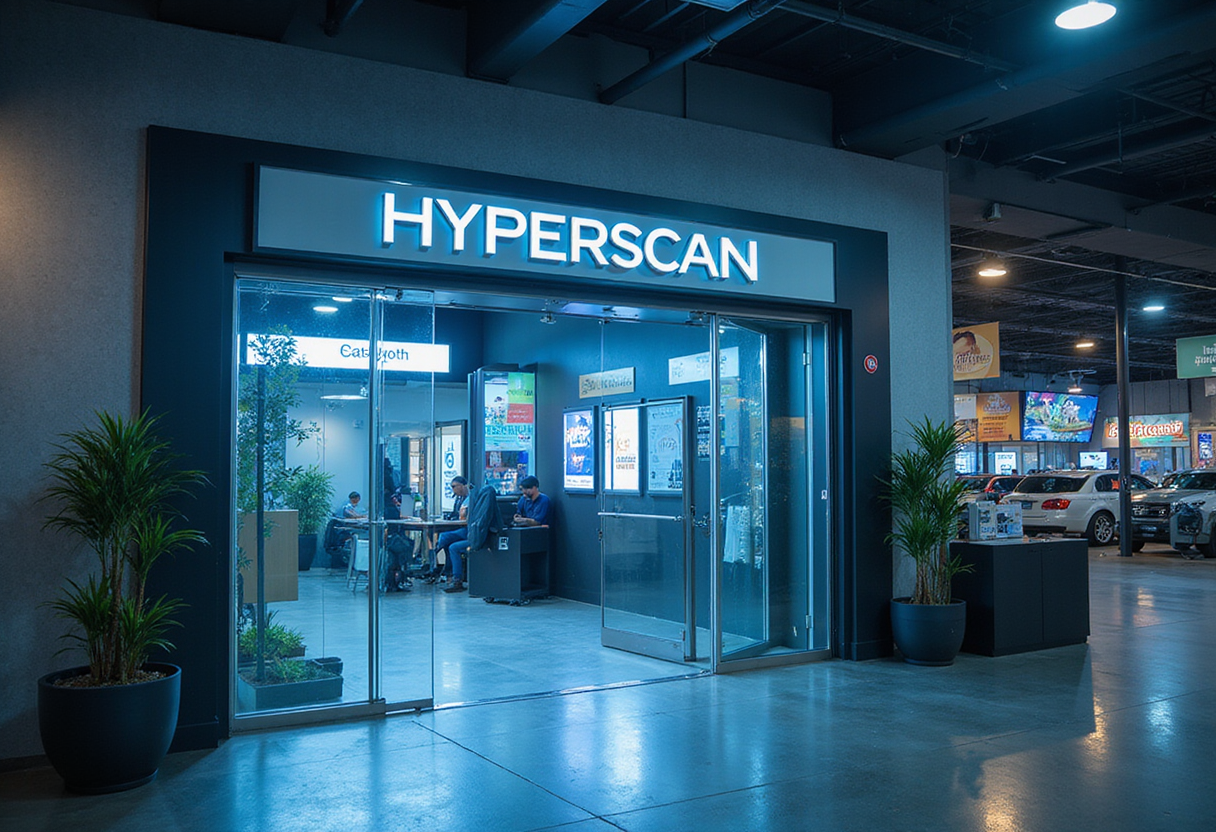
Hexagon's Portable Metrology Division has launched the HYPERSCAN SR, an entry-level wireless optical tracking 3D scanner that targets the shop floor, supplier sites, and the field. The unit extends the existing HYPERSCAN range downward in price and complexity, pairing a fully wireless workflow with what the vendor calls simple operation and dynamic tracking in a portable form factor.
The launch marks the first time Hexagon has positioned a HYPERSCAN-branded scanner as an entry-level unit. Higher-tier siblings in the range already use the same wireless optical tracking architecture; the SR is the first to be framed for users outside dedicated metrology rooms.
What does "wireless optical tracking" actually mean?
Optical tracking 3D scanning is a coordinate-measurement method in which external cameras follow markers or a handheld scanner to reconstruct geometry in real time. The workflow competes with laser line scanners and photogrammetry on accuracy, with articulated arms on reach, and with structured-light units on speed.
Stripping the cable from that loop is not cosmetic. It removes a snag hazard on a moving gantry, the strain-induced drift a tethered cable can introduce, and the reach limit a tether imposes inside large castings or on-site assemblies. The SR inherits the wireless workflow introduced across the HYPERSCAN line and pairs it with dynamic tracking - the scanner keeps acquiring while the operator moves, rather than requiring a stationary part on a turntable.
Where does the SR actually fit in a working day?
Three target environments anchor the product brief. On the shop floor, operators carry the SR to the part between machining cycles, no controlled-environment tent required. At supplier sites, it packs in a case and gets set up by visiting quality staff who arrive, measure, and depart inside a single audit window.
In the field, the same portability extends to shipboard, construction, or repair scenarios where mains power and a fixed metrology room are unavailable. None of those contexts is new to portable optical tracking. The SR's pitch is simpler: the cost of admission has dropped.
How does the SR change the entry-level calculation?
Until this launch, HYPERSCAN has been a professional-tier family. Adding an SR at the bottom reshapes the buying decision for shops that previously chose between a low-end laser scanner and a high-end optical tracker - and usually compromised on speed, marker count, or mobility.
By collapsing wireless workflow, dynamic tracking, and a portable form factor into one entry-level unit, Hexagon compresses two decision axes into one. Whether that compression survives a real inspection report is the question integrators will have to answer.
What adoption question does the launch raise?
Hexagon has not, in the announcement, published an accuracy class, sampling rate, or calibration interval for the SR. The device is positioned by feature and use case rather than by spec sheet.
Buyers comparing it against existing laser scanners will want those numbers before specifying it for serial inspection. Until they appear, the SR reads as an access point - a way to bring optical tracking inside shops that have, until now, treated it as a capital purchase rather than a portable tool. The question that follows is whether quality programs built around formal measurement uncertainty budgets will accept the entry-level scanner's data on its published merits.
via polyworks.com (Original)
Filed under
- 3d-scanning
- optical-tracking
- portable-metrology
- hexagon
- wireless-scanner
More from Olivia Hart
Show full bio
Market editor covering technology and product news in Instruments, test and measurement at Testbench Report.
67 articles
Application notes
- Tolerance-Driven Scanning, Record Renishaw Revenue Lead Metrology Week
- FARO's Quantum X FaroArm Targets Faster Automotive Scans
- eviXscan3D Pushes 100% In-Line Inspection via Multi-Scanner Arrays
- OMNIVISION Adds Two Global Shutter CMOS Sensors for Industrial Vision
- Machine Vision Roundup: MES Integration, Optical Semiconductors, Structured Light