TB-7426 · REV B · Technical newsheet
Lab InstrumentationDevice profile
Modified Ender 3 Becomes a $450 Bioprinter for Engineered Living Materials
University of Rochester microbiologists converted an Ender 3 into a $450 bioprinter that prints living bacteria in alginate ink, cutting hardware costs from over $100,000.
By Nathan Brooks3 min read558 words
Features
- The converted Ender 3 bioprinter costs $450, versus over $100,000 for typical bioprinters.
- The print head uses a 10 mL Luer-lock syringe with a 0.254 mm needle, a 2 mL/h flow rate, and 23 mm/s print speed.
- Alginate bio-ink cross-links in calcium-enriched agarose or gelatin support slurries; prints stay viable four or more weeks in agarose.
- Anne S. Meyer et al. published the work in ACS Applied Polymer Materials in August.
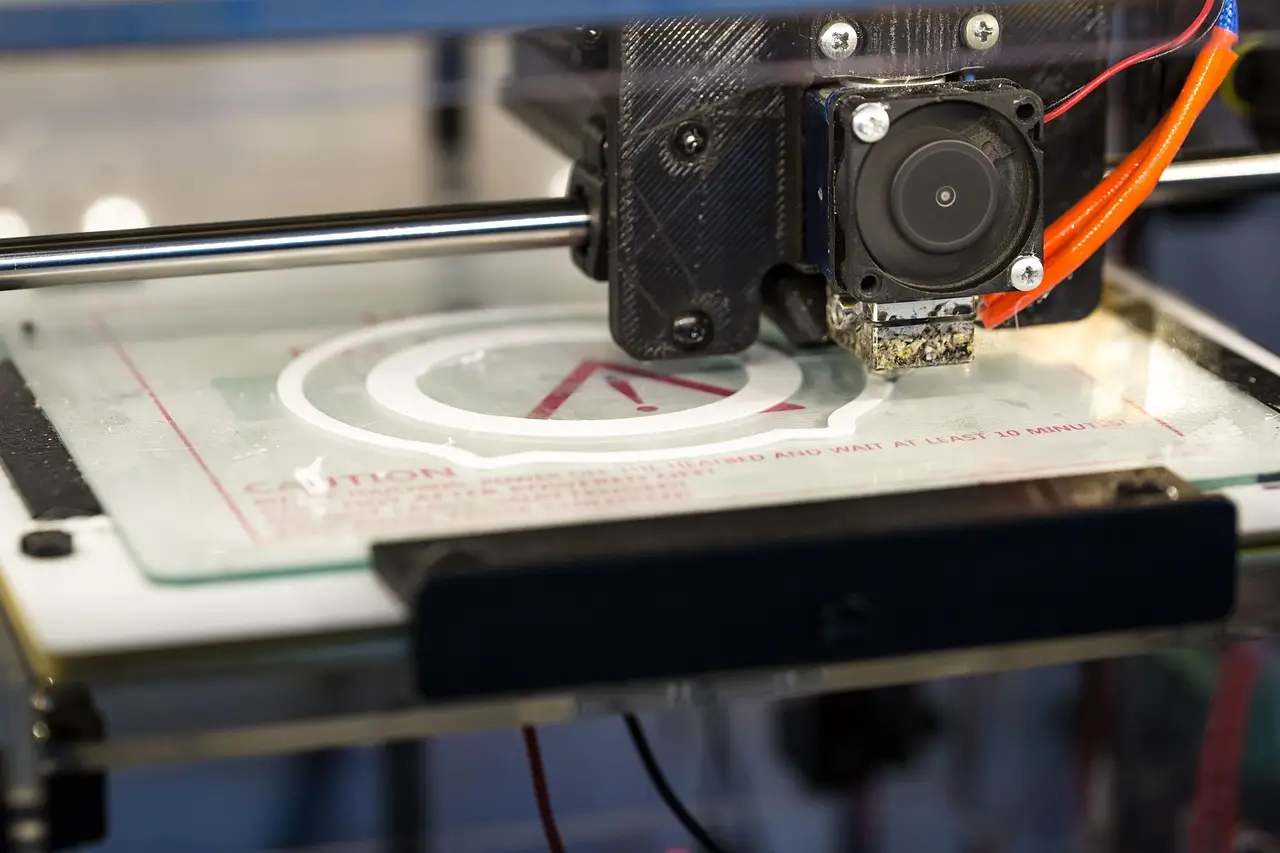
A $450 converted Ender 3 FDM printer now prints macrostructures made of living bacteria, a build that undercuts conventional bioprinters by more than two orders of magnitude, according to work published by microbiologists at the University of Rochester in August in the journal ACS Applied Polymer Materials.
Bioprinters typically cost over $100,000. Anne S. Meyer and colleagues argue in their paper, "3D Bioprinting of Engineered Living Materials," that hardware costs and the inability of expensive machines to maintain printed structures have limited progress in engineered living material (ELM) research. Their answer addresses both problems: an affordable open-source printer and a support slurry that keeps the printed living material in shape.
How Was the Printer Converted?
The team kept most of the Ender 3's structure and replaced the print head with a syringe pump mounted in custom 3D-printed PETG components. The mechanism takes a 10 mL glass Luer-lock syringe; a plunger controls extrusion and retraction.
The workflow mirrors standard 3D printing. Parts were modeled in SolidWorks, exported as STL, and sliced in Slic3r. The researchers tuned Slic3r settings for a 0.254 mm needle, reducing the extrusion multiplier to 0.004. That yields a flow rate of 2 mL/h at a print speed of 23 mm/s.
What Does It Print?
Instead of thermoplastic filament, the print head extrudes a bio-ink of bacteria mixed with alginate, deposited into one of two support materials: agarose or gelatin gels. Both slurries carry calcium ions that cross-link the alginate strands as they print, forming a solid structure that encapsulates the living bacteria.
The two gels serve different purposes:
- Agarose supports long-term incubation, keeping printed ELMs viable for four or more weeks.
- Gelatin permits extractable prints, allowing removal of the finished structure from the support bath.
The cross-linking chemistry is the enabling step. Without ion-mediated gelation of the alginate, the bacterial ink would not hold its geometry — the structural failure the researchers identified as a barrier in existing hardware.
What Are Engineered Living Materials For?
The paper focuses on bacteria-generated biomaterials, though ELMs are not limited to bacteria. Target applications include:
- Biofilms for antimicrobial treatments
- Plastic degradation
- Wastewater treatment
- Bacterial cellulose with structural properties, usable as a biodegradable plastic alternative
The team suggests that cheaper ELM research hardware could accelerate development across these fields. One speculative endpoint in the source material: bacteria-based bioplastic filaments for ordinary FDM printers, closing the loop between bioprinting research and desktop fabrication.
What Does the Build Change?
The cost gap defines the story. A laboratory that cannot justify a $100,000 bioprinter can assemble the Ender 3 conversion for roughly $450 using published, open-source designs. The CAD-to-slicer workflow also removes a training barrier: any operator familiar with desktop FDM printing already knows most of the process.
Measured performance cited in the work remains limited to the print parameters — 0.254 mm needle, 2 mL/h flow, 23 mm/s speed — and the four-week viability window in agarose. Datasheet-style claims about application breadth, from antimicrobial biofilms to wastewater treatment, are research directions rather than demonstrated deployments.
The open question is adoption: whether synthetic biology groups will validate the platform against commercial bioprinters, or whether the $450 conversion remains a teaching and prototyping tool while production ELM work stays on institutional hardware.
via tomshardware.com/feeds.xml (Source)
Filed under
- bioprinting
- engineered-living-materials
- 3d-printing
- ender-3
- bioink
More from Nathan Brooks
Show full bio
Staff writer covering people, launches and day-to-day practice in Instruments, test and measurement at Testbench Report.
105 articles
Application notes
- CLE Closes $11.9M Series A to Scale 3D Machine-Vision Platform
- Digid Nanosensors Add Printed Temperature and Force Sensing
- 3D Scanning Replaces Calipers in Reverse Engineering Workflows
- Bold Laser Automation Automates First Article Inspection for Tubular Parts
- NIST Bonds Photonic Chips to Fiber Without Glue for Extreme Environments