Technical newsheet
Industrial IoT & MonitoringDevice profile
OneM2M dashboard predicts transformer overloads weeks before alarms
A oneM2M-compliant dashboard ingests 15-minute readings from 31 transformers and 61,062 meters, ranking asset health and predicting overloads weeks before fixed-threshold alarms; IEC 60076-7 estimates hot spots.
By Nathan Brooks4 min read839 words
Features
- 61,062 smart meters and 31 transformers are monitored via a oneM2M TS-0001/TS-0004/TS-0009 data path with 15-minute posting intervals
- DT-10, a 630 kVA transformer, reaches its estimated hot-spot alarm within weeks under 20% annual load growth, before any device alarm
- 2,599 meters are predicted to fail within a month; 4,167 have an open or bypassed current circuit
- Load forecasts use a 4-week weekday profile with an 8-week back-test showing about 5% median daily-peak error
- The hub is a hackathon prototype; transformer data is real to 4 November, while meter, water and solar history is replayed
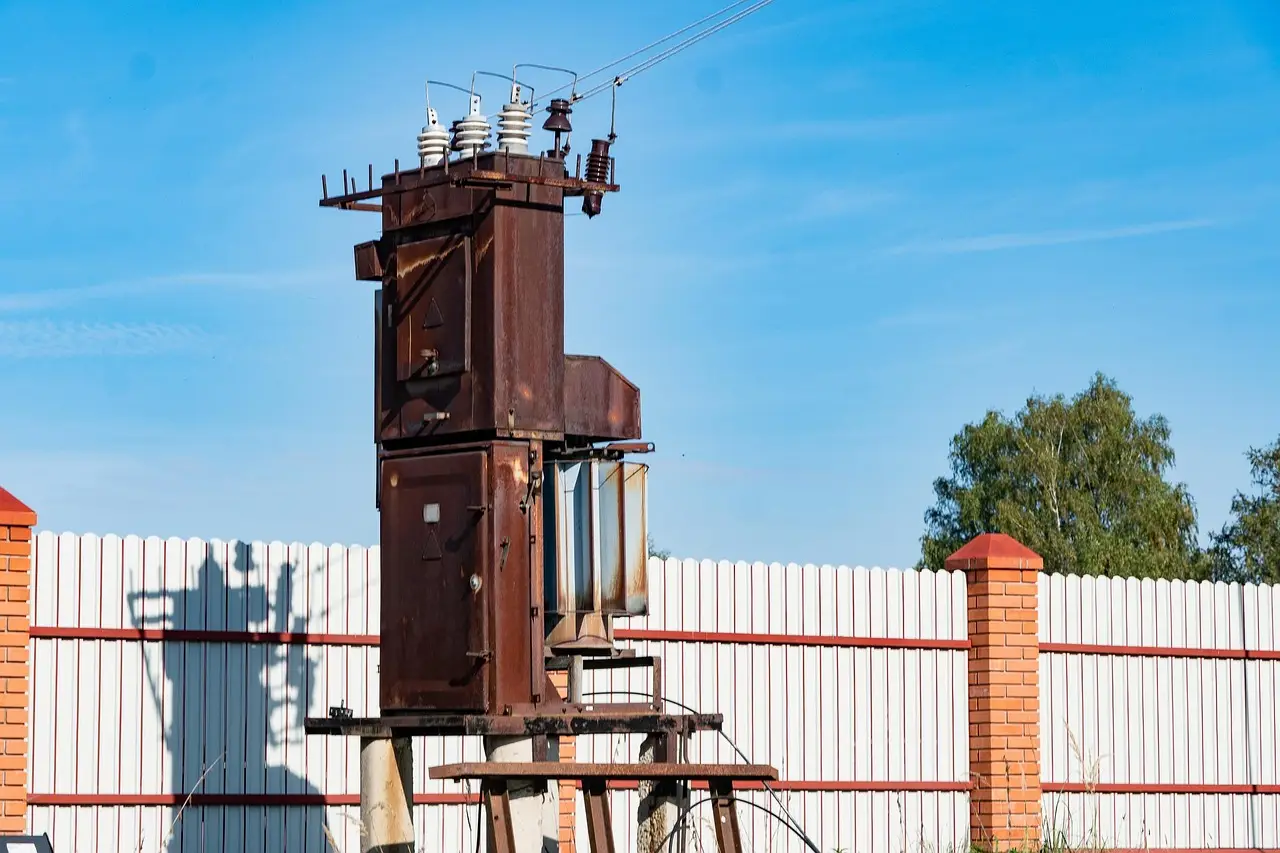
A single dashboard built on the oneM2M standard ingests readings from 31 distribution transformers, 61,062 consumer smart meters, 7 water controllers and 12 solar inverter blocks every 15 minutes, and predicts failures before fixed-threshold device alarms trigger. The Utilities Intelligence Hub, released as an open-source hackathon prototype, flagged 2,599 meters predicted to fail within a month and 6 transformers with a predicted overload or hot-spot alarm within five months. Source code is on GitHub under a use-at-your-own-risk disclaimer.
The developer identifies three gaps the system targets. Utilities collect IoT data from transformers, meters, solar plants and drinking-water pumps, but devices were installed without a load or health survey, so no baseline exists for what is normal. Assets fail without warning in the data people watch: transformers overload on one or two phases, meters fail silently, pumps run dry, inverters trip. Fixed-threshold alarms arrive only when the asset is already failing.
How does the data path work?
The hub adds no hardware. A field gateway registers as a oneM2M Application Entity and posts each reading as a contentInstance into the CSE, following the oneM2M resource model (TS-0001), primitives (TS-0004) and HTTP binding (TS-0009). Every request carries X-M2M-Origin, X-M2M-RI and X-M2M-RVI headers; resources are created with Content-Type application/json and type indicators 2 (AE), 3 (container) and 4 (contentInstance). Results return as oneM2M response codes (2000, 2001, 4004, 4105). The hub retrieves the latest reading via …/readings/la and accepts CSE subscription notifications (m2m:sgn, including verification requests) at /onem2m/notify.
The hub publishes back into the standard as its own Application Entity, UtilitiesHub, with one contentInstance per device carrying health, top issues and prediction — overload probability and days to nameplate for a transformer, failure window for a meter. Any oneM2M application can consume the results. The hub works with any external CSE (ACME, OM2M, Mobius) through two settings.
What did the measured fleet data show?
Transformer readings are real field data measured to 4 November, then each unit carried forward on its own weekday profile for the demo; meter, water and solar history is replayed to today, and the dashboard labels this distinction — a point buyers should note when weighing the predictions.
- Transformers: 6 critical, 18 with load imbalance, 13 with high neutral current. DT-10 (630 kVA) already reaches its rating at peak and, with about 20% load growth a year, passes nameplate and hits the estimated hot-spot alarm within weeks — before any device alarm. DT-07 runs on two phases, with B phase above rated current while R is nearly idle; moving consumers fixes it with no new equipment.
- Smart meters, 61,062 units under 1,222 distribution transformers on 62 feeders: 151 critical, 4,167 with a current circuit open or bypassed (lost billing energy), 2,675 with tamper or wrong wiring, and 18,082 more meters flagged if their fault repeats.
- Water: 285 dry runs and 53 tank overflows that nobody was alerted to; one pump running on a missing phase and short-cycling 38 times a day; pH below the safe 6.5 level.
- Solar, 5 plants: 8 of 12 inverter blocks show a predicted loss in the next 30 days, including one with no issue today that drops below 70% performance ratio in about two weeks.
Which method stands behind the forecasts?
The load forecast uses a weekday × 15-minute profile built from the last four weeks, with overload probability validated by an 8-week back-test reporting a median daily-peak error of about 5%. The 12-month outlook multiplies each transformer's own peaks on the same dates last year by its own year-on-year growth. Hot-spot and oil temperatures follow IEC 60076-7, because the monitors do not measure temperature directly. The health index is 100 minus the weight of every finding, collapsing a fleet of thousands into one sorted list.
The developer states why the system is not machine learning: no recorded failures exist to train on. Logged repairs will feed a future failure model. Until then, an AI work plan turns findings into one ranked weekly list, the model receives only computed findings, it may suggest only on-site actions, and a rule library answers when no model is available. Every finding carries the raw readings behind it and a field action in English and Hindi. The stack is Django, DuckDB over Parquet, Chart.js, with an open JSON API.
What comes next?
Planned work includes connecting every DT, meter and pump house through the oneM2M CSE, a field app that posts outcomes back as oneM2M content, a trained and verified failure model on logged outcomes, and a network-wide load audit from the 12-month capacity plan. The compliance question for operators: will a hackathon-grade prototype with replayed meter and solar history clear internal validation standards for asset-health decisions, and does oneM2M TS-0009 interoperability across vendor CSEs hold in production scale?
via hackster.io (Source)
Filed under
More from Nathan Brooks
Show full bio
Staff writer covering people, launches and day-to-day practice in Instruments, test and measurement at Testbench Report.
113 articles
Application notes
- Frontiers editorial tracks power system monitoring advances
- APAC Industrial IoT Push Reshapes Edge Instrumentation Requirements
- Edge AI Moves Motor Predictive Maintenance Onto the Control MCU
- IMI widens NEON line to scalable I-IoT monitoring for non-hazardous plants
- Reliable Plant Publishes Wireless Monitoring Assessment