TB-7892 · REV D · Technical newsheet
Design EngineeringDevice profile
POLYN Ships NeuroComm Digital Twin Ahead of Chip Tapeout
POLYN's digital twin emulates NeuroComm's VAD, speaker recognition and voice extraction at firmware level, claiming -3 dB SNR speech extraction before the chip is taped out.
By Amara Osei4 min read704 words
Features
- Speech extraction works at -3 dB SNR with two microphones, up from +3 dB previously.
- NeuroComm voice processing consumes below 200 µW; NeuroVoice VAD chip draws about 35 µW.
- Speaker recognition accuracy is specified at 90 percent or better; wake-word engine supports 40+ languages.
- Public demonstration scheduled for PMRExpo 2026 in Cologne, November 24–26, 2026.
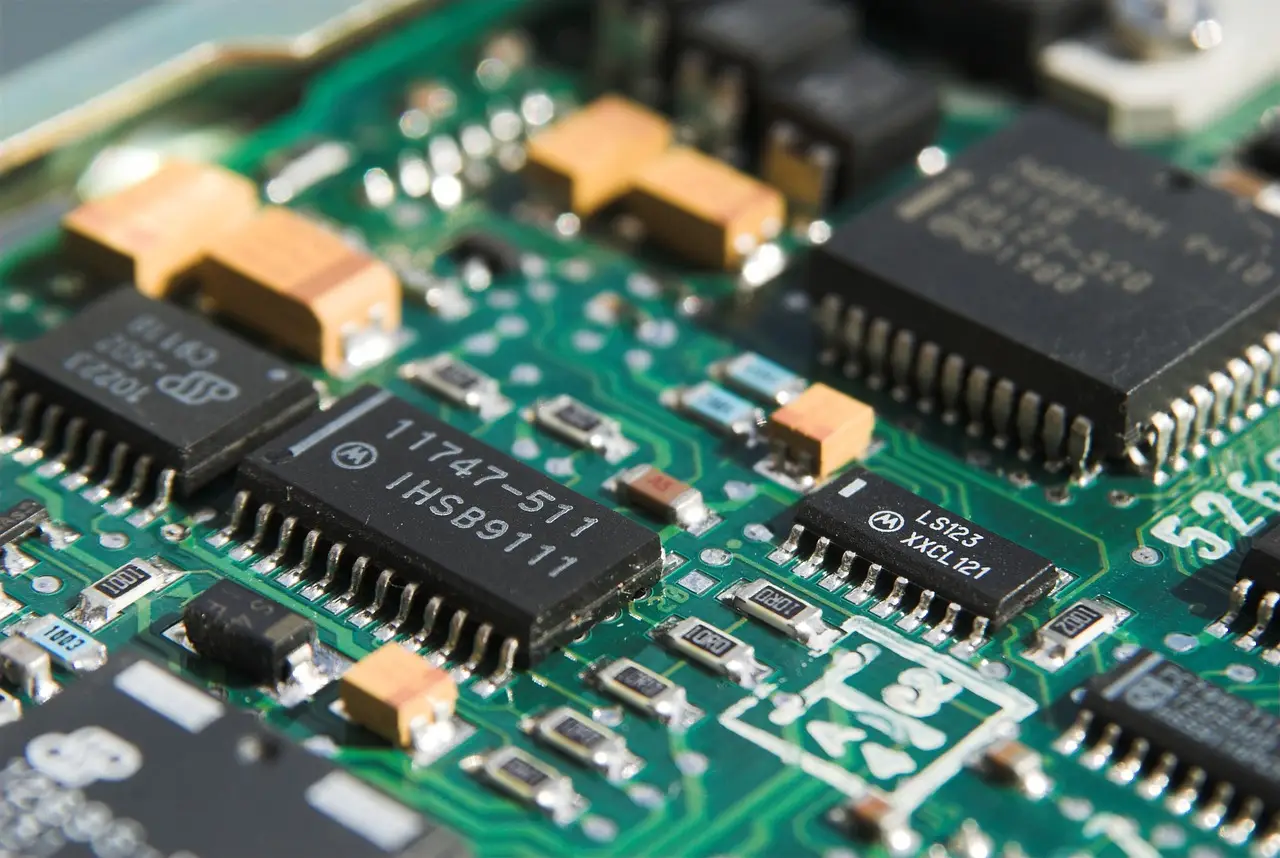
POLYN Technology is now shipping a digital twin of its NeuroComm chipset to two-way radio headset manufacturers, months before the chip itself is taped out. The twin emulates voice activity detection (VAD), voice extraction, and voice control exactly as the product firmware will run them on the companion microcontroller — a claim worth pinning down, because it determines whether headset designers can trust simulation results as silicon-equivalent.
The stakes are concrete: POLYN reports that its updated voice extraction handles a signal-to-noise ratio (SNR, the ratio of desired speech power to noise power) of -3 dB when a second microphone captures environmental sound, versus +3 dB for the previous single-microphone implementation. Working at negative SNR means extracting speech that is quieter than the noise floor. That figure, notably, belongs to a two-microphone configuration — so microphone placement and the headset's acoustic design become part of what developers can evaluate in the simulation.
What can OEMs actually test before tapeout?
Plenty, per POLYN. The twin lets headset makers evaluate:
- Voice activity detection that distinguishes speech from background noise, addressing the classic VOX (voice-operated transmission) failure mode where the channel opens on noise alone.
- Speaker recognition, limited to an enrolled talker, with at least 90 percent accuracy and fewer false detections than before.
- Keyword spotting for spoken controls such as talk-group selection.
- Speech extraction under their own microphone layouts and noise conditions.
Because the processing sits in the headset rather than the radio, these functions can retrofit onto existing analog or digital radios. POLYN also states the wake-word and command engine supports more than 40 languages, and that breath, wind, and clothing rustle will not trigger false detections. Those last claims are vendor datasheet assertions; the demo floor in Cologne will tell.
CEO Aleksandr Timofeev was blunt about the twin's status: "This is not a demo box: it is a real twin of the chip, fully emulating the Voice Activity Detection, Voice Extraction, and voice control functions of the product-level firmware running on the companion MCU."
He added: "What we have achieved with NeuroComm has made it second to none in the industry. Now with the availability of the Digital Twin, our customers have the advantage of working in the simulation environment and readying their products for our coming delivery of the chip."
The "second to none" line is marketing. The firmware-level emulation claim is engineering, and it is the more useful of the two.
Why the power number matters for a headset
NeuroComm builds on POLYN's Neuromorphic Analog Signal Processing (NASP) architecture, which maps a trained neural network into analog circuitry fabricated in standard CMOS. Inference happens close to the sensor, without repeatedly fetching model weights from memory — the usual energy tax of digital inference.
That matters because a headset's listening stage must stay active between transmissions, sipping battery the whole time. POLYN specifies a power envelope below 200 µW for NeuroComm's voice processing. The related NeuroVoice VAD engineering chip, aimed at the narrower task of always-on speech detection, runs at approximately 35 µW average power, letting a host processor sleep until speech shows up.
For buyers, the physics-in-analog approach is the buying decision: sub-200 µW listening budgets are what make always-on voice features viable in battery-powered headsets at all.
A familiar playbook
POLYN has run this early-access pattern before. The NeuroVoice evaluation kit paired a board with an online model so OEMs could start voice-enabled designs ahead of chip availability. The company is also applying NASP to vibration sensing: its VibroSense TMS engineering chips, already in evaluation for tire-mounted sensor nodes, turn raw accelerometer data into an estimate of available tire-road grip. Both applications share the same logic — local inference that spares the host from processing raw sensor data.
What comes next
POLYN plans to demonstrate NeuroComm at PMRExpo 2026 in Cologne, Germany, on November 24–26, 2026. Until then, the twin is the product.
The open question for headset OEMs: does firmware-accurate simulation arrive early enough to lock microphone placement and acoustic design before silicon — or do the -3 dB SNR figures shift once real chips meet real wind?
via audioxpress.com (Source)
Filed under
- digital-twins
- neuromorphic-computing
- voice-activity-detection
- voice-extraction
- chip-tapeout
More from Amara Osei
Show full bio
Senior reporter covering people, launches and day-to-day practice in Instruments, test and measurement at Testbench Report.
124 articles
Application notes
- China's Seichi Tech Grows Memory-Tester Orders While HBM Win Stays Unverified
- Keysight Launches Infiniium XR8 Oscilloscope Series for High-Speed Digital Compliance Work
- ViTrox Draws Bullish Coverage as AI Inspection Build-Out Accelerates
- Sentinel and Zebra Technologies Link on Enhanced Machine Vision
- Edge AI Reshapes Industrial IoT, Semiconductor Engineering Reports