TB-8370 · REV D · Technical newsheet
Industrial IoT & MonitoringDevice profile
Rockwell Pairs Emulate3D with NVIDIA Omniverse for Factory-Scale Twins
At Automation Fair 2026, Rockwell integrated Emulate3D virtual commissioning software with NVIDIA Omniverse, RTX and OpenUSD, enabling factory-scale simulation, ray-traced rendering and AI training data.
By Grace Kim3 min read655 words
Features
- Rockwell announced the Emulate3D–Omniverse integration at Automation Fair 2026
- Rockwell acquired Emulate3D from SimPlan in 2019; Siemens integrated Process Simulate with Omniverse in 2022
- Emulate3D Factory Test, launched in 2025, merges simulations from multiple workstations into one factory-scale environment
- The integration adds ray tracing via RTX and NVIDIA's Newton GPU physics engine, plus Pixar-developed OpenUSD data exchange
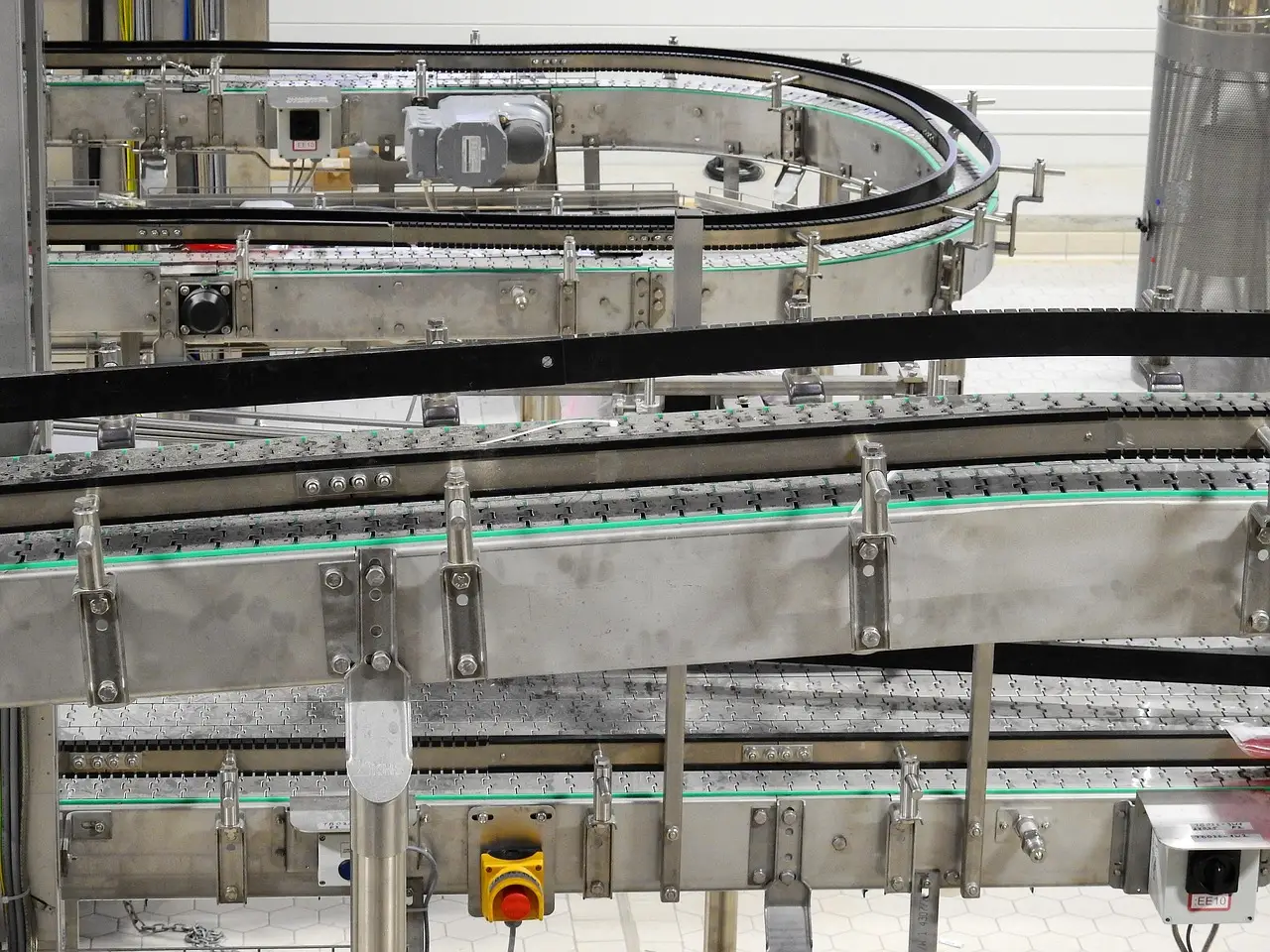
Rockwell Automation announced at Automation Fair 2026 that it has integrated Emulate3D, its virtual commissioning and visualization software, with NVIDIA Omniverse, RTX and OpenUSD technologies. The company says the combination lets Emulate3D simulate larger and more complex systems, improves graphics rendering, and sets up future AI-driven performance optimization.
What does Emulate3D do today?
Rockwell acquired Emulate3D from SimPlan in 2019. Engineers use it to model, test and optimize manufacturing cells, machines and complete lines digitally, catching problems before physical commissioning rather than during it. The software runs on the Unreal 3D rendering engine.
Users build virtual factories from three sources:
- Libraries of parameterizable standard blocks, such as robot arms, storage tanks and smart conveyors
- Custom blocks
- Imported full CAD assemblies from Inventor, Solidworks, Creo, NX and similar packages
A assembled digital twin serves factory layout work, and animation catches collisions and production-flow faults. Four physics engines cover different applications. NVIDIA's GPU-accelerated PhysX, originally built for gaming, targets speed; Bullet and Algoryx's AGX Dynamics are CPU-bound, high-fidelity engines aimed at robotics and complex multi-body dynamics respectively.
Emulate3D also tests control code. It supports hardware-in-the-loop testing with Rockwell, Siemens, B&R and Beckhoff hardware, plus software-in-the-loop through PLC emulation via FactoryTalk Logix Echo and Siemens S7-PLCSIM Advanced.
Why the single workstation caps out
Rendering, emulating and simulating complex automation strains one machine. Performance depends on geometric detail in the CAD models, the fidelity of the chosen physics engines, and the number of tags processed through multiple emulated PLCs.
The enterprise goal is to display an entire factory floor at once, not isolated parts. Rockwell addressed this last year with Emulate3D Factory Test, an upgrade that orchestrates multiple simulations running on individual workstations and merges them into one factory-scale environment.
Omniverse now serves as that unifying environment. As an NVIDIA application, it was built from the ground up for the company's enterprise RTX graphics and AI-accelerating GPUs.
What RTX, Newton and OpenUSD bring
RTX and Omniverse enable ray tracing, a technique that emulates real-world light behavior to produce photo-realistic rendering. The integration also brings NVIDIA's latest GPU-accelerated physics engine, Newton, a substantial upgrade from the general-purpose PhysX.
The native file format, OpenUSD (Unified Scene Description), may matter more. Pixar originally developed it. It works as a multi-layered "stage" onto which 3D geometry, textures, lighting and other components from different design tools can be positioned, animated and modified non-destructively. A Solidworks machine model can share one environment with a PTC Creo conveyor, a Blender lighting scheme, AutoCAD wiring and HVAC ducting, and Revit or Sketchup architecture.
OpenUSD, an open-source standard, also encapsulates non-geometric data: physics properties such as mass, friction and joints; materials; trajectories; time-series data; sensor streams; semantic labels and annotations. A hierarchical structure defines relationships between elements. That unified data set offers an efficient path to training physical AI models through synthetic data, or for an inference model to traverse and "comprehend" quickly.
Who else is doing this, and what it costs
The pairing keeps Rockwell competitive. Siemens announced a similar integration of its Process Simulate digital twin application with Omniverse in 2022, as part of a broader industrial metaverse initiative. Both companies aim to defend dominant automation positions as industrial AI spreads through global manufacturing.
One caveat stands out. Omniverse's complexity imposes a heavy learning curve. Modeling an entire factory floor, with digital replicas of every physical asset plus the control, physics and kinematic simulation data, is no quick endeavor.
The tradeoff still favors patience: a major or minor fault caught with a button click costs far less than one found while aluminum extruding equipment is being assembled. The open question for buyers is whether the factory-scale fidelity OpenUSD enables justifies the modeling investment before physical AI training becomes a standard line item in automation budgets.
via Machine Design (Source)
Filed under
- emulate3d
- digital-twins
- virtual-commissioning
- nvidia-omniverse
- openusd
More from Grace Kim
Show full bio
Correspondent covering companies, deals and strategy in Instruments, test and measurement at Testbench Report.
116 articles
Application notes
- Rockwell adds Omniverse, RTX and OpenUSD to Emulate3D
- Foxconn Reports 2.48x Faster AI Training in NVIDIA-Based Self-Learning Factories
- Bertrandt Brings Machine Vision AI Onto Bosch Rexroth's ctrlX AUTOMATION
- Hesai Launches Kosmo 3D Spatial Data Platform for Robot Training
- Eka Robotics raises $150 million for industrial physical AI