TB-4758 · REV B · Technical newsheet
Machine Vision & InspectionDevice profile
Eka Robotics raises $150 million for industrial physical AI
Eka Robotics raised $150 million at a reported $1.45 billion valuation. Vendor figures show 1,500 picks per hour and more than 95% success, but deployment conditions remain unspecified.
By Nathan Brooks4 min read878 words
Features
- Eka Robotics raised $150 million in Series A funding.
- The round reportedly values Eka Robotics at approximately $1.45 billion.
- Eka reports about 1,500 picking operations per hour versus a human benchmark near 600.
- TechCrunch reported picking success above 95% for objects weighing up to 1 kg.
- The gripper is rated for 5 million cycles; Eka targets 20 million cycles.
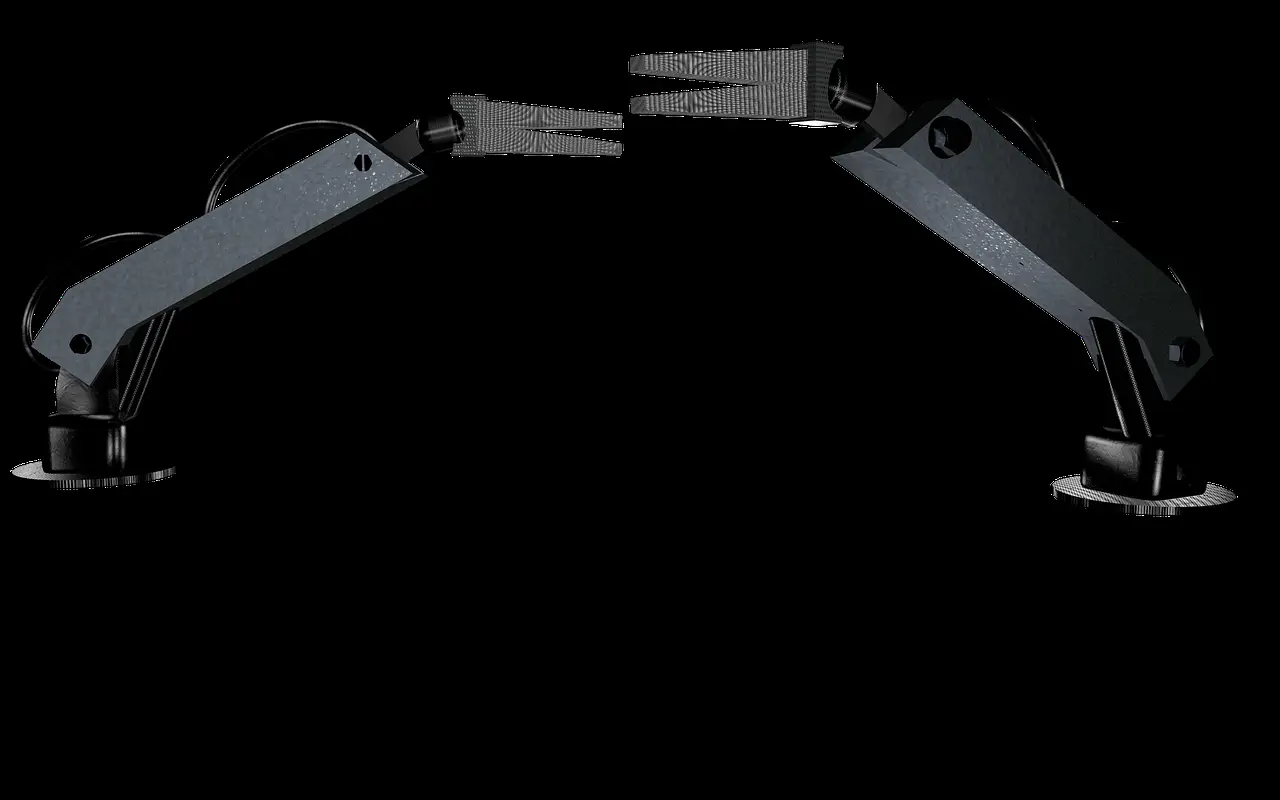
By Nathan Brooks
Eka Robotics reports that its robotic systems perform approximately 1,500 picking operations per hour, compared with a company-cited human benchmark of about 600 operations per hour. The announcement supplies no test duration, object mix, cycle definition or independent validation details for either rate.
The US-based company has raised $150 million in Series A funding, with the round reportedly valuing Eka at approximately $1.45 billion. Eka says the capital will accelerate general-purpose robots for complex physical tasks, further develop Vision-Force-Action and expand commercial deployments.
Founded by MIT researcher Pulkit Agrawal and former Google DeepMind researcher Tuomas Haarnoja, Eka defines physical AI as systems that understand, interact with and operate in the physical world. The funding announcement presents the reported valuation as evidence of growing investor confidence in the field.
Why adaptivity matters on a production line
Conventional industrial robots offer speed and repeatability but depend on carefully programmed movements and controlled environments. A changed task, new component or shifted object can require more programming, integration and adjustment.
AI-driven robots can adapt to unfamiliar objects and environments, but Eka says they often lack the speed and consistency required by demanding industrial applications. Its proposal combines general-purpose adaptability with production performance.
How does Vision-Force-Action work?
Eka's Vision-Force-Action, or VFA, combines visual perception, force sensing and robotic control. Rather than relying mainly on cameras and learned visual patterns, the system interprets forces experienced by the robotic hand during contact with an object.
For delicate or irregularly shaped components, visual information alone may not show whether the object has a secure grasp, is slipping or faces damage risk. Force feedback adds the contact evidence needed to adjust the manipulation.
This distinction matters because small changes in friction, material properties and position can turn a visually correct grasp into slip or damaging load. Eka frames its engineering target as speed, accuracy and adaptability in commercial production.
Can simulation transfer skills to real robots?
Eka trains its systems through large-scale simulation and reinforcement learning rather than human demonstrations alone. The company can accumulate thousands of hours of virtual operation in a relatively short period, partly answering the shortage of real-world manufacturing data.
The simulations vary:
- Object identity and shape
- Object position
- Environmental conditions
- Physical interactions
Reinforcement learning lets the robot develop strategies from successful and unsuccessful attempts. Eka then transfers the resulting intelligence to physical robotic systems.
Eka acknowledges that simulation-to-reality transfer remains a major technical challenge, especially for contact tasks. Differences in friction, material properties and positioning can alter outcomes, but the company believes its approach can significantly reduce the gap.
The announcement provides no quantitative sim-to-reality error bound or customer-line test results. That leaves the central claim for deployment evidence rather than an independently specified benchmark.
What do the performance figures show?
- Throughput: Eka reports approximately 1,500 picking operations per hour, against a human benchmark of around 600 operations per hour.
- Adaptation: The company says its robots handle objects outside their original training data, indicating adaptation to unfamiliar situations.
- Success and payload: TechCrunch reported picking success above 95% and handling of objects weighing up to 1 kg.
- Demonstrated tasks: Eka has shown picking and handling, wire insertion and screwing a light bulb into a socket.
- Gripper endurance: Eka rates the current gripper for 5 million operating cycles and targets 20 million cycles for industrial durability.
The gripper includes additional force sensing and offers greater flexibility than conventional rigid gripping systems. Eka presents the five-million-cycle figure as a current rating, while 20 million remains a longer-term target.
The company also claims its robots can handle unfamiliar objects, suggesting that the underlying model can generalize beyond its training set. Generalization is not the same as production repeatability, particularly when contact conditions vary.
Where physical AI intersects metrology
Potential manufacturing deployments include component assembly, cable insertion and handling of delicate materials or irregularly shaped parts. Adaptive manipulation could reduce reprogramming when parts or tasks change.
For metrology and quality control, the development matters through possible integration with automated handling, inspection and manufacturing processes. Combining robotic manipulation with machine vision and dimensional measurement could let robots respond to information about component condition, position and conformity.
Eka's current focus remains dexterous manipulation rather than dimensional metrology or automated inspection. Its significance for measurement therefore lies in the direction of production systems; no measurement product or metrology standard appears in the announcement.
What must pass industrial adoption?
Controlled demonstrations establish only the first step toward widespread industrial use. Production applications require sustained reliability, consistent cycle times and operation for extended periods without human intervention.
They also require integration with existing manufacturing equipment and production workflows. Eka currently works with industrial customers on pilots involving pick-and-place operations and wire manipulation.
The new funding will support additional tasks, further Vision-Force-Action development and faster commercial deployments. The team draws on research and engineering experience from MIT, Berkeley, DeepMind and Boston Dynamics.
Eka's longer-term objective combines industrial speed and repeatability with adaptability associated with human operators. The adoption test is whether customers can reproduce the claimed throughput, success rate and cycle life in their own lines without intervention.
via ekarobotics.com (Original)
Filed under
- physical-ai
- industrial-robotics
- vision-force-action
- force-sensing
- machine-vision
More from Nathan Brooks
Show full bio
Staff writer covering people, launches and day-to-day practice in Instruments, test and measurement at Testbench Report.
81 articles
Application notes
- KUKA moves machine vision inference to the robot controller with Jetson Orin
- Industrial Vision Expands Across Automation, Robotics, AI Inspection
- NIST Commits $20 Million to Two AI Centers with MITRE
- Physical AI's Missing Verb: Why 'Verify' Belongs in the Definition
- Bertrandt Brings Machine Vision AI Onto Bosch Rexroth's ctrlX AUTOMATION