TB-6386 · REV F · Technical newsheet
Metrology & CalibrationDevice profile
UNDP Delivers Another Batch of Lab Equipment and Reagents to Turkmenistan
UNDP has shipped a further batch of lab equipment and reagents to Turkmenistan — but no model names, specs, or calibration documentation accompany the announcement, leaving traceability questions open.
By Nathan Brooks3 min read584 words
Features
- UNDP delivered another batch of laboratory equipment and reagents to Turkmenistan, confirming at least one prior comparable delivery.
- No instrument models, specifications, reagent types, or calibration documentation have been publicly disclosed.
- Repeat reagent deliveries suggest the programme targets sustained assay availability rather than one-time capital supply.
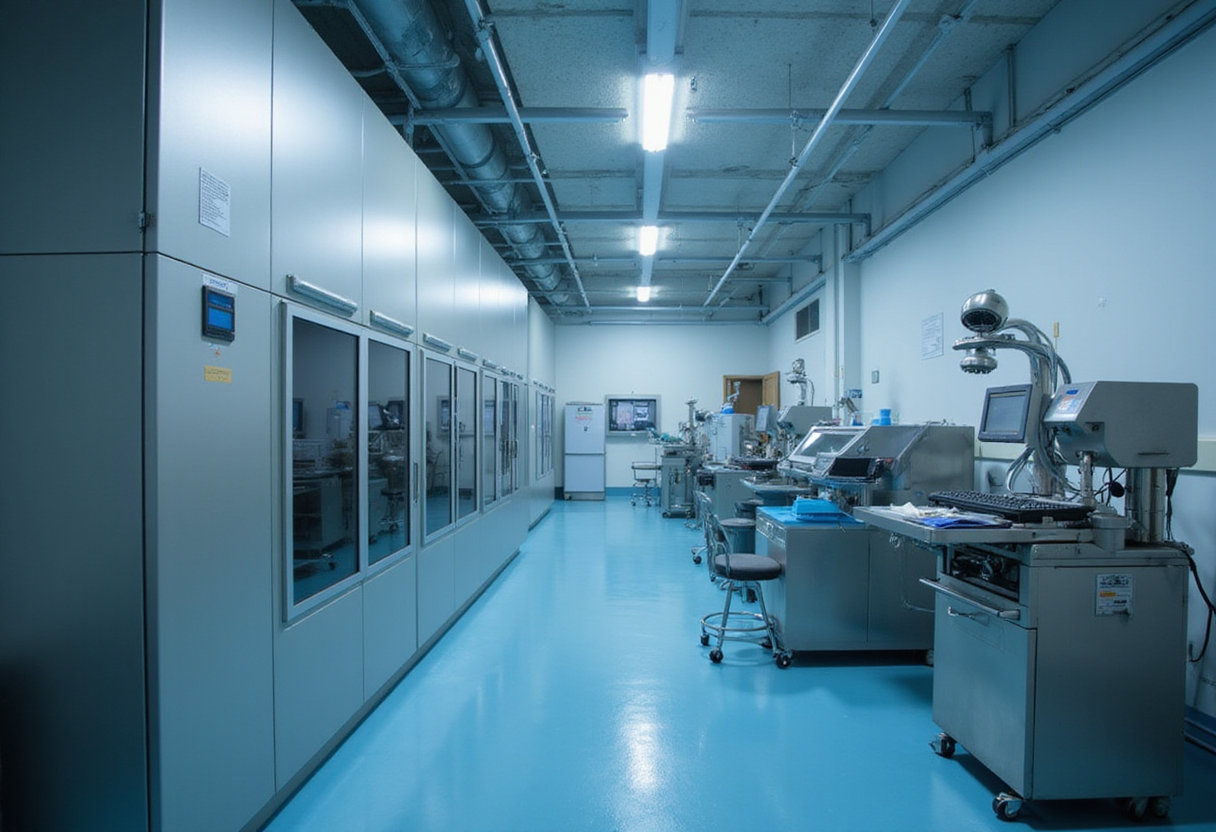
The United Nations Development Programme has delivered a further batch of laboratory equipment and reagents to Turkmenistan, Turkmenportal reports. The shipment marks another delivery in what the report describes only as an ongoing sequence — "another batch" — of UNDP-supplied instrumentation and consumables reaching the country's laboratories.
That is where the hard specification record ends. Neither UNDP nor Turkmenportal has published instrument model names, manufacturers, accuracy classes, measurement ranges, or the reagent types and lot numbers included in the consignment. No delivery dates beyond the announcement itself, no customs or handover documentation, and no calibration certificates appear in the public record accompanying the news. For a metrology-focused readership, the absence of these details is itself the story's central fact.
What the delivery does establish is a pattern. UNDP's procurement and logistics channel into Turkmenistan is functioning, and it is functioning repeatedly — the phrasing confirms at least one prior batch of comparable material. Sustained reagent supply matters as much as the hardware in this context. Reagents carry shelf lives, storage-temperature windows, and lot-traceability requirements that begin to run from the day of manufacture, not the day of installation. A gap between dispatch in the supplying country and commissioning in the receiving laboratory directly consumes usable assay life. Cold-chain integrity and quarantine-versus-release status on arrival are therefore the first questions any receiving lab's quality system must answer, whatever the analytes involved.
The equipment side raises the parallel set of questions. Laboratory instruments entering service under UNDP programmes typically require installation qualification, operational qualification, and performance verification before results carry weight — the standard IQ/OQ/PQ discipline. Whether the delivered units arrive pre-calibrated with traceable certificates, or whether local metrology bodies must verify them against national standards, determines both the timeline to first valid measurement and the documentation burden on the receiving institution. Turkmenistan's national metrology infrastructure handles this through its own legal framework; UNDP deliveries do not bypass it. Buyers and lab managers in the region will want to know which party carries the verification obligation.
The donor context shapes the likely application space, though the source specifies none. UNDP laboratory support programmes in Central Asia have historically served public-health, water-quality, and environmental-monitoring functions — analytical work where the measurement chain from reagent lot through instrument to reported result must remain documented end to end. In such settings, the operative constraint is rarely the instrument's datasheet performance. It is consumable continuity. An analyser without its reagent line is furniture. This is why repeat deliveries, rather than single large capital shipments, are the operationally significant pattern: they signal an attempt to keep assay availability aligned with assay consumption.
There is also a sustainability question the announcement raises without answering. Donated equipment creates a maintenance liability the day it is accepted. Service contracts, spare parts, firmware support, and operator training all outlast the delivery ceremony. If the programme's cadence of reagent batches continues but service support does not, the installed base degrades from calibrated instruments into unverified hardware — indistinguishable from scrap in regulatory terms, whatever its mechanical condition.
For laboratories and standards bodies watching the programme, the adoption question is straightforward: will UNDP publish the technical annexes — equipment manifests, reagent specifications, and calibration documentation — that would let the receiving institutions demonstrate traceability, or will the deliveries remain operationally opaque? Until that documentation exists, the equipment's contribution to Turkmenistan's measurement infrastructure can be counted in crates delivered, not in verified measurements produced.
via Google News: Laboratory equipment (Source)
Filed under
- undp
- turkmenistan
- laboratory-equipment
- calibration
- traceability
More from Nathan Brooks
Show full bio
Staff writer covering industry trends and analytics at Testbench Report.
19 articles
Application notes
- Oman's DGSM reviews measurement and calibration lab designation
- UNDP and Sri Lanka's Environment Ministry Deliver Lab Equipment for Chemicals Management
- EU Donates Laboratory Equipment to Tanzania Bureau of Standards
- SASO Convenes Annual Metrology Forum for World Metrology Day
- Zambia Expands ZABS Laboratory Testing Capacity with New Equipment