Technical newsheet
Test & MeasurementDevice profile
CT Scans of 1,451 Auto Connectors Find Counterfeits Within
Lumafield CT-scanned 1,451 auto connectors and found open-market units with 5x the trapped air, 20% thinner walls and 18% lower X-ray attenuation than genuine parts.
By Amara Osei4 min read789 words
Features
- Lumafield CT-scanned 1,451 automotive connectors, producing over 800,000 cross-sectional images on a Triton scanner.
- Open-market TE DT06-6S housings showed 18% lower X-ray attenuation and five times the trapped air of genuine units.
- Amphenol AT06-6S open-market walls were 20% thinner, cutting bending strength by roughly a third.
- Since 2010, about 2% of U.S. recall campaigns named a connector, affecting over 17.6 million vehicles (NHTSA data).
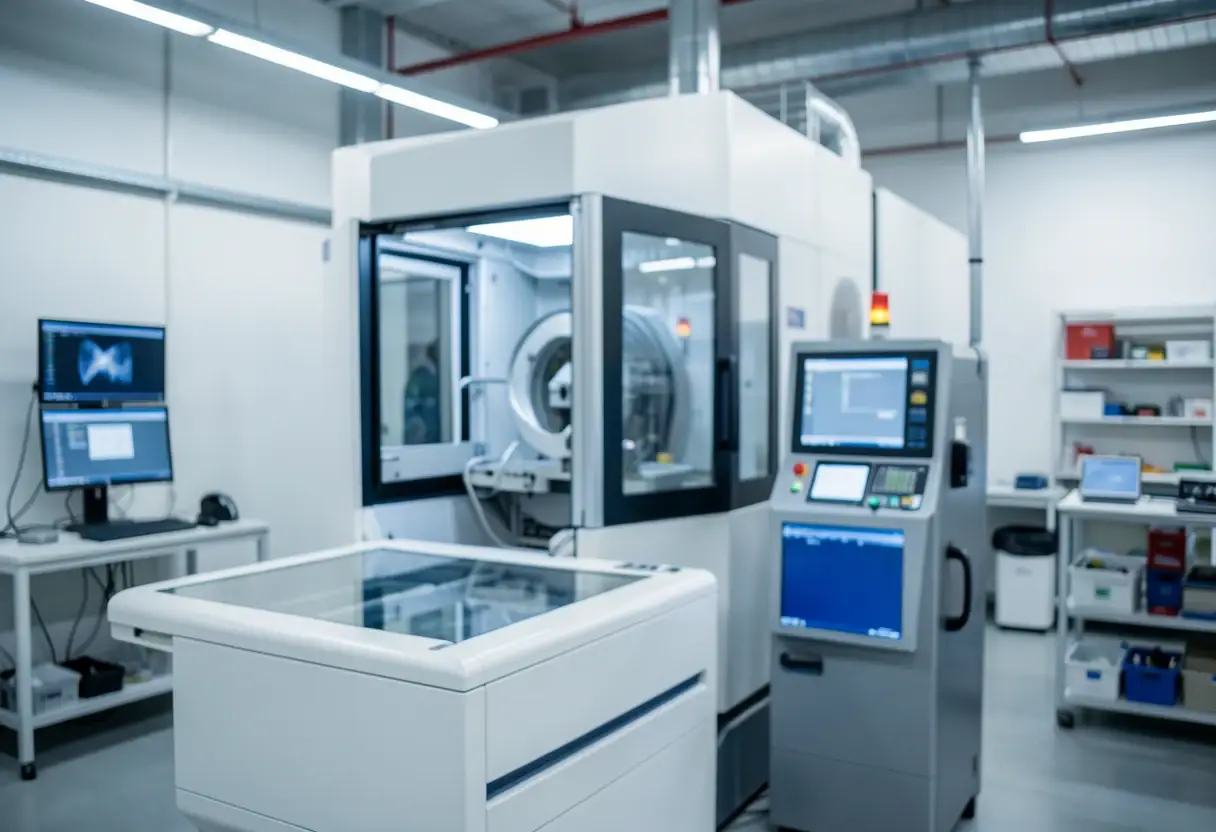
Lumafield CT-scanned 1,451 automotive electrical connectors and found that parts sold under identical part numbers differed measurably inside: 18% lower X-ray attenuation, five times the trapped air, and walls up to 20% thinner in open-market units. The study, released as the Connector Quality Report, compared genuine connectors bought from authorized distributors DigiKey and Mouser against units sourced from an unauthorized open-market distributor, AliExpress. Outside, they looked nearly identical. Inside, they differed in material, void size, wall thickness and shape.
A passenger car carries more than 1,000 electrical contacts, from drivetrain and airbag circuits to infotainment, housed in connectors ranging from one-wire plugs to 100-plus-contact assemblies linking wiring harnesses to electronic control units. Automakers lean on established suppliers — Molex, TE Connectivity, Amphenol, Yazaki — for these molded housings, which hold contacts in position, seal out dust and moisture, and survive years of heat and vibration.
Connectors fail often enough to matter. Lumafield's analysis of NHTSA data shows that since 2010, roughly 2% of U.S. automotive recall campaigns named a connector in the defect description, touching more than 17.6 million vehicles.
What did the scans actually measure?
All 1,451 connectors went through a Lumafield Triton automated industrial CT scanner, yielding more than 800,000 cross-sectional images. The sample covered eight part numbers: six from TE Connectivity's DT family and the Amphenol AT series sold as drop-in replacements — sealed connectors rated for wet, high-vibration duty in heavy-duty, marine and off-road vehicles — plus a sealed Molex connector and a TE part used as a control.
Lumafield's Quality Agent, an agentic AI tool, built an analysis for each part number from an engineer's plain-language request, tested it on a few units, then ran it across every unit and flagged individual housings for review, cross-referencing its own wall-thickness and porosity results. The company notes the data volume exceeded what traditional manual analysis could handle.
X-ray attenuation (how much radiation a material absorbs, which tracks its composition, here glass-fiber content) served as the material proxy. Void volume, wall thickness and surface deviation did the rest.
How bad were the open-market parts?
- Different materials. TE DT06-6S housings bought through the unauthorized distributor showed 18% lower X-ray attenuation than genuine units, implying significantly less glass fiber than the PA66 GF15 nylon (nylon with 15% glass filler) on TE's drawing. Less glass, less rigidity.
- More porosity. The same open-market housings held five times as much trapped air by volume, and 73% contained a void larger than the largest void in any genuine unit.
- Different tooling. On seven of eight part numbers, open-market housings deviated meaningfully from known-good units. Genuine OEM DT06-6S housings showed a median surface deviation of 0.16 mm; open-market counterparts, 0.40 mm — evidence they came off different molds.
- Thinner walls. Four of eight open-market part numbers ran thinner than genuine counterparts. The widest gap hit the Amphenol AT06-6S at 20% thinner walls, corresponding to roughly a third less bending strength.
Why does this escape normal inspection?
Connectors qualify to shared standards — USCAR-2 and LV 214 — but qualification tests a design on a limited sample. Once production runs, per-part checks such as visual inspection, continuity tests and leak tests cannot see inside the housing. A supplier can change a mold, swap a resin, or add a sub-tier supplier without changing the part number, and nothing downstream catches it.
The study also flagged a subtler case: genuine TE DT06-6S and Amphenol AT06-6S housings are sold as replacements for each other, share nearly identical geometry but use different materials and clip designs. Both meet their published specs, yet swapping one for the other changes something in the vehicle even when no spec is broken.
"Most manufacturing and inspection data describes processes and point measurements: temperatures, cycle times, test results, individual dimensional measurements. Incomplete inspection coverage is a challenge we regularly see causing escapes and recalls in the industry," said Andreas Bastian, Co-Founder and CTO of Lumafield. "When we looked inside these connectors, we found that nominally identical parts were made of different materials, had different levels of critical defects like porosity, and were even made in very different molds. This is the data that physical AI needs, and almost no factory has it yet."
That's the quiet verdict: the inspection gap is real, measurable, and sitting inside parts that pass every routine check.
The full report is available for download at lumafield.com. The question it leaves buyers: if a part number no longer guarantees the part, what does your incoming-inspection plan actually verify?
via lumafield.com (Original)
Filed under
More from Amara Osei
Show full bio
Senior reporter covering people, launches and day-to-day practice in Instruments, test and measurement at Testbench Report.
134 articles
Application notes
- EV Scale Puts Tensile Testing Standards Back on the Bench
- Thin-Film Platinum RTD Demand Projected Through 2035 In IndexBox Outlook
- Glimpse Expands CT Software Beyond Batteries With Explore Package
- Vision Systems Take Over Inspection of EV Components
- ViTrox Draws Bullish Coverage as AI Inspection Build-Out Accelerates