Technical newsheet
Test & MeasurementDevice profile
YA Group acquisition brings Delphi 3D CT into failure analysis
YA Group has announced the acquisition of Delphi Precision Imaging, set to add industrial 3D CT and high-resolution X-ray failure-analysis expertise in Mountlake Terrace, Washington.
By Nathan Brooks4 min read765 words
Features
- YA Group announced the acquisition of Delphi Precision Imaging’s Seattle-area business.
- More than a decade of Delphi imaging experience will join YA Group.
- The announcement provides no scanner model, resolution, accuracy, throughput or calibration interval.
- Four lifecycle stages are covered: prototype development, first-article inspection, production and failure analysis.
- Delphi’s CT system and imaging team will relocate to YA’s Mountlake Terrace laboratory.
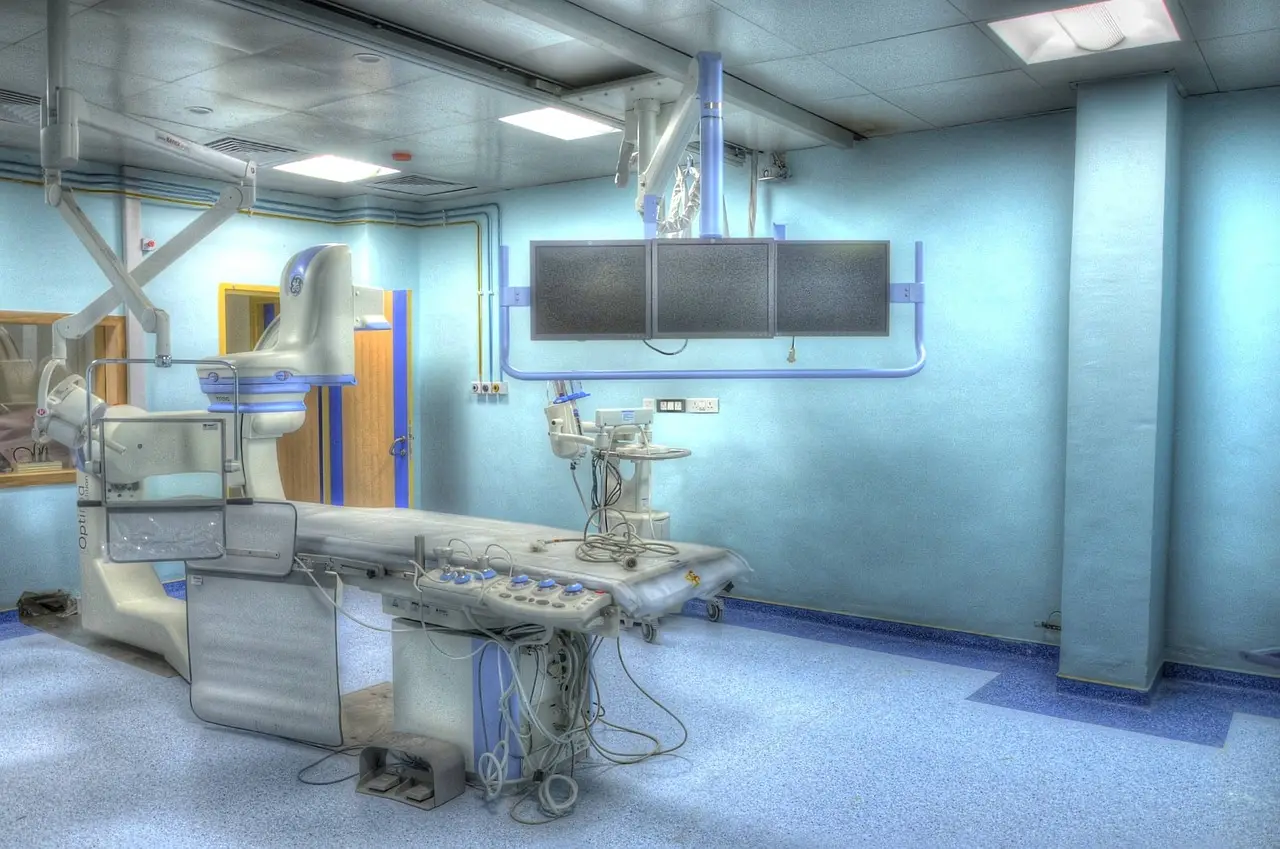
YA Group has announced the acquisition of Delphi Precision Imaging’s Seattle-area business, bringing more than a decade of industrial 3D computed tomography experience to a unified failure-analysis operation in Mountlake Terrace, Washington.
The deal expands YA Group’s materials-testing and forensic-engineering practice with nondestructive internal inspection. Under the combined model, engineers can inspect a component, identify an internal defect and investigate its cause through one team.
The announcement provides no purchase price, closing date, scanner model, X-ray source, voxel resolution, dimensional accuracy, defect-detection threshold, throughput figure or calibration interval. It therefore documents a capability acquisition rather than a quantified performance gain.
What does the acquisition add?
Delphi supplies high-resolution industrial X-ray and 3D CT scanning services. The process forms a detailed image of a component’s internal structure without cutting, sectioning or damaging the part, which keeps the specimen available for follow-on laboratory analysis and preserves evidence when a product faces dispute.
Industrial CT measures changes in X-ray attenuation through a component and reconstructs a 3D representation from multiple projections. The physics makes internal geometry visible without removing material, but resolution and defect detectability still depend on the object, acquisition and reconstruction settings. The announcement supplies none of those test conditions.
YA Group characterizes Delphi’s output as precise and high quality and says the service has a record of rapid turnaround. Because the announcement gives neither numerical benchmarks nor comparison conditions, those statements remain vendor claims rather than independently measured performance.
Richard Dethlefs, PE, SE, President of Engineering Services at YA Group, said: “Acquiring Delphi is another important step in building a multidisciplinary technical consulting firm equipped to solve our clients’ most complex challenges.”
He added: “By combining Delphi’s advanced industrial CT scanning with our laboratory testing and investigative expertise, we can provide clients with a more comprehensive understanding of how products are manufactured, why components fail, and what the evidence tells us.”
Which applications gain support?
Delphi’s technology supports five named manufacturing sectors:
- Aerospace
- Defense
- Additive manufacturing
- Electronics
- Medical devices
Within those sectors, the stated work covers product development, dimensional inspection, quality assurance and failure analysis. The acquisition therefore reaches both design-stage evaluation and production inspection, as well as post-failure investigation.
YA Group’s existing laboratory already provides digital microscopy, scanning electron microscopy, elemental analysis and spectroscopy. Combining those methods with CT gives materials scientists and engineers a route from internal imaging to materials characterization and cause-of-failure analysis without consuming the original component.
Delphi co-owner Daniel Bone said joining YA Group would let the operation build on years of work at Delphi. He called the imaging complementary to YA’s materials-testing and forensic-engineering resources, adding that the combined team could show what was happening inside a component and why it happened.
What changes for disputed components?
YA Group identifies three practice areas that gain support:
- Product liability
- Design defect investigations
- Litigation support
In each, the ability to inspect internal structure without sectioning helps preserve the original condition of evidence. YA’s laboratory also expands Delphi’s reach earlier in the product life cycle and allows testing sooner. The stated sequence begins with prototype development and first-article inspection, continues into production and ends with failure analysis.
Delphi co-owner Jean Chenevert said existing commitments to precise imaging, quick turnaround and responsive service would remain unchanged. She said the acquisition would add access to a broader team of scientists and engineers and additional testing capabilities, which would support existing client relationships and service.
Does relocation alter technical continuity?
Delphi’s industrial CT scanning system and imaging team will relocate to YA’s Materials, Testing & Evidence Laboratory in Mountlake Terrace. The imaging group will join materials scientists, chemists and engineers already based there.
Delphi co-owners Daniel Bone and Jean Chenevert will continue with YA Group. The firm will also retain Delphi’s experienced imaging professionals, a continuity measure intended to protect technical expertise and service for existing clients.
Will the combined service meet inspection requirements?
The acquisition identifies the operating model but leaves the principal metrology questions open. Buyers still need the scanner specification, applicable sample size and material range, spatial resolution and accuracy data, minimum detectable flaw, turnaround commitment, calibration record and evidence-handling procedure before setting an acceptance criterion.
YA Group lists further information at www.yagroup.com. The acquisition answers who will coordinate CT and laboratory testing, but not whether that workflow meets a client’s acceptance criteria. Will the combined method qualify on measured resolution, accuracy and evidence-control data?
via delphiprecisionimaging.com (Original)
Filed under
- industrial-3d-ct
- nondestructive-inspection
- failure-analysis
- materials-testing
- forensic-engineering
More from Nathan Brooks
Show full bio
Staff writer covering people, launches and day-to-day practice in Instruments, test and measurement at Testbench Report.
109 articles
Application notes
- Glimpse Expands CT Software Beyond Batteries With Explore Package
- FreeScan Omni brings 0.02 mm 3D inspection to the shopfloor
- senswork to Demo AI Surface Inspection and 3D QC at IMTS 2026
- amsight to Lead ESA FIRST! Project DIQAM on AM Qualification
- Wireless 3D Scanner Replaces Fixed Metrology at Fabricator TBI