TB-3250 · REV F · Technical newsheet
Metrology & CalibrationDevice profile
MEMS Oscillators Continue the Long Search for Stable Time
From Huygens’s 1657 pendulum to programmable silicon timing, oscillators traded bulk for portability, programmability and tougher packaging, but comparative data remains thin.
By Amara Osei4 min read744 words
Features
- Huygens built a working pendulum clock in 1657, raising daily precision from minutes to seconds.
- Britain’s Longitude Prize, established in 1714, targeted longitude accuracy within one-half degree.
- John Harrison’s H4 marine chronometer achieved a reported two seconds per day in 1761.
- The Shortt dual-pendulum clock, introduced in the 1920s, deviated by about one second per year.
- The first quartz clock and quartz-crystal oscillator date to 1927; quartz dominated electronic timing by the 1970s.
By Amara Osei
Christiaan Huygens’s 1657 pendulum clock raised daily timekeeping precision from minutes to seconds, an improvement of roughly two orders of magnitude.
That figure is a historical performance claim, not a modern metrology specification; the account gives no uncertainty, comparison protocol or environmental test conditions. Its significance lies in replacing consultation of the sky with a repeatable mechanical reference. Astronomical observations varied by as much as 30 seconds per day in the account, with Earth’s elliptical orbit cited as a cause.
The source is the final installment of a timekeeping-history series. Its author, Mohamed Zanaty, Ph.D., works in R&D engineering at SiTime and earned a doctorate in Microsystems at EPFL.
What did Galileo and Huygens establish?
Galileo Galilei observed a cathedral chandelier in the early 1600s and noticed that each cycle took roughly the same time despite a changing swing arc. This is isochronism (approximately constant cycle time), and it supplied the operating basis for Huygens’s first working pendulum clock in 1657, described in the source as the first mechanical oscillator.
Takeaway: The pendulum converted a visible swing into a usable time reference.
How did portable timing solve longitude?
Huygens developed the balance wheel and spiral spring in 1675. Unlike a pendulum, the balance wheel oscillates back and forth regardless of orientation, making the arrangement suitable for pocket watches, wristwatches and marine chronometers rather than a stationary installation.
By the early 1700s, precise timekeeping mattered for maritime navigation, especially determining longitude at sea. Britain’s Longitude Prize, established in 1714, sought a method accurate to one-half degree. John Harrison met the challenge in 1761 with the H4 marine chronometer, reported to hold two-second-per-day accuracy; the source says that result transformed global navigation and established portable oscillators as practical instruments.
Takeaway: Portable oscillators made a ship’s position measurable, not merely inferable from the sky.
Why did quartz displace mechanical clocks?\n
Mechanical precision still had limits. The Shortt dual-pendulum clock, introduced in the 1920s, used two interconnected pendulums: a primary pendulum in a vacuum chamber to exclude external disturbances and a secondary pendulum acting as regulator. Its reported deviation was about one second per year, yet temperature shifts and air-pressure variations still changed the result.
Zanaty states the design lesson plainly: “reducing environmental interference is essential for stability.”
Pierre and Jacques Curie discovered piezoelectricity in 1880, finding that quartz generates an electrical charge under mechanical stress and vibrates at a stable frequency when electrically excited. The source dates both the first quartz clock and the quartz-crystal oscillator to 1927. Quartz soon outperformed mechanical timekeepers, although no error, aging or temperature coefficient accompanies that claim.
By the 1970s, quartz had become the standard for precision electronic timekeeping in wristwatches, household clocks, computers and telecommunications systems, where synchronized operation mattered.
Takeaway: Quartz improved repeatability and system integration, but its fixed operating point limits later tuning.
What can MEMS change?
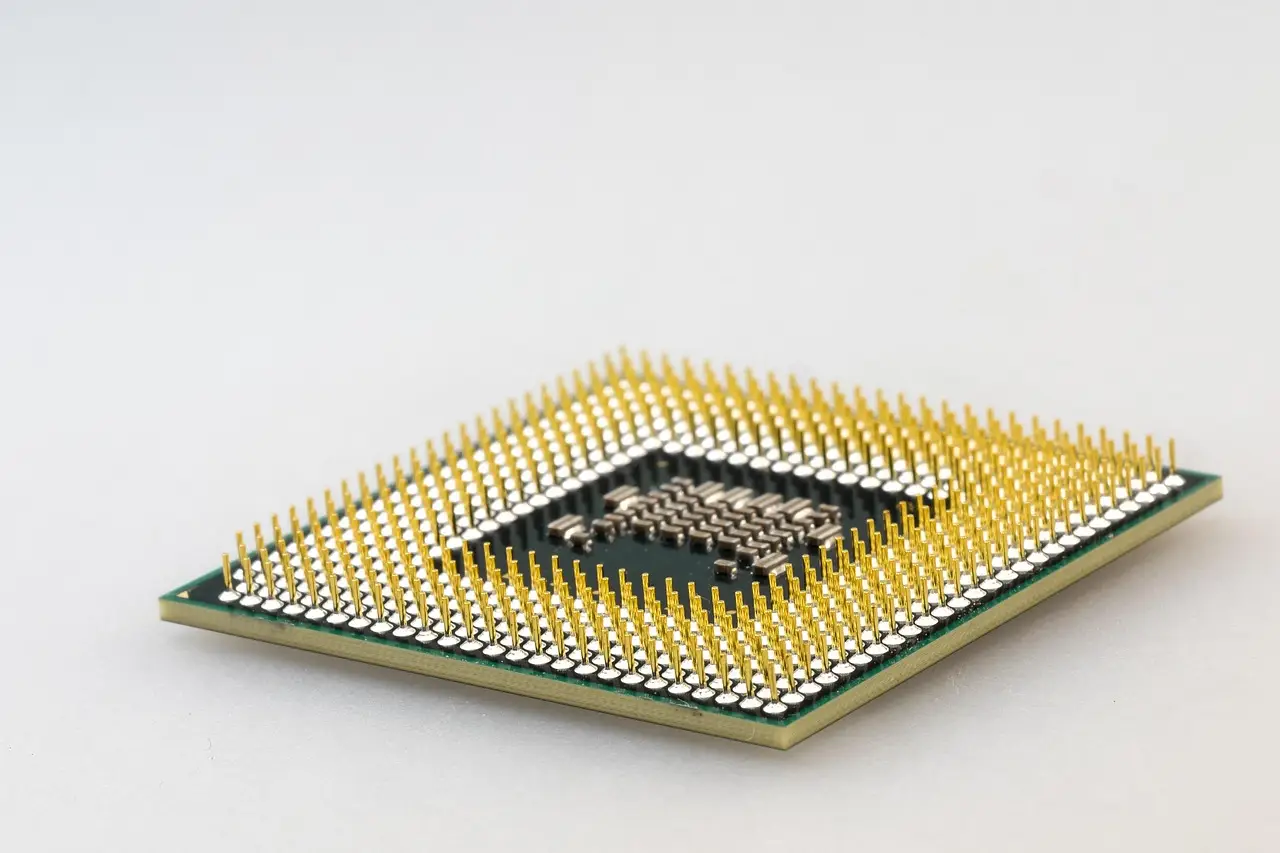
At component level, quartz and MEMS both use electromechanical resonance. Silicon MEMS implements the timing structure through semiconductor manufacturing, enabling compact packages and a programmable path for frequency, stability and performance. The buying distinction is configurability: fixed-frequency quartz offers a fixed reference, whereas the MEMS approach can be tuned for the application.
Zanaty writes: “Unlike fixed-frequency quartz, programmable MEMS timing solutions give designers the flexibility to tune frequency, stability, and performance to meet the needs of a broad range of applications.”
The source attributes to advanced silicon fabrication a high degree of repeatability and to MEMS packaging the ability to withstand shock, vibration and wide temperature ranges. It presents these properties as improved stability, resiliency and long-term reliability, and positions SiTime as extending the platform into scalable precision timing.
Those claims target compact electronics and harsh operating environments: AI infrastructure, cloud and edge data centers, automated driving systems, robotics and industrial IoT. Each needs precise synchronization, but the source does not show whether a given MEMS device meets its accuracy class (a specified error bound), long-term frequency drift, shock level or temperature range.
No named device, datasheet, frequency tolerance, temperature coefficient, aging rate, shock-vibration test profile or comparative benchmark appears. The claims therefore remain product-positioning statements within a company-authored article, not measured evidence separating MEMS from quartz. A promise is not a specification.
Takeaway: Which applications can adopt programmable silicon without sacrificing required stability, and what measured evidence will settle the matter in regulated uses?
via sitime.com (Original)
Filed under
- mems-oscillators
- precision-timing
- frequency-stability
- quartz-resonators
- electronic-timekeeping
More from Amara Osei
Show full bio
Senior reporter covering people, launches and day-to-day practice in Instruments, test and measurement at Testbench Report.
124 articles
Application notes
- NIST Pins Down Martian Time: Clocks Run 477 µs Fast per Day
- February 1955: Electronic Design's First 'Ideas for Design' Drew an Oscilloscope Panel Around the Operator
- World Metrology Day Spotlights Calibration's Role in African Healthcare
- Metrology bulletin: 12 µm scanning, traceability and inline QA
- NIST Team Controls Molecular Ion Rotation with 99.8% Fidelity